
Pasta with meat sauce
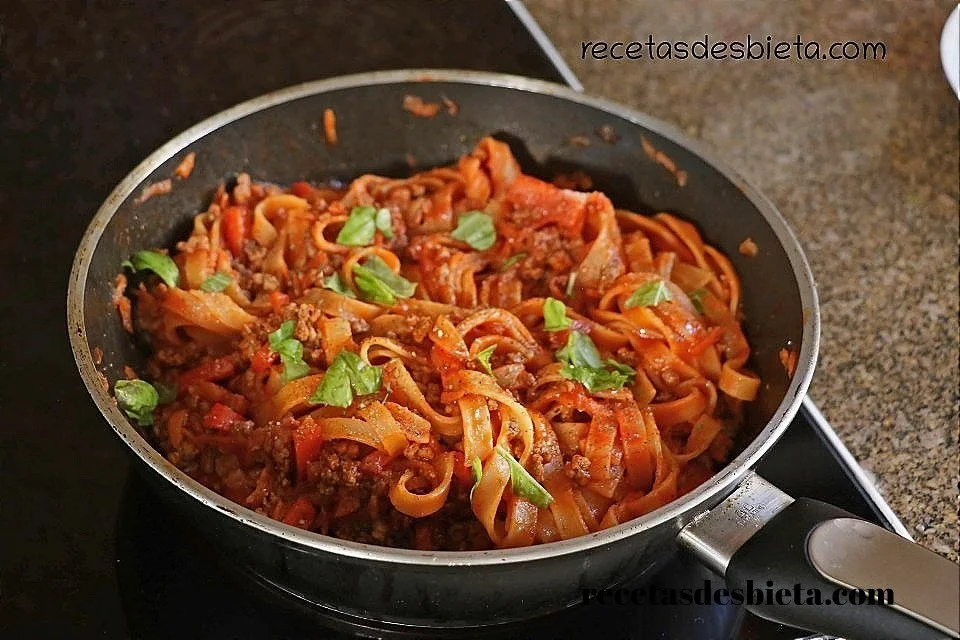
This is a quick one-pan-style pasta dish, with minced meat and vegetables simmered together with pasta in tomato juice. It is a practical choice when you want a filling dinner without cooking the pasta separately.
Ingredients
- 250 gminced meat
- 1 mediumonion
- 1 smallcarrot
- ¼sweet pepper
- 180–200 gpasta nests or spaghetti
- 600 mltomato juice
- 2 tbsp (30 ml)oil
- to tastesalt, ground black pepper and spices
- to tasteoregano, basil or other preferred herbs
- to tastecheese, for serving
Instructions
- 1
Prepare the meat
Measure out 250 g of minced meat. The cook prefers to mince the meat at home, but ready-minced meat can be used.
- 2
Chop the onion
Finely chop one medium onion.
- 3
Grate the carrot
Grate one small carrot.
- 4
Slice the pepper
Cut a quarter of a sweet pepper into thin strips; adding it is optional.
- 5
Brown the onion
Heat 2 tablespoons of oil in a frying pan, add the onion and cook until golden.
- 6
Cook the carrot
Add the grated carrot and cook for a couple of minutes.
- 7
Fry the meat
Add the minced meat and fry until it changes colour.
- 8
Add the pepper
Stir in the pepper and cook for a couple of minutes.
- 9
Add the pasta
Arrange 180–200 g of pasta nests or spaghetti over the meat mixture.
- 10
Pour in tomato
Cover the pasta with 600 ml of tomato juice.
- 11
Simmer covered
Put a lid on the pan and cook over medium heat for 10 minutes.
- 12
Finish cooking
Turn the pasta over, cover the pan again and cook over medium heat for 5 minutes more, or until it is cooked to your liking.
- 13
Season the sauce
Season with salt and black pepper, then add a little oregano, basil or another preferred spice.
- 14
Serve the pasta
Serve once the pasta is ready.
- 15
Add the cheese
Top with a little cheese, if you like.
What is pasta with meat sauce?
It is a simple pasta supper in which minced meat, vegetables and pasta cook together in a tomato-based liquid. The method makes a quick, comforting dish without a separate pot for boiling the pasta.
This version uses tomato juice rather than a thicker prepared sauce, with onion and carrot for the base and sweet pepper as an optional addition.
Nutrition and macros by portion
The nutrition label shows one serving as written: 700 calories, 35g protein, 80g carbs, 27g fat.
| Portion | Adjustment | kcal | Protein | Carbs | Fat |
|---|---|---|---|---|---|
| Lighter | Use less oil and pasta | 490 kcal | 25g | 56g | 19g |
| This serving | As written | 700 kcal | 35g | 80g | 27g |
| Hungry | Use 200 g pasta | 1050 kcal | 53g | 120g | 41g |
The pasta supplies most of the carbohydrates, while the minced meat contributes much of the protein and some of the fat. Oil and any cheese topping add further fat, and tomato juice and vegetables contribute some carbohydrates. For a balanced plate, serve a portion with a green salad or extra vegetables.
Build the vegetable base
Onion: cook it in the oil until golden to give the sauce a savoury start.
Carrot: grate it so it softens quickly as it cooks with the onion.
Pepper: cut it into thin strips so it can soften in just a couple of minutes; leave it out if preferred.
Choose the pasta
Pasta nests are easy to lay over the meat mixture, while spaghetti also works. The recipe gives a range of 180–200 g, so use the lower amount for a saucier result or the higher amount for more pasta.
The pasta cooks directly in the tomato juice, which is why keeping the pan covered helps it soften.
Keep the pan covered
Covered cooking: let the pasta simmer for 10 minutes over medium heat before turning it over. The lid helps retain the steam while the pasta absorbs the tomato liquid.
Final check: cook for another 5 minutes after turning, then check whether the pasta is done to your preference.
Season at the end
Salt and pepper: season after the pasta has cooked, tasting as you go. Tomato juice can vary in saltiness, so this makes it easier to adjust.
Herbs: add a little oregano, basil or another preferred spice at the end, as suggested in the method. A small amount is enough to flavour the tomato sauce.
Make it a meal
Serve the pasta hot, with a little grated cheese on top if desired. A crisp green salad or simply dressed vegetables make a fresh contrast to the rich meat and tomato sauce.
If the sauce looks thicker than you prefer, stir it gently before serving so the pasta and meat are evenly coated.
Recipe notes & tips
- Finely chop the onion so it cooks through quickly.
- Use a frying pan with a lid that fits well to hold in steam.
- Keep the heat at medium while the pasta cooks.
- Turn the pasta carefully after the first 10 minutes so it cooks more evenly.
- Taste before adding salt, especially if your tomato juice is already seasoned.
- Add cheese at the table so everyone can choose how much to use.
Variations
- Skip the pepper: leave it out for a simpler sauce.
- Change the herbs: use oregano, basil or another favourite spice.
- Choose spaghetti: use it instead of pasta nests and turn it carefully during cooking.
- Add cheese: finish each serving with a little grated cheese.
- Adjust the pasta: use 180 g for a saucier dish or 200 g for a more pasta-heavy one.
Common mistakes to avoid
- Crowded pan: use a wide frying pan so the pasta can sit over the meat mixture.
- High heat: keep the pan at medium so the tomato liquid simmers rather than reducing too quickly.
- Lifting the lid often: leave it covered during the first 10 minutes to retain steam.
- Undercooked pasta: after turning it, cook for the full additional 5 minutes or until it reaches your preferred texture.
- Over-seasoning early: taste the finished sauce before adding salt and pepper.
How to store
Cool leftovers promptly and refrigerate them in a covered container for up to 3 days. Reheat in a pan or microwave until piping hot; add a small splash of water if the pasta has absorbed most of the sauce.
Frequently asked questions
Can I use spaghetti instead of pasta nests?
Yes. The recipe allows either pasta nests or spaghetti; arrange the spaghetti over the meat mixture and turn it carefully partway through cooking.
Do I have to add the sweet pepper?
No. The method says the pepper is optional, so you can leave it out.
How do I know when the pasta is done?
Check it after the additional 5 minutes of covered cooking. If it is not tender enough, continue cooking until it suits your preference.
Can I use a different herb?
Yes. Oregano and basil are suggested, but the method allows other preferred spices or herbs.
Why cook the pasta in tomato juice?
It lets the pasta cook in the same pan as the meat and vegetables, absorbing some of the tomato flavour as it softens.
Cook it from the original
This recipe comes from recetasdesbieta.com. Their page has the author’s own photos, notes and tips — the best place to cook it from.
Open the recipe on recetasdesbieta.com