
Braised lamb shanks
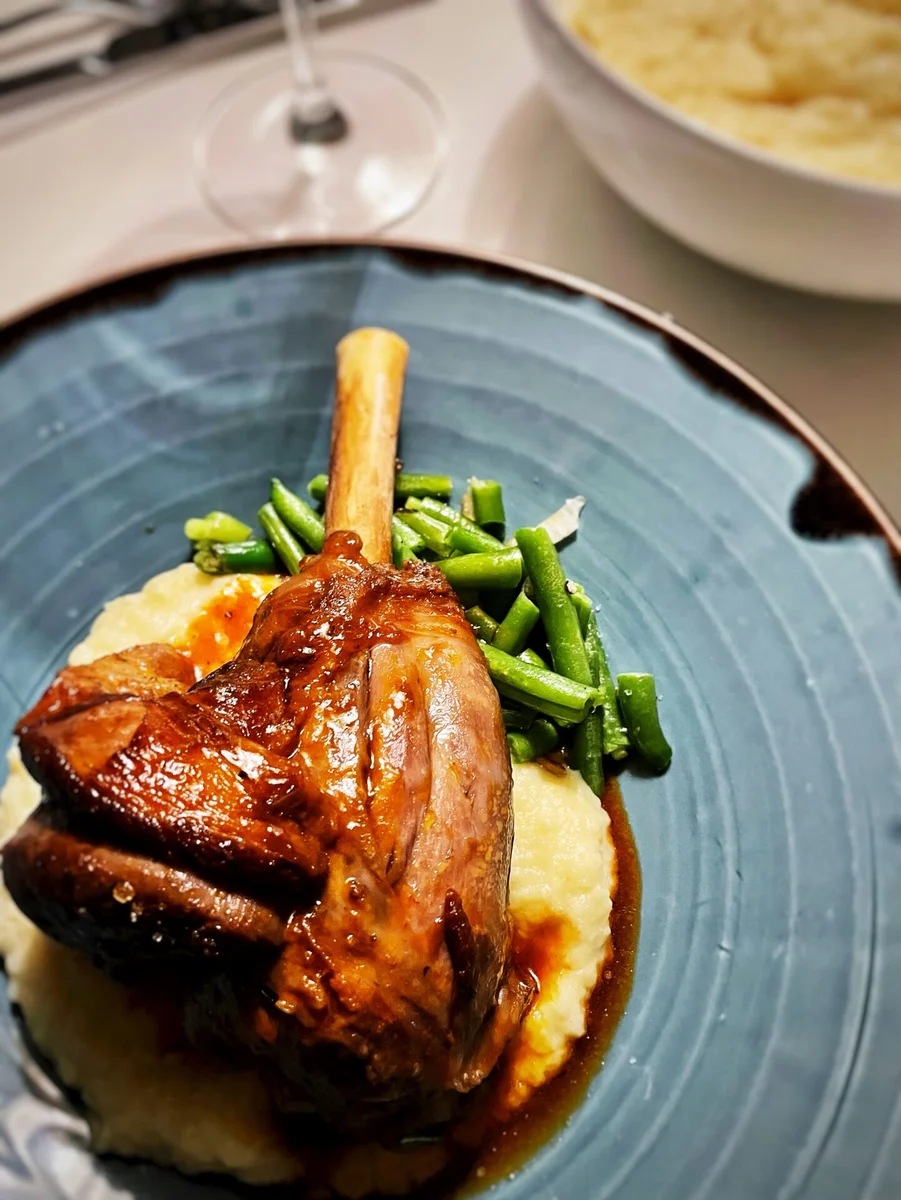
Lamb shanks are browned, then slowly braised with wine, stock, vegetables and herbs until tender. The strained, vegetable-enriched cooking juices make a full-flavoured sauce, and the dish is served with mashed potatoes.
Ingredients
- 4lamb shanks
- 1onion
- 2 mediumcarrots
- 150 gceleriac
- 1/2leek
- 2garlic cloves
- 2 Tbsptomato purée
- 1 tsppowdered sugar
- 150 mlred wine
- 400 mlstock
- 1 Tbspghee
- 2 Tbspsunflower oil
- 3 sprigsrosemary
- 3bay leaves
- 2cloves
- 3, slightly crushedjuniper berries
- to tastesalt and pepper
Instructions
- 1
Prepare the lamb
Take the lamb shanks out of the fridge, rinse them with cold water and pat dry with a kitchen towel.
- 2
Heat the oven
Preheat the oven to 180°C.
- 3
Season the shanks
Season the lamb generously with salt and pepper.
- 4
Cut the vegetables
Cut the celeriac, onion, leek and garlic into pieces about the size of your thumb.
- 5
Heat the ghee
Warm the ghee in an ovenproof roasting pan large enough to hold the shanks and fit in the oven.
- 6
Brown the lamb
When the ghee is hot, add the shanks and brown them on all sides, about 2 minutes per side. Add the garlic and rosemary.
- 7
Set aside lamb
Remove the shanks to a deep plate and add the oil to the roasting pan.
- 8
Brown the vegetables
When the oil is hot, add the vegetables and cook for around 5–10 minutes, until they have taken on colour.
- 9
Caramelise the sugar
Push the vegetables to the side of the pan. Add the powdered sugar and let it melt, then stir in the tomato purée and combine everything.
- 10
Reduce the wine
Add a generous splash of red wine and let it reduce.
- 11
Add braising liquid
Pour in the rest of the wine, then add the spices and stock. Set the lamb shanks on top of the vegetables.
- 12
Cover the pan
Put the lid on the roasting pan and place it in the oven.
- 13
Braise the shanks
Braise for 2 hours, turning the shanks every 30 minutes. Take care when handling the hot pan.
- 14
Rest the lamb
After 2 hours, remove the shanks from the pan and leave them to rest on a deep plate while you finish the sauce.
- 15
Strain the sauce
Set a sieve over another pot and slowly pour the sauce and cooked vegetables through it. Make sure all the liquid is transferred, then gently press the vegetables with a spatula and scrape the purée from the underside of the sieve into the sauce.
- 16
Season and serve
Season the sauce with salt and pepper. Serve it with the lamb shanks and mashed potatoes.
What are braised lamb shanks?
Lamb shanks are the lower part of the leg, a cut well suited to slow cooking until the meat becomes tender. Braising means browning the meat first, then cooking it covered with liquid.
This version pairs the lamb with red wine, stock, aromatic vegetables and herbs. Pressing some of the cooked vegetables through a sieve gives the sauce extra body and flavour.
Nutrition and macros by portion
The nutrition label shows one serving as written: 650 calories, 0g protein, 0g carbs, 0g fat.
| Portion | Adjustment | kcal | Protein | Carbs | Fat |
|---|---|---|---|---|---|
| Lighter | Less added oil | 455 kcal | 0g | 0g | 0g |
| This serving | As written | 650 kcal | 0g | 0g | 0g |
| Hungry | Larger portion of lamb | 975 kcal | 0g | 0g | 0g |
The lamb supplies most of the protein and fat, while the vegetables and small amount of sugar contribute carbohydrates; the ghee and sunflower oil also add fat. Serve with a sensible portion of mashed potatoes and plenty of the braised vegetables to make a balanced plate.
Build flavour in the pan
Brown the shanks: Give them colour on all sides before the long cook; this creates a savoury base for the braising liquid. Work in a pan that can go from the hob to the oven and is large enough to hold the shanks.
Colour the vegetables: Let the onion, carrot, celeriac, leek and garlic take on colour before adding the liquids. The brief caramelising step with sugar and tomato purée rounds out the base.
The wine and stock
Reduce the first splash: Letting a little wine cook down in the pan concentrates its flavour before the remaining wine and stock go in. Scrape the pan as you stir so the browned bits become part of the sauce.
Keep the shanks nestled above the vegetables, with the pan covered for the oven braise. The method calls for turning them every 30 minutes.
Check tenderness and timing
Allow 2 hours of braising at 180°C, turning the shanks at half-hour intervals. Take care around the hot pan and lid each time you do this.
The recipe gives the cooking time but no separate doneness test. If the meat is not yet tender after 2 hours, continue braising and check it again before serving.
Finish the sauce
Rest the lamb: Set the shanks aside while you strain the cooking liquid into a second pot. This gives you room to work with the sieve and keeps the meat out of the way.
Press gently: Push the soft vegetables through the sieve with a spatula, then scrape the purée from underneath into the sauce. This is the recipe’s thickening step; finish by seasoning with salt and pepper.
Serving the shanks
Serve each shank with some of the sauce and mashed potatoes, as suggested in the method. The potatoes make a natural base for catching the juices.
Bring the sauce to the table separately if you want everyone to choose how much to spoon over their lamb.
Recipe notes & tips
- Pat the shanks dry before browning so they colour more readily.
- Brown the lamb on every side before adding the braising liquid.
- Cut the vegetables into similarly sized pieces for more even cooking.
- Turn the shanks every 30 minutes, taking care with the hot pan.
- Pour the sauce through the sieve slowly so you can press the vegetables without spilling.
- Taste the strained sauce and adjust its salt and pepper before serving.
Variations
- Herb swap: Use another sturdy herb in place of rosemary if you prefer.
- More vegetables: Add extra of the listed vegetables for a fuller sauce.
- Wine choice: Choose a dry red wine that you would be happy to drink with the meal.
- Smoother sauce: Strain the sauce without pressing the vegetables through.
- Rustic sauce: Press more of the soft vegetables through the sieve for extra body.
Common mistakes to avoid
- Crowding the pan: Brown the shanks in batches if they do not fit comfortably in one layer.
- Skipping the browning: Give the lamb and vegetables time to colour before adding the liquids.
- Burning the sugar: Let it melt gently, then stir in the tomato purée rather than leaving it unattended.
- Forgetting to turn the shanks: Turn them every 30 minutes during the 2-hour braise.
- Pressing too hard: Work the cooked vegetables gently through the sieve to avoid splashing hot sauce.
- Serving without tasting: Check the finished sauce and season it with salt and pepper.
How to store
Cool leftovers promptly, transfer them to a covered container and refrigerate for up to 3 days. Reheat the lamb and sauce thoroughly in a covered pan over a low heat, adding a little water or stock if the sauce has thickened.
Frequently asked questions
Can I make this ahead?
Yes. Cook the lamb and sauce, cool them promptly and refrigerate in a covered container for up to 3 days. Reheat thoroughly before serving.
How do I know when the lamb shanks are ready?
The recipe gives a braising time of 2 hours at 180°C. If the meat is not tender at that point, continue cooking and check again.
Why strain and press the vegetables?
The soft vegetables add flavour and thickness to the sauce when gently pushed through the sieve. For a smoother, thinner sauce, strain without pressing them through.
Can I use a pan without a lid?
The method calls for a covered roasting pan. If yours has no lid, use an oven-safe cover that fits securely.
What should I serve with braised lamb shanks?
The recipe suggests mashed potatoes, which go well with the rich sauce. Spoon some of the strained cooking juices over the lamb and potatoes.
Why does the stated total time differ from the oven time?
The recipe lists 150 minutes total but also specifies a 2-hour braise, in addition to preparation and browning. Allow extra time if your preparation or cooking takes longer.
Cook it from the original
This recipe comes from sabrinastable.com. Their page has the author’s own photos, notes and tips — the best place to cook it from.
Open the recipe on sabrinastable.com