
Authentic Tagliatelle Bolognese Recipe (Italian Tagliatelle al Ragù)
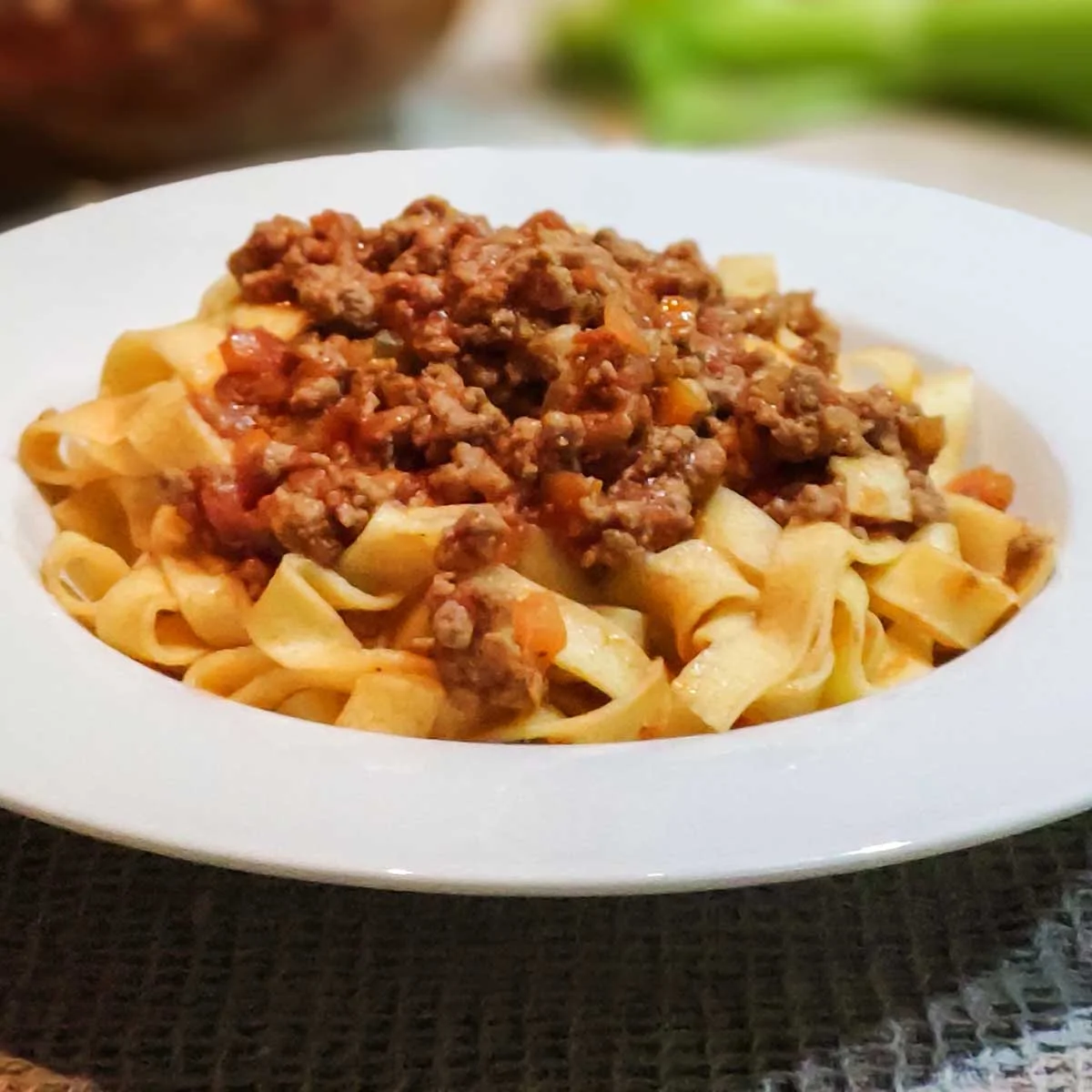
Tagliatelle Bolognese pairs fresh egg pasta with a slowly simmered ragù of beef, pancetta, vegetables and tomato. It is a rewarding weekend dish: the sauce can cook gently while you make the pasta by hand or with a pasta roller.
Ingredients
- 200 g"00" flour
- 200 gsemolina flour
- 4 eggs, at least 70 g eacheggs
- 300 gground beef
- 150 gsliced pancetta or minced pork
- 1 smallcarrot
- 1 stalkcelery
- 300 gtomato passata
- 1 smallonion
- 100 mldry white wine
- 300 mlmeat broth
- 3 tablespoonsextra virgin olive oil
- 100 mlwhole milk
- To tastesalt
- To tastefreshly ground black pepper
- To tastegrated Parmigiano Reggiano
- 1 tablespooncoarse salt, for the pasta water
Instructions
- 1
Prepare vegetables
Cut the carrot, celery and onion into very small pieces and set them aside. Finely chop the pancetta.
- 2
Cook pancetta
Put the chopped pancetta in a saucepan and cook over medium heat for about 3 minutes, stirring occasionally.
- 3
Soften vegetables
Add the olive oil and finely chopped vegetables. Stir and cook over medium heat for about 5 minutes.
- 4
Brown the beef
Add the ground beef, stir and cook over medium heat for about 5 minutes. Pour in the white wine, stir, and let it evaporate.
- 5
Simmer the ragù
Add the passata, cover the pan and simmer for about 2 hours. If the sauce gets too dry, add a little broth. Toward the end, stir in the milk to soften the tomato's acidity, then season with salt and pepper to taste.
- 6
Combine the flours
Sift the two flours and combine them in a bowl. Add the eggs.
- 7
Mix the dough
Using a stand mixer with the flat beater, mix on speed 2 for half a minute.
- 8
Knead the dough
Replace the flat beater with the dough hook and knead on speed 2 for 2–3 minutes, until a single firm ball forms.
- 9
Finish by hand
Dust the work surface with semolina. Take the dough out of the bowl and knead it by hand for 2 minutes.
- 10
Rest the dough
Shape the dough into a ball and wrap it in cling film or a tea towel. Leave it to rest for about 20 minutes, then cut off a piece and flatten it with your hands.
- 11
Start rolling
Fit the pasta sheeter to the stand mixer and set it to level 1. At speed 2, feed the dough through the rollers once.
- 12
Fold the sheet
Fold the dough in half, then fold it in half again.
- 13
Repeat rolling
Flour the dough and pass it through the rollers again. Repeat the pass-and-fold process 3–4 times, until the dough is smooth and elastic.
- 14
Thin the sheets
Stop folding and pass the dough through the smooth rollers at positions 2 and then 3. If a sheet becomes too long, cut it in half.
- 15
Cut tagliatelle
Remove the sheeter and attach the tagliatelle cutter. Run it at speed 1, feeding in the pasta sheet and catching the cut strands with your other hand.
- 16
Shape pasta nests
Gather the tagliatelle and lay them on a tray dusted with semolina. Divide them into portions of about 50 g and coil each portion into a nest.
- 17
Boil the pasta
Bring a pot of water to the boil over high heat and add 1 tablespoon of coarse salt. Add the tagliatelle and cook for 3 minutes from when the water returns to the boil, about 5 minutes in total. If using bought pasta, follow the packet timing.
- 18
Toss and serve
Drain the tagliatelle while al dente and toss with plenty of ragù. Serve with grated Parmigiano Reggiano and extra ragù at the table for anyone who wants more.
What is tagliatelle Bolognese?
Tagliatelle al ragù comes from Emilia-Romagna in northern Italy, where broad ribbons of egg pasta are traditionally served with a slowly cooked meat sauce. The name describes the pairing: tagliatelle pasta with ragù, rather than a separate style of pasta sauce.
This version makes both the pasta and ragù from scratch. The long simmer builds a savoury sauce, while the fresh egg pasta gives it a tender, substantial base.
Nutrition and macros by portion
The nutrition label shows one serving as written: 1141 calories, 45g protein, 120g carbs, 51g fat.
| Portion | Adjustment | kcal | Protein | Carbs | Fat |
|---|---|---|---|---|---|
| Lighter | Less pasta, more greens | 799 kcal | 31g | 84g | 36g |
| This serving | As written | 1141 kcal | 45g | 120g | 51g |
| Hungry | Larger pasta portion | 1712 kcal | 68g | 180g | 77g |
The pasta flours supply most of the carbohydrates, while beef contributes protein and pancetta, olive oil and beef fat account for much of the fat. For a more balanced plate, serve a generous portion of greens alongside the pasta.
Why the ragù starts with pancetta
Pancetta: cooking it first lets its fat render into the pan, bringing flavour to the vegetables and beef that follow.
Soffritto: carrot, celery and onion are chopped very finely so they soften into the sauce rather than remaining as large pieces.
The slow-cooked sauce
Wine: let it evaporate after adding it to the beef; this keeps the sauce from tasting sharply of raw wine.
Broth and milk: add a little broth if the ragù becomes dry during its two-hour simmer. The milk goes in near the end, as directed, to mellow the tomato.
Getting the pasta dough right
Flour blend: "00" flour and semolina combine to make a dough suited to rolling and cutting into ribbons. Sifting them together helps distribute the two flours evenly.
Kneading: aim for one firm ball, then knead it by hand until it feels cohesive. If the dough resists rolling, the resting period gives it time to relax.
Rolling and cutting tagliatelle
Folding: repeated passes and folds at level 1 help make the sheet smooth and elastic. Once it reaches that texture, stop folding and thin it through settings 2 and 3.
Handling: cut a long sheet in half if it becomes awkward to manage. Dust the cut pasta and tray with semolina to help keep the strands from sticking together.
How to judge doneness
Ragù: keep it at a gentle simmer for about 2 hours, checking occasionally and adding broth if it is becoming too dry.
Pasta: begin counting the 3-minute cooking time once the water returns to the boil. Taste a strand before draining; it should be tender but still have a little firmness.
Serving the dish
Toss the drained pasta with plenty of ragù so the sauce coats the ribbons. Bring grated Parmigiano Reggiano and extra sauce to the table.
A simple green salad or cooked greens make a fresh contrast to the rich pasta. Serve them alongside rather than mixing them into the ragù.
Recipe notes & tips
- Chop the carrot, celery and onion very finely so they blend into the ragù as they cook.
- Keep the ragù at a gentle simmer and check it from time to time during the two-hour cook.
- Measure the flour and eggs carefully so the fresh pasta dough starts with the intended proportions.
- Dust the work surface and tray with semolina to make the dough and cut strands easier to handle.
- Cook fresh tagliatelle in salted boiling water and taste it before draining.
- Toss the pasta with the sauce while it is still hot so the ragù clings to the ribbons.
Variations
- Use minced pork: replace the pancetta with the listed minced pork for a different meat texture.
- Use peeled tomatoes: substitute crushed peeled tomatoes for the passata if that is what you have.
- Make the dough by hand: combine the flours and eggs, then knead by hand until a firm dough forms.
- Serve extra cheese: bring additional grated Parmigiano Reggiano to the table for finishing.
- Use bought tagliatelle: cook it according to the timing on its packet and toss it with the ragù.
Common mistakes to avoid
- Chopping the vegetables too coarsely: they may remain distinct in the sauce; cut them into very small pieces.
- Letting the ragù dry out: add a little broth during the simmer when the sauce needs moisture.
- Folding after the dough is smooth: skip further folds and move on to thinning the sheets at settings 2 and 3.
- Handling long sheets in one piece: cut them in half when they become too long to manage comfortably.
- Draining by the clock alone: taste a strand to check that the pasta is al dente before draining.
- Skipping the semolina dusting: coat the tray and pasta lightly to help prevent the strands from sticking.
How to store
Store leftover ragù in an airtight container in the fridge for up to 3 days and reheat it gently in a saucepan. Cooked pasta is best eaten straight away, but leftovers can be refrigerated separately and reheated with a splash of water or broth.
Frequently asked questions
Can I make the ragù ahead?
Yes. Cook it through, cool it promptly and refrigerate it in an airtight container. Reheat gently before tossing it with the pasta.
Can I make the pasta dough without a stand mixer?
Yes. Combine the sifted flours and eggs, then knead by hand until you have a firm dough. Follow the same resting and rolling stages.
What if I do not have a pasta cutter?
Roll the dough into sheets, dust them lightly with semolina, then cut them into ribbons with a sharp knife.
Can I use shop-bought tagliatelle?
Yes. Use the packet's cooking time, then drain the pasta and toss it with the ragù.
Why add milk to the sauce?
The recipe adds milk near the end of cooking to soften the acidity of the tomato. Stir it in toward the end of the simmer.
How do I know when fresh tagliatelle is cooked?
Start with 3 minutes once the water returns to the boil, then taste a strand. Drain when it is al dente.
Cook it from the original
This recipe comes from recipesfromitaly.com. Their page has the author’s own photos, notes and tips — the best place to cook it from.
Open the recipe on recipesfromitaly.com