
Pork Tenderloin with Peppercorn Gravy
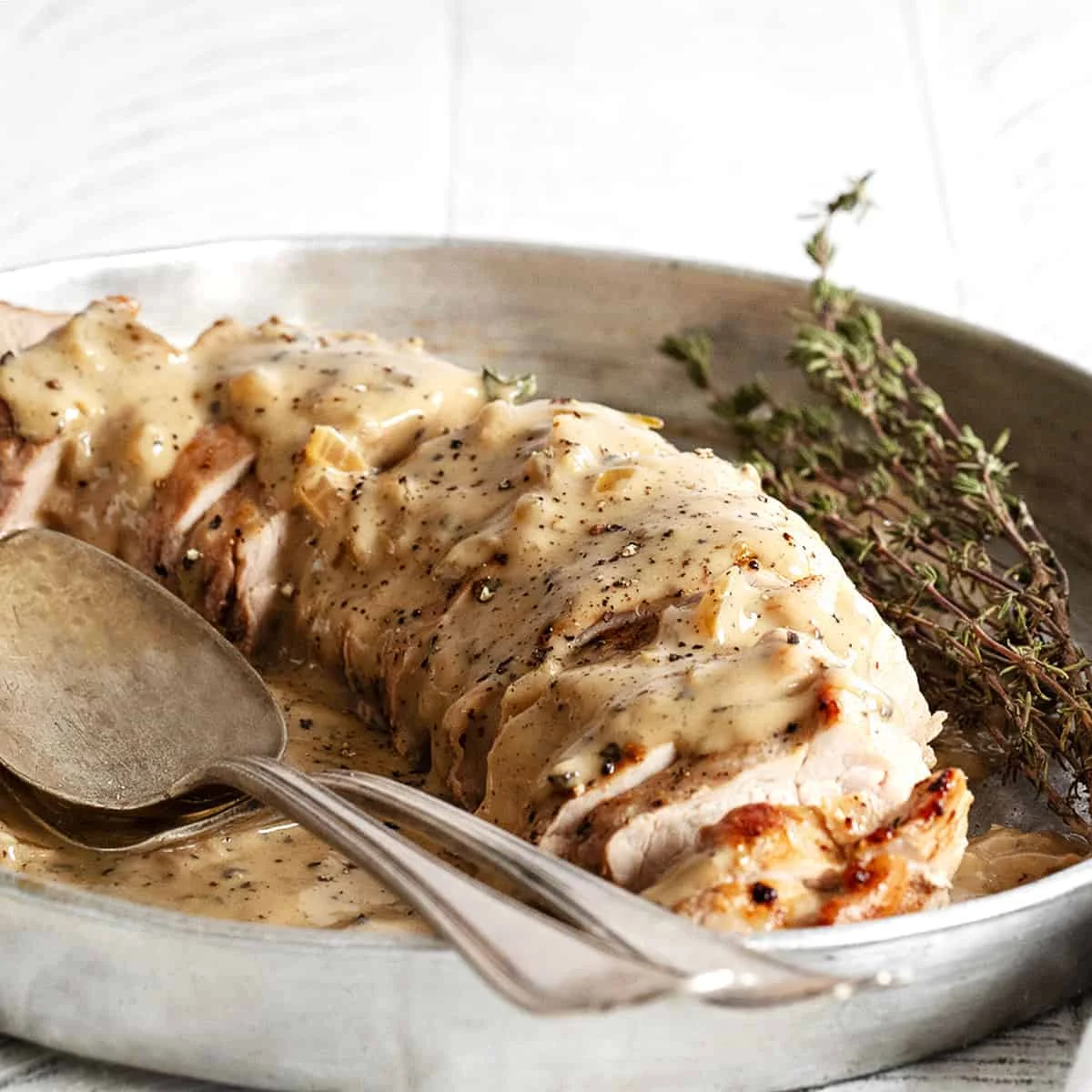
Pork tenderloin is seared, roasted until tender and served with a savoury peppercorn gravy finished with cream. It makes a quick, comforting main course, with the sauce coming together in the same pan as the pork.
Ingredients
- 454–567 g (1–1¼ lb)pork tenderloin, silver skin and visible fat removed
- al gustosalt and freshly ground pepper
- a splasholive oil, for the pan
- 14 g (1 tablespoon)butter
- 40 g (¼ cup)onion, very finely chopped
- 2–3 teaspoonscrushed peppercorns (black, green or red, or a mixture)
- 60–80 ml (¼–⅓ cup)red or white wine, or omit and use a little more broth
- 240 ml (1 cup)chicken or beef broth
- ½ teaspoonDijon mustard
- ½ teaspoonfresh thyme leaves, or a pinch of dried thyme leaves
- 60 ml (¼ cup)heavy whipping cream (35% fat), optional
- to tastesalt and freshly ground pepper
- 16 g (2 tablespoons)cornflour
- 15 ml (1 tablespoon)cold water
Instructions
- 1
Heat the oven
Preheat the oven to 220°C (425°F).
- 2
Prepare the pork
Remove the silver skin and any visible fat from the tenderloin. Season it with some salt and set it aside.
- 3
Sear the tenderloin
Heat an ovenproof frying pan on the hob over medium-high heat. Add a splash of olive oil and let it heat, then add the pork. Turn it as needed until it is seared and golden on all sides.
- 4
Roast the pork
Put the pan with the pork into the preheated oven. Roast for about 20–25 minutes, until the thickest part of the meat reaches 63°C (145°F) on a thermometer.
- 5
Measure the sauce
While the pork cooks, gather and measure the sauce ingredients so they are ready to use.
- 6
Rest the pork
Take the pan out of the oven. Transfer the pork to a chopping board to rest and loosely cover it with a piece of foil.
- 7
Make the gravy
Return the hot pan to the hob over medium-high heat. Add the butter and melt it, scraping up the browned bits from the bottom. Stir in the onion and peppercorns until the onion starts to colour, about 1 minute. Add the wine and cook, stirring, until it has mostly evaporated, about 1 minute. Add the broth, Dijon mustard and thyme. Reduce the heat to medium and simmer the sauce for a few minutes, until the flavours combine and it reduces slightly. If using cream, stir it in and warm the sauce through. Taste and season with salt as needed. In a small bowl, mix the cornflour and cold water until smooth. Stir a little of this mixture at a time into the hot gravy, mixing well after each addition, until it reaches your preferred thickness.
- 8
Slice and serve
Cut the tenderloin into slices and spoon the hot gravy over the top to serve.
What is peppercorn gravy?
Peppercorn gravy is a savoury pan sauce with crushed peppercorns for a warm, aromatic bite. This American-style version is made in the pan used to cook the pork, so the browned bits become part of the sauce.
The tenderloin cooks quickly, while broth, wine, mustard and thyme build the gravy around it. Cream softens the peppery edge, though the sauce can also be made without it.
Nutrition and macros by portion
The nutrition label shows one serving as written: 448 calories, 54g protein, 10g carbs, 18g fat.
| Portion | Adjustment | kcal | Protein | Carbs | Fat |
|---|---|---|---|---|---|
| Lighter | Omit the cream | 314 kcal | 38g | 7g | 13g |
| This serving | As written | 448 kcal | 54g | 10g | 18g |
| Hungry | Add more tenderloin | 672 kcal | 81g | 15g | 27g |
The tenderloin supplies most of the protein, while the wine, broth and cornflour contribute some carbohydrates. Olive oil, butter and optional cream provide most of the fat. For a balanced plate, serve the pork and gravy with vegetables and a moderate portion of potatoes or another starchy side.
Choosing the tenderloin
Silver skin: trim away the thin, tough membrane and any visible fat before seasoning. This helps the tenderloin cook and slice evenly.
Peppercorns: crush them rather than leaving them whole, so their flavour spreads through the gravy. Black, green or red peppercorns—or a mixture—work here.
Searing and roasting
A hot pan helps the pork brown on all sides before it goes into the oven. Turn the tenderloin as needed so it gets an even sear.
Doneness: check the thickest part with a thermometer and take the pork out when it reaches 63°C (145°F). The recipe estimates about 20–25 minutes in the oven, but the temperature is the key cue.
Building the gravy
Pan fond: after removing the pork, scrape the browned bits into the melted butter as you make the sauce. They add savoury depth without needing a separate stockpot.
Wine reduction: let the wine cook until mostly evaporated before adding the broth. If you prefer to leave it out, use a little extra broth instead.
Getting the texture right
Cream: stir it in near the end and warm the sauce through. Leave it out for a non-creamy gravy.
Cornflour slurry: combine the cornflour and cold water until smooth, then add it gradually to the hot sauce. Stop when the gravy is as thick as you like; you may not need all of the slurry.
Resting and serving
Rest the pork loosely covered with foil while you make the gravy. This gives you time to finish the sauce before slicing the meat.
Serve the slices with the hot gravy spooned over them. Potatoes, rice or vegetables make practical sides for catching the sauce and completing the plate.
Recipe notes & tips
- Use an ovenproof frying pan so you can move the seared pork straight into the oven.
- Measure the sauce ingredients while the pork roasts so they are ready when the pan comes out.
- Crush the peppercorns to a coarse texture for noticeable flecks in the gravy.
- Add the cornflour slurry a little at a time and stir thoroughly before adding more.
- Slice the tenderloin after it has rested, then serve it with the gravy while hot.
Variations
- Skip the cream: leave it out for a non-creamy gravy.
- Change the wine: use red or white wine, as preferred.
- Omit the wine: replace it with a little extra broth.
- Mix peppercorns: combine black, green or red peppercorns for a different peppery character.
- Use dried thyme: substitute a pinch of dried thyme leaves for the fresh leaves.
- Choose the broth: make the gravy with chicken or beef broth.
Common mistakes to avoid
- Skipping the trim: remove silver skin and visible fat before seasoning so the meat is ready to cook evenly.
- Crowding the sear: turn the tenderloin as needed to brown it on all sides.
- Guessing doneness: check the thickest part and use 63°C (145°F) as the target temperature.
- Burning the pan bits: scrape them up with the butter rather than leaving them stuck to the pan.
- Adding slurry all at once: stir in the cornflour mixture gradually to avoid making the gravy too thick.
- Slicing straight away: let the pork rest loosely covered with foil before cutting it.
How to store
Refrigerate leftover pork and gravy in a covered container for up to 3–4 days. Reheat gently in a pan or microwave until hot throughout; add a splash of broth if the gravy has thickened.
Frequently asked questions
Can I make the gravy without cream?
Yes. The recipe allows you to omit the cream for a non-creamy sauce.
Can I leave out the wine?
Yes. Omit it and use a little more chicken or beef broth instead.
How do I know when the pork is cooked?
Check the thickest part with a thermometer and cook until it reaches 63°C (145°F). The stated oven time is about 20–25 minutes.
How can I make the gravy thicker?
Mix the cornflour with cold water until smooth, then stir it into the hot gravy a little at a time until it reaches the texture you want.
Which peppercorns should I use?
Use crushed black, green or red peppercorns, or mix them. Choose the type or combination you prefer.
Cook it from the original
This recipe comes from seasonsandsuppers.ca. Their page has the author’s own photos, notes and tips — the best place to cook it from.
Open the recipe on seasonsandsuppers.ca