
Creamy White Wine Pork Tenderloin
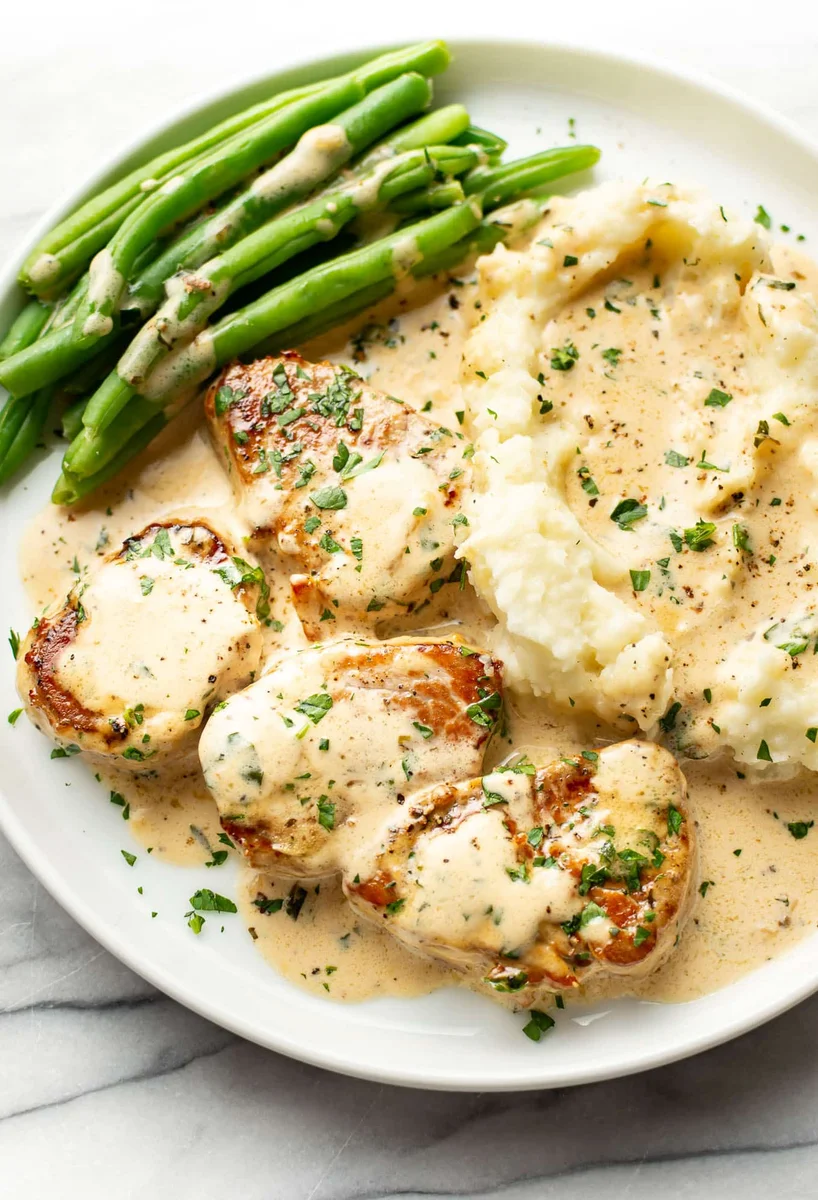
Pork tenderloin rounds are seared and served in a silky white wine and cream sauce flavoured with garlic and Italian herbs. This quick skillet meal brings an elegant sauce to the table in about 30 minutes.
Ingredients
- 454 g (1 pound)pork tenderloin
- to tastesalt and pepper
- 15 ml (1 tablespoon)olive oil
- 15 g (1 tablespoon)butter
- 2 clovesgarlic, minced
- 1.25 ml (1/4 teaspoon)Italian seasoning or Herbs de Provence
- 120 ml (1/2 cup)dry white wine
- 60 ml (1/4 cup)chicken broth
- 180 ml (3/4 cup)heavy or whipping cream
- 5 ml (1 teaspoon)cornstarch
- 15–30 ml (1–2 tablespoons)fresh parsley, chopped
Instructions
- 1
Slice and season
Trim away excess fat and silver skin from the pork, then cut it into rounds about 2.5 cm (1 inch) thick. Season the pieces with salt and pepper.
- 2
Sear the pork
Heat the olive oil and butter in a skillet over medium-high heat for a few minutes. When hot, add the pork, working in two batches if the pan would be crowded, and sear for about 3 minutes per side until lightly golden. Transfer to a plate.
- 3
Reduce the wine
Put the garlic, Italian seasoning, white wine and chicken broth into the skillet. Let the mixture bubble for about 3–5 minutes, until the liquid has reduced by more than half.
- 4
Mix the slurry
In a small bowl, stir the cornstarch into 2 teaspoons of cold water until it has dissolved.
- 5
Add cream
Lower the heat to medium. Pour in the cream and cornstarch mixture, then stir well to combine.
- 6
Finish the pork
When the sauce starts bubbling again, return the pork to the skillet. Simmer for another 3–5 minutes or so, until the pork is cooked through and the sauce has thickened slightly. Adjust the salt and pepper to taste, then scatter over the chopped parsley.
What is creamy white wine pork tenderloin?
This American-style skillet dish pairs slices of pork tenderloin with a creamy pan sauce built from white wine, broth, garlic and herbs. The technique of searing meat and making a sauce in the same pan gives the sauce savoury browned flavours without a long cooking time.
Tenderloin cooks quickly, which makes it a good fit for a 30-minute meal. Reducing the wine before adding cream concentrates its flavour and helps keep the finished sauce from tasting flat.
Nutrition and macros by portion
The nutrition label shows one serving as written: 374 calories, 25g protein, 3g carbs, 27g fat.
| Portion | Adjustment | kcal | Protein | Carbs | Fat |
|---|---|---|---|---|---|
| Lighter | Use less cream | 262 kcal | 18g | 2g | 19g |
| This serving | As written | 374 kcal | 25g | 3g | 27g |
| Hungry | Add potatoes or rice | 561 kcal | 38g | 5g | 41g |
The pork supplies most of the protein, while the cream, butter and olive oil contribute much of the fat. The small amount of carbohydrate comes mainly from the sauce ingredients; serve with a vegetable and a measured portion of potatoes or rice to round out the plate.
Choosing the ingredients
Pork: Tenderloin is lean and small enough to cut into quick-cooking rounds. Trim away the silver skin, which can remain chewy after cooking.
Wine and herbs: Use a dry white wine, rather than a sweet one, and Italian seasoning or Herbs de Provence as listed. Chicken broth adds savouriness while allowing the wine to remain noticeable.
Getting a good sear
Hot pan: Let the skillet heat for a few minutes before adding the oil, butter and pork. The rounds should sizzle when they meet the surface.
Space: Leave room around the pork so it sears rather than steams. If the skillet is crowded, brown the pieces in two batches and transfer them to the plate.
Reducing and thickening the sauce
Wine reduction: Simmer the wine, broth, garlic and herbs until more than half the liquid has evaporated, about 3–5 minutes. This step concentrates the liquid before the cream goes in.
Cornstarch slurry: Dissolve the cornstarch in cold water before adding it to the pan. Stir as the sauce heats, then give it a few minutes to thicken gently.
Checking the pork
Timing: The recipe first sears the rounds for about 3 minutes per side, then simmers them in the sauce for another 3–5 minutes. The exact time depends on the thickness of the slices and how hot the pan is.
Doneness: Check the thickest piece before serving; the pork should be cooked through. Avoid a long simmer, as lean tenderloin can become dry.
Serving the dish
Sauce: Spoon plenty of the creamy wine sauce over the pork when plating. Chopped parsley adds a fresh finish to the rich, savoury sauce.
Sides: Serve with potatoes, rice or bread to catch the sauce, and add a green vegetable or salad for a contrasting, lighter element.
Recipe notes & tips
- Pat the pork dry before seasoning if its surface is damp, so it browns more readily.
- Cut the tenderloin into evenly sized rounds to help them cook at a similar rate.
- Use a broad skillet or sear the pork in batches to avoid crowding.
- Stir the cornstarch into cold water until smooth before pouring it into the pan.
- Taste the sauce after it thickens and adjust the salt and pepper before serving.
Variations
- Use Herbs de Provence: Swap them for the Italian seasoning for a different herbal profile.
- Add mushrooms: Sauté sliced mushrooms in the skillet before adding the garlic and liquids.
- Choose another dry wine: Use a dry white wine you enjoy drinking in place of the one on hand.
- Add lemon: Finish with a little lemon zest for a brighter contrast to the cream.
- Serve with greens: Add steamed green beans or wilted spinach alongside the pork.
Common mistakes to avoid
- Crowding the skillet: The pork may steam instead of sear; brown it in two batches when needed.
- Skipping the reduction: The sauce can taste thin; let the wine and broth reduce by more than half.
- Adding dry cornstarch: It can form lumps; dissolve it in cold water first.
- Boiling the cream hard: The sauce may reduce too quickly; keep it at a gentle simmer.
- Overcooking the pork: Lean tenderloin can dry out; check it as the final simmer approaches 3 minutes.
How to store
Refrigerate leftovers in an airtight container and use within 3 days. Reheat gently in a covered pan over low heat, stirring the sauce; add a small splash of broth if it has thickened too much.
Frequently asked questions
Can I use a different cut of pork?
Pork loin can work if cut into similar-sized pieces, but its thickness and cooking time may differ. Check the pork as it cooks rather than relying only on the timing.
What can I use instead of white wine?
Replace it with additional chicken broth, though the sauce will lose the wine's flavour. Keep the reduction step so the liquid still concentrates.
How do I know when the sauce is thick enough?
It should lightly coat the pork and a spoon rather than remain very runny. It will continue to thicken slightly as it simmers.
Can I make this ahead?
It is best freshly cooked, since reheating can make lean pork less tender. You can prepare the ingredients in advance, then cook the pork and sauce just before serving.
What should I serve with it?
Potatoes, rice or bread work well with the creamy sauce. Add a green vegetable or salad to balance the richness.
Cook it from the original
This recipe comes from saltandlavender.com. Their page has the author’s own photos, notes and tips — the best place to cook it from.
Open the recipe on saltandlavender.com