
Easy Roast Chicken
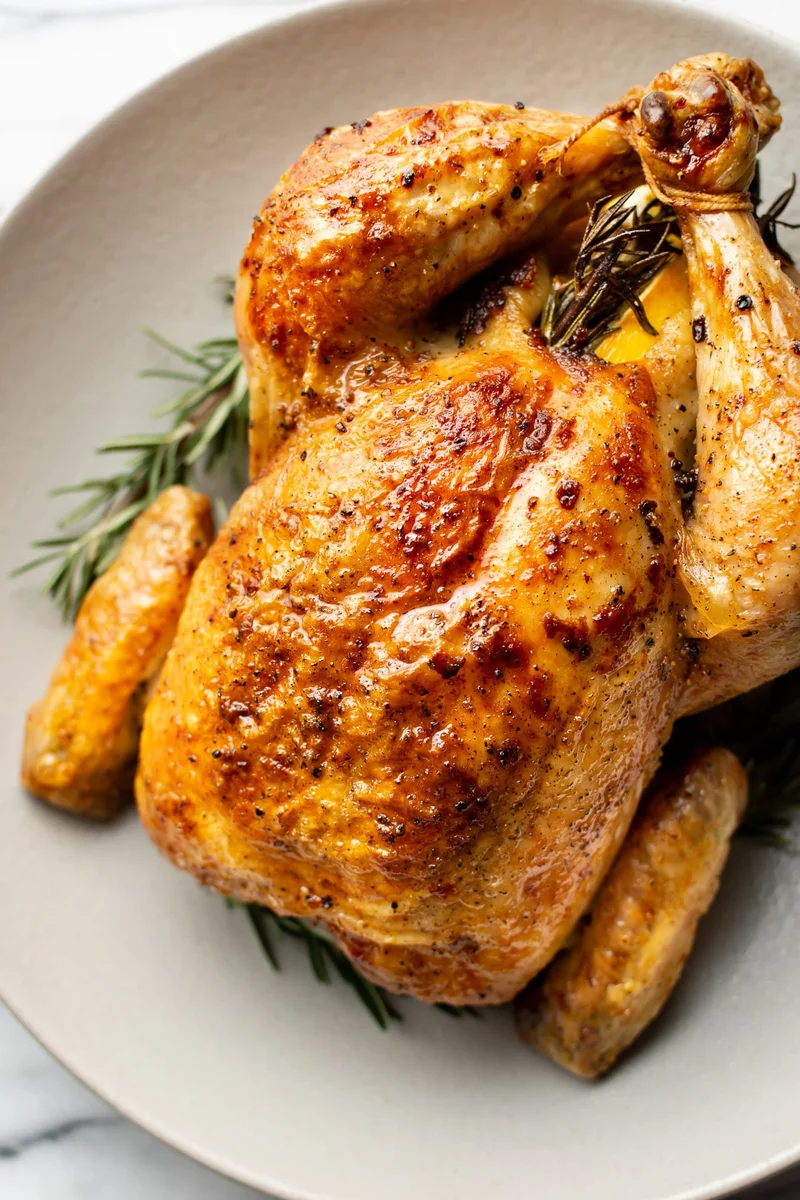
This simple roast chicken is filled with lemon, garlic and rosemary, then covered in melted butter for tender meat and crisp skin. It makes a satisfying centrepiece, with buttery pan juices to spoon over the chicken and its sides.
Ingredients
- 1 whole chicken (1.6–2.7 kg; 3.5–6 lb)whole chicken
- to tastesalt and pepper
- 1lemon, cut into quarters
- 6 clovesgarlic, peeled
- 4 sprigsfresh rosemary
- 60 ml (¼ cup; ½ stick)butter, melted
Instructions
- 1
Heat the oven
Heat the oven to 220°C (425°F) and set the rack in the middle. If possible, take the chicken out of the fridge 30 minutes before you begin. Melt the butter in the microwave or in a small saucepan.
- 2
Dry the chicken
Remove any giblets from the cavity, if present, then pat the chicken dry with kitchen paper.
- 3
Season and fill
Season the chicken generously with salt and pepper, including inside the cavity. Put the lemon quarters, garlic and rosemary inside; it is fine if some of them stick out. If you like, tie the legs together with kitchen twine for more even cooking.
- 4
Add the butter
Set the chicken breast-side up in a roasting tin or dish. A rack in the tin helps the skin crisp all over. Pour the melted butter over the chicken.
- 5
Roast the chicken
Roast a 1.6–1.8 kg (3.5–4 lb) chicken for 55–65 minutes. A 2.3–2.7 kg (5–6 lb) chicken may take up to 1 hour 30 minutes. Do not baste it or open the oven during roasting.
- 6
Check for doneness
The chicken is cooked when there is no visible pink in a cut between the leg and thigh, the juices run clear and the legs move easily when wiggled. These visual checks alone can be unreliable, so for best results use an instant-read thermometer in the thickest part of the thigh, without touching the bone: it should read at least 74°C (165°F). The recipe notes that the thigh becomes tender above 77°C (170°F), while the breast remains moist; the temperature will rise a little after the chicken comes out of the oven.
- 7
Rest and carve
Leave the chicken to rest for 5–10 minutes before carving so the juices can settle. Spoon the buttery juices over the carved chicken and any side dishes.
What is roast chicken?
Roast chicken is a familiar American-style centrepiece: a whole bird seasoned and cooked in the oven until its skin browns and its meat is tender. This version keeps the preparation simple, using lemon, garlic and rosemary in the cavity to flavour the chicken as it roasts.
Butter poured over the skin helps it brown, while the juices left in the tin bring extra flavour to the carved meat. The method relies on a hot oven and a thermometer check rather than frequent basting.
Nutrition and macros by portion
The nutrition label shows one serving as written: 351 calories, 24g protein, 3g carbs, 27g fat.
| Portion | Adjustment | kcal | Protein | Carbs | Fat |
|---|---|---|---|---|---|
| Lighter | Use less butter | 246 kcal | 17g | 2g | 19g |
| This serving | As written | 351 kcal | 24g | 3g | 27g |
| Hungry | Serve a larger portion | 527 kcal | 36g | 5g | 41g |
The chicken provides most of the protein, while the butter contributes much of the fat; the lemon, garlic and rosemary add flavour with relatively little carbohydrate. Balance the plate with vegetables and, if you like, a modest serving of potatoes or another starchy side.
Get the chicken ready
Dry skin: pat the chicken thoroughly with kitchen paper before seasoning. Removing surface moisture gives the skin a better chance to crisp.
Take the chill off: if time allows, leave the chicken out of the fridge for 30 minutes before cooking, as the method suggests. This is a short head start, not a substitute for checking that the bird is cooked through.
Build flavour in the cavity
Lemon and garlic: tuck the quarters and peeled cloves inside the chicken so their aromas mingle with the roasting juices.
Rosemary: add the sprigs alongside the lemon and garlic. There is no need to make everything fit perfectly; the recipe allows some of the filling to stick out.
Butter and crisp skin
Melted butter: pour it over the breast and other exposed areas before roasting. A roasting tin with a rack lets hot air circulate around more of the bird, helping the skin crisp evenly.
Hands off: the method does not call for basting or opening the oven while the chicken roasts. Keeping the oven closed avoids interrupting the cooking.
Check the thickest part
Use a thermometer: insert an instant-read thermometer into the thickest part of the thigh, taking care not to touch the bone. The minimum stated temperature is 74°C (165°F); the recipe notes that the thigh becomes tender above 77°C (170°F).
Allow for carry-over: the temperature can rise slightly after the chicken is removed from the oven. Visual cues such as clear juices and easy-moving legs can help, but the thermometer is the more reliable check.
Rest, carve and serve
Resting: leave the cooked chicken for 5–10 minutes before carving. This gives the juices time to settle rather than running straight out onto the board.
Serve the pan juices: spoon the buttery, lemony juices over the chicken or its side dishes. Roast potatoes, vegetables or a simple salad make natural accompaniments.
Recipe notes & tips
- Pat the skin dry before adding the butter for a better chance of crisping.
- Use a roasting tin with a rack if you want the skin to crisp more evenly.
- Season inside the cavity as well as over the outside of the chicken.
- Keep the oven door closed during roasting, as the method advises.
- Check the thigh with an instant-read thermometer without touching the bone.
- Rest the chicken for 5–10 minutes before carving.
Variations
- Extra herbs: add other fresh herbs alongside the rosemary.
- More garlic: tuck a few extra peeled cloves into the cavity.
- Citrus swap: use another quartered citrus fruit in place of the lemon.
- Pan vegetables: arrange vegetables in the roasting tin to cook alongside the chicken.
- Crispier finish: use a roasting tin with a rack to improve air circulation around the bird.
Common mistakes to avoid
- Wet skin: pat the chicken dry before seasoning so the surface is not damp.
- Guessing doneness: use a thermometer in the thickest part of the thigh rather than relying only on colour or juices.
- Touching the bone: position the thermometer probe in the thigh meat, not against the bone.
- Opening the oven: avoid checking or basting during the roast, as the method calls for leaving the oven closed.
- Carving immediately: rest the chicken for 5–10 minutes first so the juices can settle.
- Forgetting the juices: spoon the buttery liquid from the tin over the chicken and sides.
How to store
Refrigerate leftover chicken in a covered container within 2 hours and use within 3–4 days. Reheat portions until steaming hot throughout; keep the pan juices and spoon them over the meat to help it stay moist.
Frequently asked questions
How long does this roast chicken take?
The recipe gives 55–65 minutes for a 1.6–1.8 kg (3.5–4 lb) chicken, and up to 1 hour 30 minutes for a 2.3–2.7 kg (5–6 lb) bird. Check doneness with a thermometer, since timing varies with the size and oven.
What temperature should the chicken reach?
The recipe specifies at least 74°C (165°F) in the thickest part of the thigh, with the probe clear of the bone. It notes that the thigh becomes tender above 77°C (170°F), and that the temperature may rise a little while resting.
Do I need to baste the chicken?
No. The method says not to baste or open the oven during roasting; the melted butter is poured over the chicken before it goes in.
Should I tie the legs together?
It is optional. The recipe suggests tying them with kitchen twine to help the chicken cook more evenly.
Can I roast the chicken without a rack?
Yes, use a roasting tin or ovenproof dish. A rack is recommended because it helps the skin crisp more evenly.
How long should the chicken rest before carving?
Rest it for 5–10 minutes. Then carve and spoon the buttery juices over the meat or any side dishes.
Cook it from the original
This recipe comes from saltandlavender.com. Their page has the author’s own photos, notes and tips — the best place to cook it from.
Open the recipe on saltandlavender.com