
Risotto alla Milanese
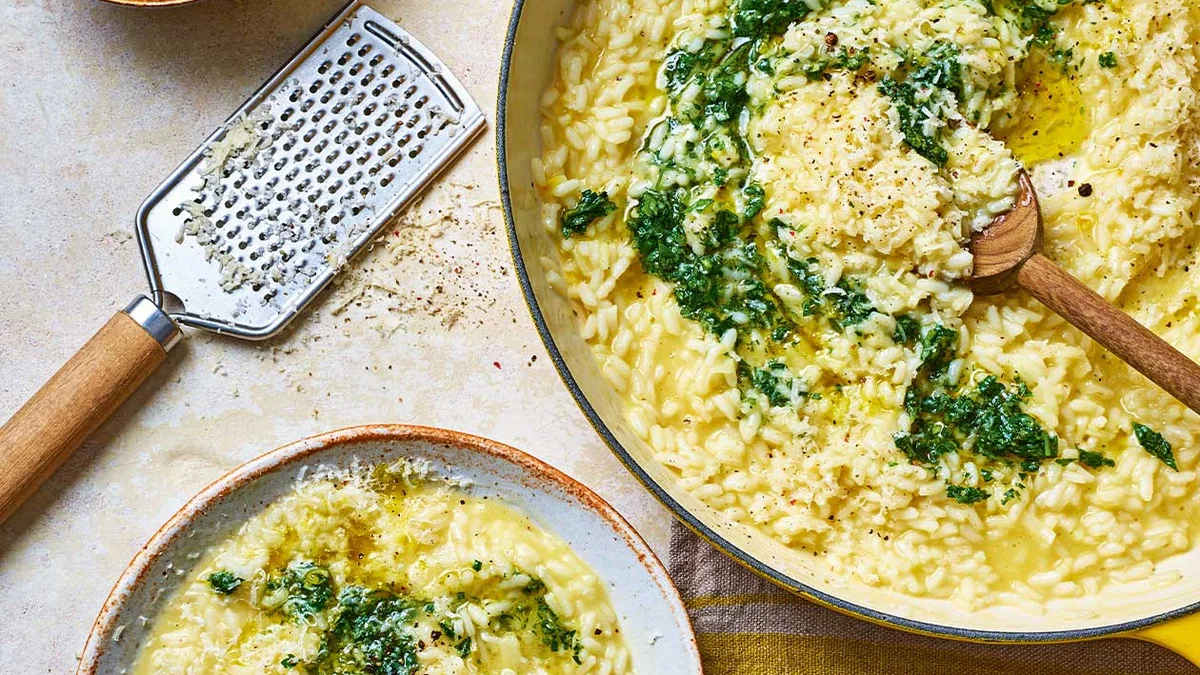
Risotto alla Milanese is a creamy northern Italian rice dish scented with saffron and finished with butter and Parmigiano Reggiano. A bright parsley, garlic and lemon gremolata adds a fresh contrast to its rich, comforting texture.
Ingredients
- 1 x 30 g packflat-leaf parsley
- 2garlic cloves
- zest and juice of 1lemon
- 1 tbspolive oil
- 60 gbutter
- 1 tbspolive oil
- 1 largeechalion shallot, finely chopped
- 300 grisotto rice
- 80 mlwhite wine (such as Soave)
- 1.2 L, made using 2 stock potshot chicken stock
- a large pinchsaffron threads
- 50 g, plus extra to serveParmigiano Reggiano, finely grated
Instructions
- 1
Make the gremolata
Roughly chop the parsley. Grate the garlic over it and add the lemon zest, then chop everything very finely. Transfer to a bowl and mix with the lemon juice and oil. Season to taste, cover and set aside.
- 2
Soften the shallot
Melt half the butter with 1 tbsp oil in a wide sauté pan or deep frying pan over a medium-low heat. Add the shallot and cook for 5–6 minutes until soft but not coloured. Stir in the rice and cook for another minute. Add the wine, raise the heat to medium and let it bubble until mostly evaporated, then turn the heat to low.
- 3
Infuse the saffron
Meanwhile, keep the stock warm in a saucepan over a low heat. Take out two ladlefuls, mix them with the saffron in a small bowl or jug, and set aside.
- 4
Cook the risotto
Add the warm stock to the rice a ladleful at a time, stirring and letting each addition absorb before adding the next. Continue until all the stock has been added and absorbed; this takes about 20 minutes. Stir in the saffron-infused stock until combined, leaving the risotto slightly brothy. Remove it from the heat straight away and stir in the remaining butter and Parmigiano Reggiano. Season to taste.
- 5
Finish and serve
Serve immediately, or cover and leave the risotto to sit for a few minutes if you prefer it firmer. Spoon the gremolata over the top and serve with extra cheese.
What is risotto alla Milanese?
Risotto alla Milanese is a classic rice dish from Milan in northern Italy, known for its golden colour and the aroma of saffron. The rice is cooked gradually with stock until it turns creamy while retaining a little bite.
This version finishes the risotto with butter and Parmigiano Reggiano, then adds parsley, garlic and lemon gremolata. The fresh, zesty topping provides a lively counterpoint to the richness of the rice.
Nutrition and macros by portion
The nutrition label shows one serving as written: 550 calories, 11g protein, 70g carbs, 23g fat.
| Portion | Adjustment | kcal | Protein | Carbs | Fat |
|---|---|---|---|---|---|
| Lighter | Use less finishing butter | 385 kcal | 8g | 49g | 16g |
| This serving | As written | 550 kcal | 11g | 70g | 23g |
| Hungry | Serve a larger portion | 825 kcal | 17g | 105g | 35g |
The rice provides most of the carbohydrates, while butter, olive oil and cheese contribute much of the fat. The stock, rice and cheese provide some protein, with the cheese also adding flavour. Serve it with a green salad or vegetables to balance the plate with something fresh.
The ingredients that shape the dish
Rice: Risotto rice releases starch as it is stirred and cooked, helping create the dish’s characteristic creamy texture. Keep the grains moving as you add the stock, but avoid stirring so vigorously that they break up.
Saffron: A large pinch infuses two ladlefuls of stock, spreading its fragrance and colour through the finished dish. Adding it separately makes it easier to distribute evenly.
Gremolata: Parsley, garlic and lemon bring freshness to each serving. Chop the mixture finely so the flavours meld and it sits neatly on the risotto.
Build the flavour from the base
Shallot: Cook it gently for 5–6 minutes until soft, taking care not to let it colour. This gives the rice a mellow savoury base without distracting from the saffron.
Wine: Let the wine bubble until mostly evaporated before lowering the heat. This leaves its flavour in the pan without making the rice too wet at the start.
Add the stock gradually
Warm stock: Keep the stock in a saucepan over a low heat while the rice cooks. Warm liquid helps maintain a steady cooking process when it is added to the pan.
Ladlefuls: Add stock a little at a time and wait for each addition to be absorbed before adding more. The method takes about 20 minutes once you begin adding the stock.
Look for a creamy finish
Texture: The rice should be creamy and still a little brothy when you add the saffron stock. It should not sit in a stiff mound; the rice will continue to settle as it rests.
Finish: Take the pan off the heat before stirring in the remaining butter and cheese. Serve straight away for a looser texture, or cover it for a few minutes if you prefer it firmer.
Serve it while hot
Topping: Add the gremolata and extra Parmigiano Reggiano just before serving, so the parsley and lemon stay fresh against the hot risotto.
On the side: The recipe is substantial on its own, but you can serve it with a crisp green salad or simply cooked vegetables for a lighter contrast.
Recipe notes & tips
- Warm the stock before adding it so the rice cooks steadily.
- Keep the heat low after the wine has mostly evaporated.
- Stir regularly as the stock goes in to help the rice cook evenly.
- Keep the saffron-infused stock separate until the rice has absorbed the main stock.
- Serve the gremolata at the end to preserve its fresh, lemony flavour.
Variations
- Vegetable stock: Use hot vegetable stock instead of chicken stock for a meat-free version.
- Extra lemon: Add a little more lemon zest to the gremolata for a sharper finish.
- Herb mix: Replace some of the parsley with finely chopped chives for a different fresh note.
- More saffron: Add a few extra threads if you want a more pronounced saffron aroma.
- Gluten-free check: Choose stock labelled gluten-free if you need the dish to meet that requirement.
Common mistakes to avoid
- Browning the shallot: Cook it over medium-low heat and stop when it is soft, before it colours.
- Adding cold stock: Keep the stock warm in a separate saucepan while the rice cooks.
- Pouring in all the stock: Add it a ladleful at a time and let each addition absorb first.
- Overcooking the rice: Start checking the texture as the stock is absorbed and stop when the risotto is creamy with a little bite.
- Stirring in the finish over heat: Remove the pan from the heat before adding the remaining butter and cheese.
How to store
For the best texture, serve the risotto straight away. If you have leftovers, cool them promptly, refrigerate in a covered container and use within 2 days; reheat thoroughly with a splash of water or stock, stirring until steaming hot.
Frequently asked questions
Can I make risotto alla Milanese ahead?
It is best cooked just before serving, as the rice continues to absorb liquid and can become firm. Prepare the gremolata in advance and keep it covered until needed.
Why does the stock need to be hot?
Warm stock keeps the cooking process steady as you add it to the rice. Keep it over a low heat so it stays warm without boiling hard.
How do I know when the risotto is ready?
The rice should be tender with a little bite and the mixture should look creamy and slightly brothy. It takes about 20 minutes to add and absorb the stock.
Can I use a different rice?
Risotto rice is best for the creamy texture this method relies on. Other rice varieties may absorb liquid differently, so the result and cooking time can change.
Can I use vegetable stock instead?
Yes. Hot vegetable stock can replace the chicken stock; follow the same gradual addition method.
Should I cover the risotto before serving?
Serve it immediately for a looser texture. If you prefer it firmer, cover the pan and leave it to sit for a few minutes.
Cook it from the original
This recipe comes from sainsburysmagazine.co.uk. Their page has the author’s own photos, notes and tips — the best place to cook it from.
Open the recipe on sainsburysmagazine.co.uk