
Spaghetti with pesto and ricotta
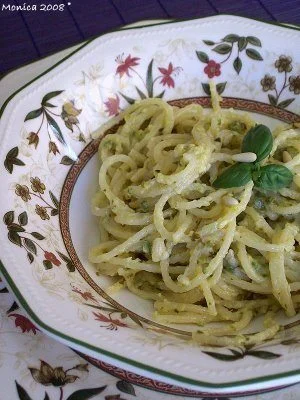
Spaghetti is tossed with a creamy pesto made from ricotta, basil, garlic, olive oil and walnuts. It is a straightforward meal for four, best served as soon as the pasta meets the sauce.
Ingredients
- 5garlic cloves
- 1 cup (about 20 g)basil leaves
- to tastesalt and black pepper
- 200 gricotta
- 120 ml (½ cup)olive oil
- 75 gwalnuts
- 500 gspaghetti
- as neededwater
- to tastesalt
- to tasteoil
- to tastebay leaf
- a few leavesrocket
- to tasteParmesan
Instructions
- 1
Blend the pesto
Put the garlic, basil leaves and a pinch of salt in a blender or food processor and blend to a paste. Add the ricotta, then gradually pour in the olive oil as the mixture turns creamy. Add the walnuts and blend again until finely broken down. Season with salt and pepper and leave the pesto to rest.
- 2
Cook the spaghetti
Bring a large pan of water to the boil with a little salt. The recipe advises against adding oil to the water. Cook the spaghetti until al dente, following the timing on the packet, and stir it occasionally so it does not clump.
- 3
Drain and toss
Drain the spaghetti, then mix it with the pesto.
- 4
Finish and serve
Serve straight away, topped with a little grated Parmesan and, if you like, a few rocket leaves.
What is spaghetti with pesto and ricotta?
Pesto is an Italian-style herb sauce traditionally built around basil, garlic and olive oil. This version blends in ricotta and walnuts, making it creamy and pleasantly nutty.
The method keeps things simple: blend the sauce ingredients, cook the spaghetti until al dente, then toss them together. Rocket and Parmesan are optional finishing touches.
Nutrition and macros by portion
The nutrition label shows one serving as written: 900 calories, 30g protein, 100g carbs, 47g fat.
| Portion | Adjustment | kcal | Protein | Carbs | Fat |
|---|---|---|---|---|---|
| Lighter | Use less olive oil | 630 kcal | 21g | 70g | 33g |
| This serving | As written | 900 kcal | 30g | 100g | 47g |
| Hungry | Add extra spaghetti | 1350 kcal | 45g | 150g | 71g |
Most of the carbohydrates come from the spaghetti, while the olive oil and walnuts provide much of the fat. Ricotta, Parmesan and walnuts contribute protein, though the amounts depend on the cheese used and how much Parmesan is added. Serve with a generous portion of rocket or other vegetables for freshness and balance.
Choosing the pesto ingredients
Basil: Use fresh leaves for the most fragrant sauce, and blend them with the garlic and a pinch of salt until they form a paste.
Ricotta and walnuts: Ricotta gives the pesto its creamy body, while walnuts add a mellow, earthy flavour. Blend the walnuts until finely broken down so they distribute evenly through the sauce.
Getting the sauce texture right
Add the olive oil gradually after the ricotta, blending as you pour. This helps the sauce become smooth and creamy rather than oily.
The pesto should be easy to toss through the pasta. If it seems thick, loosen it with a small splash of the pasta cooking water; add it little by little.
Cooking spaghetti al dente
Follow the packet timing as a guide, then taste a strand near the end of cooking. It should be tender but still have a slight firmness in the centre.
Stir the spaghetti occasionally while it cooks to help keep it from sticking together. The recipe uses salted water and does not call for oil in the pan.
Tossing and serving
Drain the spaghetti and mix it with the pesto while the pasta is hot, so the sauce coats the strands. Serve promptly, before the pasta cools and the sauce firms up.
Finish with grated Parmesan and a few rocket leaves if desired. A crisp green salad or simply dressed vegetables make a fresh side.
Timing the meal
The listed total time is 39 minutes, though the pasta itself cooks according to the timing on its packet. Start the water heating while you prepare the pesto to keep the cooking moving.
The sauce can be blended while the water comes to the boil. Once the pasta is cooked, toss and serve without delay.
Recipe notes & tips
- Blend the garlic, basil and salt into a paste before adding the ricotta.
- Pour in the olive oil gradually while blending to help the pesto turn creamy.
- Check the spaghetti a little before the packet's suggested cooking time is up.
- Stir the pasta occasionally as it cooks to stop it clumping.
- Reserve a little pasta water before draining if you want to loosen the sauce.
- Toss the pesto through the spaghetti just before serving.
Variations
- Use pine nuts: Swap the walnuts for pine nuts for a more traditional pesto-style flavour.
- Add lemon: Blend in a little lemon zest for a brighter, fresher note.
- Try another herb: Replace some of the basil with parsley for a gentler herbal flavour.
- Add vegetables: Toss in cooked peas or spinach when mixing the pasta with the pesto.
- Change the pasta: Use another long pasta shape, such as linguine, and cook it according to its packet.
Common mistakes to avoid
- Adding oil to the cooking water: The recipe does not call for it; use salted water and stir the pasta instead.
- Overcooking the spaghetti: Check it near the packet's suggested time and drain when it is still slightly firm.
- Pouring in all the oil at once: Add it gradually while blending for a more even, creamy sauce.
- Leaving large walnut pieces: Blend the pesto again until the walnuts are finely broken down.
- Letting the finished dish sit: Toss the pasta with the pesto and serve straight away.
How to store
Refrigerate leftovers in a sealed container and eat within 2 days. Reheat gently in a pan with a splash of water, stirring until warmed through; the pasta is best freshly made.
Frequently asked questions
Can I make the pesto ahead?
Yes. Blend it in advance, cover it and keep it refrigerated, then cook and toss the spaghetti just before serving.
How do I know when the spaghetti is al dente?
Use the packet timing as a guide and taste a strand near the end. It should be cooked through but retain a slight firmness.
Can I leave out the walnuts?
Yes, though the pesto will lose some of its nutty flavour and texture. You can leave them out or replace them with another nut if suitable.
What can I use instead of a blender?
A food processor or another suitable chopper works, as the recipe suggests. Blend the ingredients until they form a paste and the walnuts are finely broken down.
Should I add oil to the pasta water?
No. The recipe recommends salted water without oil and advises stirring the pasta occasionally to prevent it sticking together.
Can I use rocket in the dish?
Yes. The recipe suggests a few rocket leaves as an optional garnish, added when you serve the pasta.
Cook it from the original
This recipe comes from saborgourmet.com. Their page has the author’s own photos, notes and tips — the best place to cook it from.
Open the recipe on saborgourmet.com