
Penne Puttanesca (Easy Pantry Recipe!)
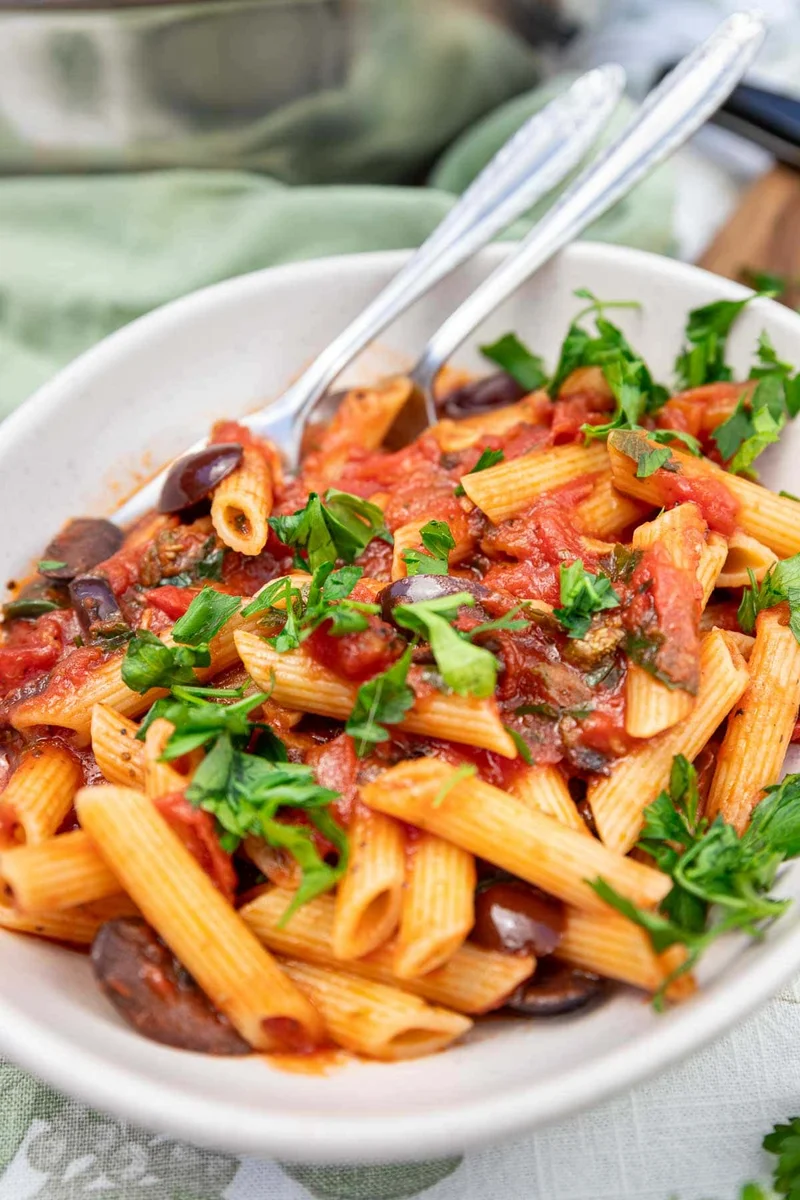
Penne puttanesca is a bold Italian pasta dish with a rich tomato sauce flavoured with anchovies, olives, capers and garlic. It makes a satisfying pantry dinner in about 30 minutes, and the sauce brings plenty of savoury flavour without needing Parmesan.
Ingredients
- 80 ml (⅓ cup)extra-virgin olive oil
- 7 clovesgarlic, thinly sliced
- 800 g (28 oz)chopped tomatoes
- 6anchovies, finely chopped
- 30 ml (2 tablespoons)capers
- about 100 g (⅔ cup)black olives, roughly chopped and preferably pitted
- 1.25 ml (¼ teaspoon)chilli flakes
- 5 ml (1 teaspoon)dried oregano
- 2.5 ml (½ teaspoon)dried basil
- 1.25 ml (¼ teaspoon)black pepper
- about 60 g (1 cup)fresh parsley, washed and chopped, plus extra to serve
- 400 g (14 oz)penne pasta
Instructions
- 1
Warm the aromatics
Heat the olive oil over a medium heat in a large frying pan or other wide pan. Add the sliced garlic and chopped anchovies and cook for 2 minutes, taking care not to brown the garlic.
- 2
Build the sauce
Add the chopped tomatoes, capers, olives, chilli flakes, dried oregano, dried basil and pepper. Half-fill one of the empty tomato cans with water and add it to the pan.
- 3
Simmer until thick
Simmer the sauce for about 20 minutes, until reduced to a rich, silky consistency that is neither watery nor overly thick.
- 4
Cook the penne
Meanwhile, cook the pasta in salted boiling water until al dente, about 11 minutes or following the packet instructions. Drain it.
- 5
Add the parsley
Stir the chopped parsley into the sauce and adjust the seasoning if needed.
- 6
Combine to serve
Stir a generous amount of sauce through only the pasta you plan to eat straight away. There should be enough sauce for about 4 portions in total.
- 7
Serve immediately
Divide into bowls and, if you like, sprinkle over a little extra fresh parsley.
What is penne puttanesca?
Puttanesca is an Italian pasta sauce known for its punchy combination of tomatoes, olives, capers and anchovies. Its name and exact origins are often discussed, but the dish is firmly associated with southern Italian cooking and a practical store-cupboard approach.
This version uses penne, whose ridges and hollow centres catch the sauce. Anchovies melt into the olive oil to give it savoury depth, while parsley adds a fresh finish.
Nutrition and macros by portion
The nutrition label shows one serving as written: 618 calories, 17g protein, 86g carbs, 24g fat.
| Portion | Adjustment | kcal | Protein | Carbs | Fat |
|---|---|---|---|---|---|
| Lighter | Use less olive oil | 433 kcal | 12g | 60g | 17g |
| This serving | As written | 618 kcal | 17g | 86g | 24g |
| Hungry | Add more penne | 927 kcal | 26g | 129g | 36g |
The penne provides most of the carbohydrates, while olive oil supplies much of the fat; the anchovies and pasta contribute protein. For a more balanced plate, serve a portion with a generous side salad or other vegetables.
The flavour base
Garlic and anchovies: Warm them gently in the oil so the garlic softens and the anchovies begin to dissolve into the base. Browning the garlic can make it taste bitter, so keep the heat moderate.
Olives and capers: These bring salty, briny notes that balance the tomatoes. If your olives or capers are particularly salty, taste the finished sauce before adding any extra salt.
Getting the sauce texture right
Tomatoes and water: Adding water from the empty tomato can gives the sauce enough liquid to simmer and reduces waste. The sauce should cook down to a silky coating consistency rather than remain thin or become pasty.
Wide pan: A large surface area helps moisture evaporate as the sauce simmers. Stir occasionally and adjust the heat so it bubbles gently rather than rapidly.
Cooking penne al dente
Pasta water: Bring a pan of salted water to a boil before adding the penne, then cook it for about 11 minutes or according to the packet. Check a piece near the end; it should be tender with a little firmness at its centre.
Drain promptly once it reaches that point. The recipe combines the pasta with sauce just before serving, so it is easy to keep the remaining sauce separate.
When to mix pasta and sauce
Serve-now portions: Stir sauce through only the amount of pasta you are about to eat. This follows the recipe’s approach and helps keep the pasta from sitting in sauce if you are saving the rest.
Final seasoning: Taste the sauce after adding the parsley. The anchovies, olives and capers already contribute saltiness, so make any adjustment carefully.
What to serve alongside
A crisp green salad or simply dressed leaves offer a fresh contrast to the sauce’s salty, rich flavours. Crusty bread also works well for mopping up any sauce left in the bowl.
The recipe is designed to be served without Parmesan, as the anchovies, olives and capers provide plenty of savoury character.
Recipe notes & tips
- Use a wide pan so the sauce can reduce evenly.
- Keep the garlic pale while it cooks with the anchovies.
- Taste before adding extra salt because the olives, capers and anchovies are already savoury.
- Check the pasta a minute or two before the packet’s suggested cooking time.
- Mix sauce into only the pasta you are serving straight away.
Variations
- More heat: Increase the chilli flakes to ½ teaspoon.
- Herb swap: Use mixed Italian herbs in place of the dried oregano and basil.
- Olive choice: Try another pitted black olive variety, roughly chopped.
- Extra freshness: Add a little more chopped parsley just before serving.
- Pasta shape: Use another short pasta shape that can hold the chunky sauce.
Common mistakes to avoid
- Browning the garlic: Keep the heat at medium and cook it gently for 2 minutes with the anchovies.
- Thin sauce: Let it simmer for about 20 minutes, or until reduced to a silky consistency.
- Overcooked penne: Check it near the packet’s suggested time and drain as soon as it is al dente.
- Over-salting: Taste after the sauce has simmered before adjusting the seasoning.
- Mixing all the pasta ahead: Combine sauce only with the portion you are about to eat.
How to store
Refrigerate leftover sauce and pasta separately in covered containers and use within 3 days. Reheat the sauce in a pan until hot, loosening it with a splash of water if needed; reheat the pasta with a little water or combine it with hot sauce.
Frequently asked questions
Can I use a different pasta shape?
Yes. Choose a short pasta shape that can hold the chunky tomato, olive and caper sauce.
How can I make the sauce spicier?
Increase the chilli flakes from ¼ teaspoon to as much as ½ teaspoon, as suggested in the recipe.
Do I need to rinse the capers?
The recipe does not specify rinsing them. If yours taste especially salty, you can rinse and drain them before adding, then taste the sauce before seasoning.
Can I make the sauce ahead?
Yes. Make the sauce ahead and refrigerate it in a covered container, then reheat it thoroughly before serving with freshly cooked pasta.
Why is there no Parmesan?
The anchovies, olives and capers give the sauce plenty of savoury flavour, so Parmesan is not needed for this version.
How do I know when the sauce is ready?
After about 20 minutes of simmering, it should be reduced and silky, without looking watery or becoming overly thick.
Cook it from the original
This recipe comes from scrummylane.com. Their page has the author’s own photos, notes and tips — the best place to cook it from.
Open the recipe on scrummylane.com