
Bread and butter pudding
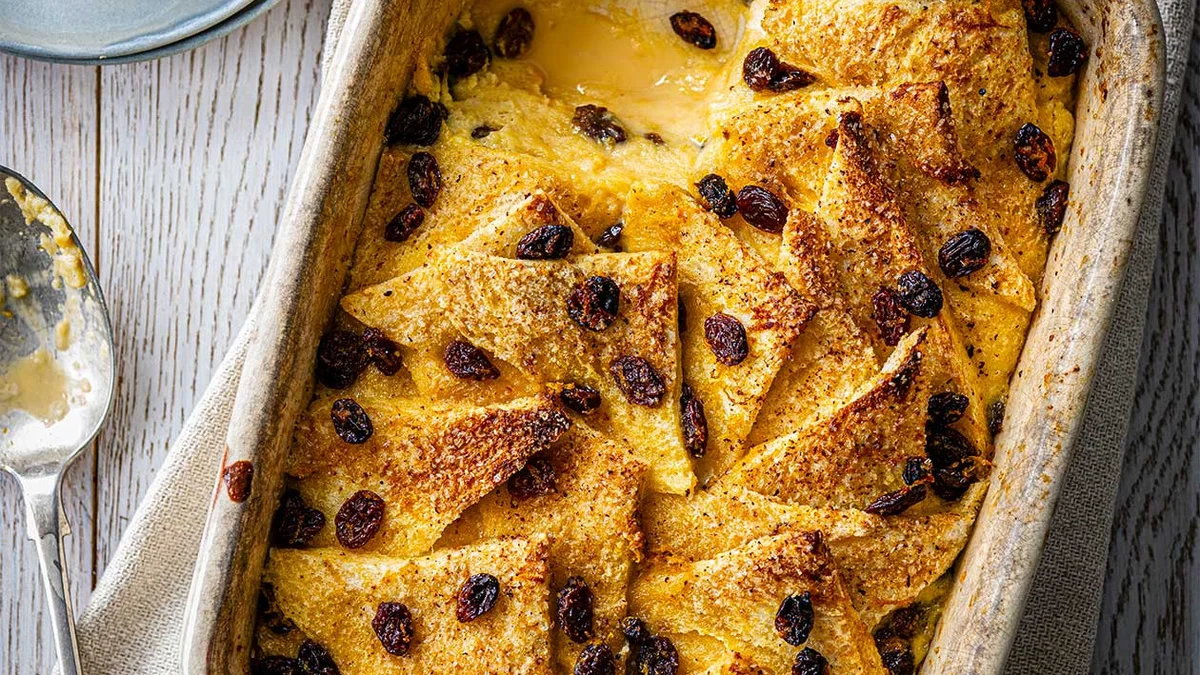
Bread and butter pudding is a British baked dessert made by soaking buttered bread in vanilla custard. It turns slightly stale bread into soft, rich layers with a crisp, sugary top.
Ingredients
- about 75 g, plus extraslightly salted butter, softened, plus extra to grease
- 10 slicesslightly stale thick-sliced white bread
- 100 gsultanas, raisins or currants, or a mixture
- zest of 1orange
- 1 1/2 tbspdemerara sugar
- to gratenutmeg
- optional, to servevanilla ice cream or custard
- 350 mlwhole milk
- 200 mldouble cream
- 1vanilla pod
- 5 mediumeggs
- 45 gcaster sugar
Instructions
- 1
Make the custard
Pour the milk and cream into a saucepan. Split the vanilla pod lengthways, scrape out the seeds, and add both seeds and pod to the pan. Heat until just below boiling, then take off the heat. Whisk the eggs and caster sugar in a bowl, then slowly pour in the warm milk mixture while whisking until smooth. Leave for 20 minutes, then strain through a sieve into a large jug or bowl.
- 2
Layer and soak
Grease an oven dish measuring about 26 cm x 18 cm x 6 cm. Remove the bread crusts, butter one side of each slice, then cut each into 4 triangles. Arrange half the triangles in a roughly overlapping layer in the dish. Mix the dried fruit with the orange zest and scatter about half over the bread. Repeat the layers once. Briefly whisk the custard, pour it over the pudding and gently press the bread to help it soak. Leave for 30 minutes, or cover and soak in the fridge for a few hours.
- 3
Bake until golden
Heat the oven to 180°C, 160°C fan or gas 4. Sprinkle the demerara sugar and a little grated nutmeg over the pudding. Bake for 30–35 minutes, until puffed and golden brown. Leave to stand for 5–10 minutes before serving with ice cream or custard, if you like.
What is bread and butter pudding?
This traditional British pudding layers buttered bread with dried fruit, then bakes it in an egg-and-milk custard. It is a practical way to use bread that has started to go stale.
Here, orange zest and vanilla bring fragrance to the custard, while demerara sugar adds a crunchy finish.
Nutrition and macros by portion
The nutrition label shows one serving as written: 571 calories, 14g protein, 47g carbs, 36g fat.
| Portion | Adjustment | kcal | Protein | Carbs | Fat |
|---|---|---|---|---|---|
| Lighter | Use less butter and cream | 400 kcal | 10g | 33g | 25g |
| This serving | As written | 571 kcal | 14g | 47g | 36g |
| Hungry | Serve a larger slice | 857 kcal | 21g | 71g | 54g |
The bread and sugar provide most of the carbohydrates, while butter, double cream and whole milk contribute much of the fat; eggs add protein alongside some of the dairy. Serve a smaller slice with fresh fruit, or pair it with fruit instead of an additional spoonful of custard or ice cream.
Why slightly stale bread works
Bread choice: Thick-sliced white bread gives the pudding substantial, soft layers. Slightly stale slices absorb custard without breaking down as quickly as very fresh bread.
Butter: Spreading butter on one side of each triangle adds richness and helps the exposed edges turn golden in the oven.
Making smooth vanilla custard
Warm gently: Heat the milk, cream and vanilla until just below boiling, then remove the pan from the heat. Pouring the liquid slowly into the whisked eggs while stirring helps combine them evenly.
Strain: After the 20-minute rest, pass the custard through a sieve to catch the vanilla pod and any small lumps before pouring it over the bread.
Layering and soaking
Fruit layers: Toss the sultanas, raisins or currants with the orange zest, then divide the mixture between the two bread layers so it is spread throughout.
Soaking time: Press the bread gently into the custard, then leave it for 30 minutes before baking. For a longer soak, cover the dish and refrigerate it for a few hours.
When it is ready
Look for a pudding that has puffed up and turned golden brown after 30–35 minutes at 180°C, 160°C fan or gas 4. The centre should be set rather than runny.
Resting: Give it 5–10 minutes out of the oven before serving. The layers settle slightly, and the pudding is easier to portion.
Serving ideas
Serve it warm on its own or add vanilla ice cream or custard for a more indulgent dessert. A little extra orange zest can echo the flavour in the fruit.
The pudding is rich, so a modest portion alongside fresh fruit can make a more balanced dessert plate.
Recipe notes & tips
- Use bread that is slightly stale, rather than fresh and very soft.
- Keep the milk mixture below boiling so it is warm, not bubbling, when added to the eggs.
- Whisk continuously as you pour the warm milk mixture into the eggs.
- Butter the bread before cutting it into triangles to make spreading easier.
- Press the bread gently into the custard to encourage an even soak.
- Let the pudding stand for 5–10 minutes after baking before serving.
Variations
- Mix the dried fruit: Use sultanas, raisins, currants or a combination, as listed in the recipe.
- Add citrus: Swap the orange zest for finely grated lemon zest for a different citrus note.
- Change the spice: Replace the grated nutmeg with a light dusting of cinnamon.
- Prepare ahead: Cover the assembled pudding and leave it to soak in the fridge for a few hours before baking.
- Serve with custard: Spoon warm custard alongside the pudding instead of ice cream.
Common mistakes to avoid
- Using very fresh bread: It can turn too soft; slightly stale thick slices hold their shape better.
- Boiling the milk mixture: Take it off the heat just before it boils so it is ready to combine with the eggs.
- Pouring too quickly: Add the warm mixture gradually while whisking to help keep the custard smooth.
- Skipping the soak: Leave the assembled pudding for 30 minutes so the bread has time to absorb the custard.
- Baking for too long: Check after 30 minutes and take it out when puffed and golden, within the stated 30–35-minute range.
How to store
Cool leftovers, cover and refrigerate for up to 2 days. Reheat portions until hot throughout in a low oven or microwave; the sugary top may soften after storage.
Frequently asked questions
Can I prepare bread and butter pudding ahead?
Yes. Assemble it, cover the dish and leave it to soak in the fridge for a few hours, as described in the method. Add the demerara sugar and nutmeg before baking.
Can I use fresh bread?
Slightly stale bread is best because it absorbs the custard while keeping its structure. Fresh bread can be softer and may give a less distinct layer.
Which dried fruit can I use?
Use sultanas, raisins, currants or any mixture of them, keeping to 100 g in total.
How do I know when it is baked?
It should be puffed up and golden brown after 30–35 minutes at 180°C, 160°C fan or gas 4. Let it stand for 5–10 minutes before serving.
Can I serve it without a topping?
Yes. Ice cream or custard is optional, and the pudding can be served on its own.
Cook it from the original
This recipe comes from sainsburysmagazine.co.uk. Their page has the author’s own photos, notes and tips — the best place to cook it from.
Open the recipe on sainsburysmagazine.co.uk