
Octopus with olive mayonnaise
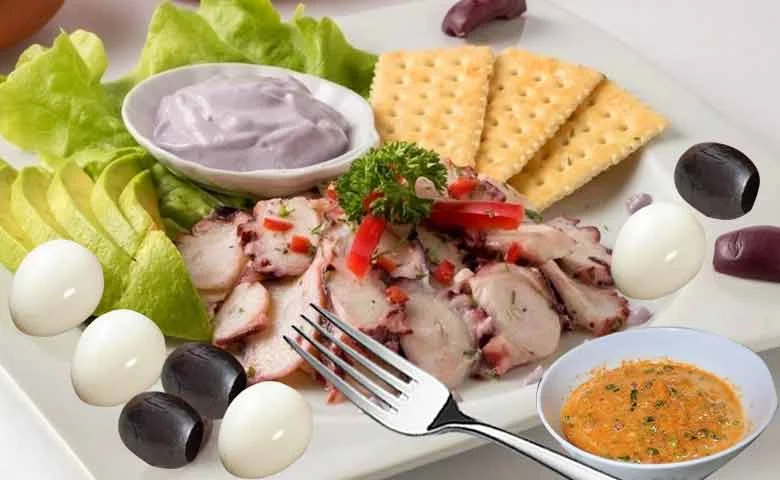
Tender octopus is served on crisp lettuce with a smooth, savoury sauce made from Peruvian botija olives, fresh cheese and mayonnaise. It makes a distinctive seafood starter or light meal, with toast or crackers for scooping up the sauce.
Ingredients
- 1, approximately 1.2 kgoctopus
- 1bay leaf
- 1onion, cut into large pieces
- 1celery stalk
- to tastesalt
- 120 ml (½ cup)pitted black botija olives
- 120 ml (½ cup)mayonnaise
- 120 ml (½ cup)fresh cheese
- 2 tablespoonsevaporated milk
- juice of ½lemon
- to tastepepper
- as neededfresh lettuce leaves
- optionalcooked quail eggs
- as neededsalted crackers or toasted bread
Instructions
- 1
Cook the octopus
Clean the octopus and rinse it thoroughly. Put it in a large pan with enough water to cover, then add the onion, celery, bay leaf and a little salt. Cook over a medium heat for 40–45 minutes, until tender. Lift it out, drain and leave to cool.
- 2
Blend the sauce
Put the black olives, fresh cheese, mayonnaise, evaporated milk, lemon juice and a little pepper in a blender. Blend until smooth and creamy.
- 3
Slice the octopus
Once cool, cut the octopus into thin slices, keeping the tentacles intact where possible for a neat presentation.
- 4
Arrange the platter
Cover a large plate with lettuce leaves. Arrange the octopus slices in a fan shape, then spoon the olive sauce over the top or into the centre so everyone can serve themselves.
- 5
Garnish and serve
Serve with halved cooked quail eggs and salted crackers or toasted bread.
What is Peruvian octopus with olive mayonnaise?
This seafood dish pairs cooked octopus with a creamy sauce based on black botija olives, a variety associated with Peruvian cooking. It is presented on lettuce, with quail eggs and crackers or toast as accompaniments.
The combination works because the octopus has a mild, briny flavour that sits comfortably alongside the olives’ savoury richness. The cheese, mayonnaise and lemon bring the sauce together into a smooth, tangy dressing.
Nutrition and macros by portion
The nutrition label shows one serving as written: 280 calories, 0g protein, 0g carbs, 0g fat.
| Portion | Adjustment | kcal | Protein | Carbs | Fat |
|---|---|---|---|---|---|
| Lighter | Use less olive sauce | 196 kcal | 0g | 0g | 0g |
| This serving | As written | 280 kcal | 0g | 0g | 0g |
| Hungry | Add extra toasted bread | 420 kcal | 0g | 0g | 0g |
The octopus is the main source of protein, while the mayonnaise, fresh cheese and olives contribute much of the dish’s fat. Crackers or toasted bread provide most of the carbohydrates; serve them alongside a generous amount of lettuce to add freshness and balance the plate.
Cooking the octopus until tender
Gentle simmering: the recipe cooks the octopus in water with onion, celery and bay leaf for 40–45 minutes. Check tenderness before draining, as the size of the octopus can affect how long it takes.
Cooling: let the octopus cool before slicing. It is easier to handle, and the tentacles are less likely to break apart.
Making a smooth olive sauce
Olives and cheese: blend the pitted botija olives with fresh cheese, mayonnaise, evaporated milk and lemon juice. Blend until no large pieces remain and the sauce looks creamy.
Seasoning: add pepper and taste the sauce before serving. The olives and mayonnaise can already be savoury, so adjust with a light hand.
Slicing and arranging
Thin slices: cut the cooled octopus into even rounds, taking care to keep the tentacles in attractive pieces. This makes the platter easier to serve and lets the sauce coat each bite.
Sauce placement: spoon the sauce over the octopus or leave it in the centre of the platter. Keeping some octopus visible gives the dish a clean, colourful presentation.
Serving the platter
Lettuce base: fresh leaves add a crisp, cool contrast to the tender octopus and creamy sauce. Arrange them on the plate just before adding the other ingredients.
Accompaniments: serve with halved quail eggs and crackers or toasted bread, as specified in the recipe. The bread or crackers are handy for enjoying any sauce left on the plate.
Timing and preparation
The listed total time is 70 minutes, including 40–45 minutes of cooking. Allow extra time if the octopus needs longer to become tender or to cool sufficiently for slicing.
You can cook the octopus ahead and chill it, then blend the sauce and assemble the platter closer to serving. Keep the components covered and refrigerated while waiting.
Recipe notes & tips
- Rinse the octopus thoroughly before cooking.
- Use a large pan so the octopus can sit comfortably in the water.
- Start checking tenderness near the end of the 40–45-minute cooking time.
- Blend the sauce until fully smooth for an even coating.
- Slice the octopus only after it has cooled.
- Add the lettuce and arrange the platter shortly before serving.
Variations
- More lemon: add a little extra lemon juice for a brighter sauce.
- Coarser sauce: blend briefly and leave some small olive pieces for texture.
- Extra garnish: arrange additional halved quail eggs around the platter.
- Bread option: serve with toasted bread instead of salted crackers.
- Sauce on the side: serve the olive mayonnaise in a bowl for dipping.
Common mistakes to avoid
- Slicing while hot: the octopus is harder to handle; let it cool first.
- Stopping before tender: give it more time in the simmering water and check again.
- Over-blending in bursts: uneven pieces can remain; blend until the sauce is consistently smooth.
- Adding too much seasoning: olives can be quite savoury; taste before adding more salt.
- Dressing too early: the lettuce can lose its crispness; assemble the platter near serving time.
How to store
Refrigerate leftover octopus and sauce separately in covered containers and use within 1–2 days. Serve chilled or bring briefly to cool room temperature; avoid reheating the assembled platter, as the lettuce and mayonnaise-based sauce are best served cold.
Frequently asked questions
How can I tell when the octopus is tender?
Check a thicker part with a knife or fork near the end of the cooking time. It should be easy to pierce; if it is still firm, continue cooking and check again.
Can I cook the octopus ahead?
Yes. Cook and cool it, then keep it covered in the fridge until you are ready to slice and assemble the platter.
Can I make the olive sauce without a blender?
A blender gives the smoothest result. Without one, finely chop or mash the olives and mix them thoroughly with the other sauce ingredients.
Do I have to use botija olives?
They give the sauce its distinctive Peruvian olive flavour. If they are unavailable, use another pitted black olive, knowing that the taste may differ.
Can I leave out the quail eggs?
Yes. They are optional, so the platter can be served without them.
What should I serve with the octopus?
The recipe suggests salted crackers or toasted bread. Fresh lettuce and the optional quail eggs complete the platter.
Cook it from the original
This recipe comes from recetascocinaperuana.com. Their page has the author’s own photos, notes and tips — the best place to cook it from.
Open the recipe on recetascocinaperuana.com