
Torta della Nonna (Italian Grandma's Cake Recipe)
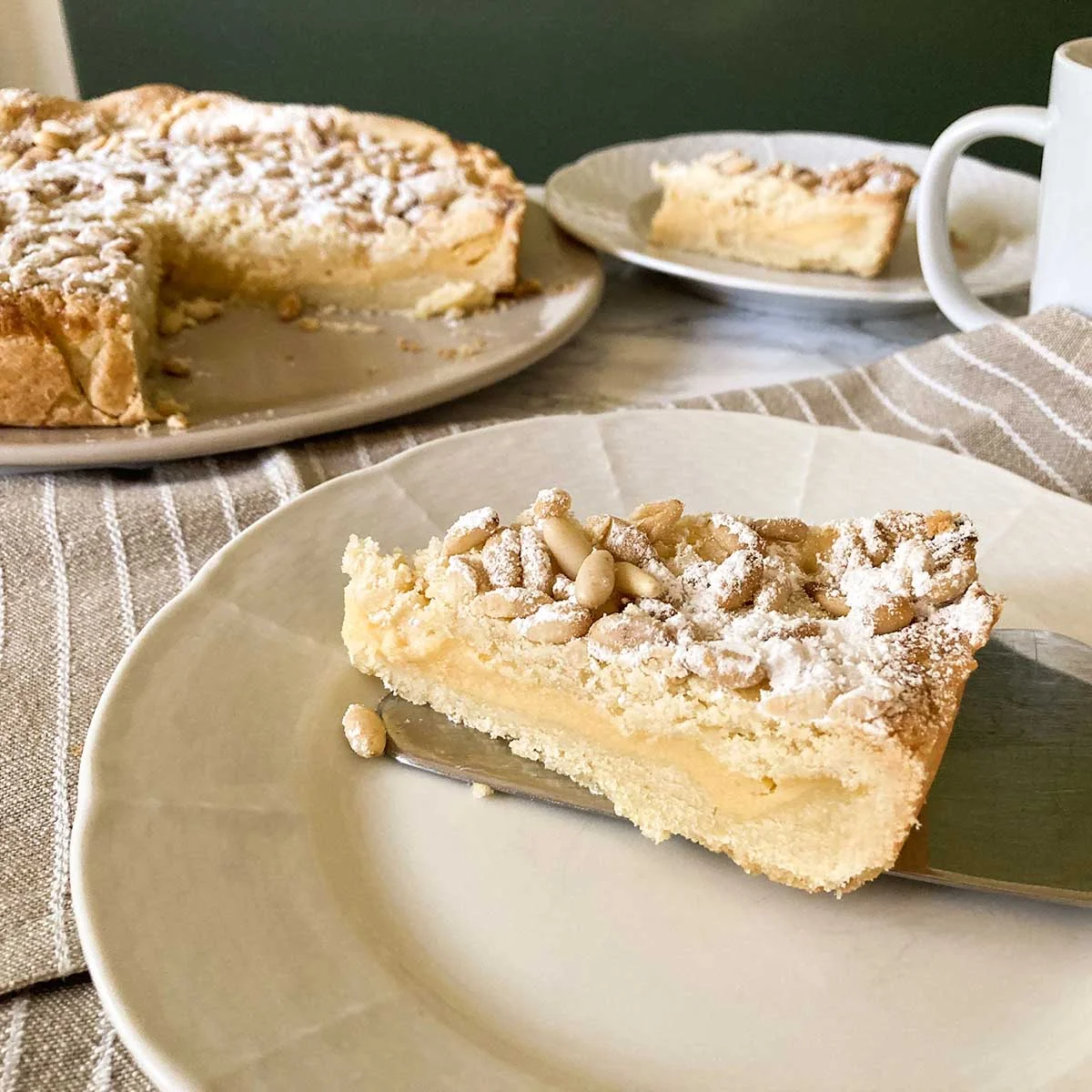
Torta della Nonna is an Italian custard tart with a tender shortcrust pastry shell, a layer of pastry cream and a pine nut topping. It makes a generous centrepiece for a family meal or an afternoon coffee.
Ingredients
- 250 g, plus extra for the work surfaceplain flour
- 100 ggranulated sugar
- 120 g, coldunsalted butter
- 1, at room temperatureegg
- 1, at room temperatureegg yolk
- 1/6 teaspoonsalt
- 1/2 teaspoonbaking powder
- Zest of 1/2lemon
- 4egg yolks
- 100 ggranulated sugar
- 40 gplain flour
- 500 mlmilk
- 1/2 teaspoon, or zest of 1/2 lemonvanilla bean
- 80 gpine nuts
- 2 tablespoonsicing sugar
Instructions
- 1
Make the pastry
Make a well in the flour on your work surface. Add the sugar, lemon zest if using, salt and room-temperature egg and egg yolk. Mix, then add the cold butter and knead quickly until the dough is smooth and no longer sticky.
- 2
Chill the dough
Shape the pastry into a log, wrap it in cling film and refrigerate for at least 30 minutes.
- 3
Mix the yolks
In a saucepan, stir the egg yolks and sugar together with a wooden spoon. Gradually add the sifted flour.
- 4
Stir the mixture
Continue stirring for about 5 minutes, until blended, then set the pan aside.
- 5
Warm the milk
Heat the milk until it is almost boiling, then take it off the heat. Slowly pour it into the yolk, sugar and flour mixture, stirring constantly.
- 6
Cook the custard
Set the pan over a low heat and cook for another 3–4 minutes, stirring all the time.
- 7
Cool the custard
As soon as the cream has thickened, transfer it to a bowl and cover it with cling film. Chill it in the fridge, or set the bowl in a larger bowl of ice to cool it more quickly.
- 8
Divide the pastry
Line a round baking tin with baking paper; the recipe uses a tart tin about 22 cm across. Take the pastry from the fridge and divide it into two pieces, one about two-thirds of the dough and the other about one-third.
- 9
Roll the base
Dust the work surface with flour and roll out the larger piece to about 4 mm thick. Wrap the smaller piece and return it to the fridge.
- 10
Line the tin
Lay the rolled pastry in the prepared tin. Trim away the overhanging dough with a knife or by pressing a rolling pin along the rim.
- 11
Prick the base
Prick the pastry base with a fork to help prevent it from puffing up during baking.
- 12
Fill the pastry
Stir the chilled pastry cream until smooth and creamy again. Spoon it into the pastry case and level it evenly.
- 13
Add the pastry lid
Roll out the remaining dough to the same thickness and lay it over the custard. Trim away excess pastry, press the edges together to seal, then gently prick the top with a fork.
- 14
Top with pine nuts
Scatter the pine nuts over the whole surface of the tart.
- 15
Bake the tart
Bake in a conventional oven at 170°C for about 45 minutes, until the pine nuts are well toasted.
- 16
Cool and serve
Let the tart cool after baking. Dust generously with icing sugar before serving.
What is Torta della Nonna?
Torta della Nonna, or grandmother’s cake, is a classic Italian tart made with shortcrust pastry and pastry cream. It is associated with Tuscan cooking and is often finished with pine nuts and icing sugar.
This version encloses the custard between two pastry layers. The contrast of crumbly pastry, soft filling and toasted nuts is what makes each slice distinctive.
Nutrition and macros by portion
The nutrition label shows one serving as written: 662 calories, 13g protein, 80g carbs, 33g fat.
| Portion | Adjustment | kcal | Protein | Carbs | Fat |
|---|---|---|---|---|---|
| Lighter | Smaller slice, fruit alongside | 463 kcal | 9g | 56g | 23g |
| This serving | As written | 662 kcal | 13g | 80g | 33g |
| Hungry | Larger slice | 993 kcal | 20g | 120g | 50g |
The pastry and sugar provide most of the carbohydrates, while butter and pine nuts contribute much of the fat. Egg yolks, milk and flour contribute protein, with the eggs and milk doing most of that work. Pair a slice with fresh fruit for a more balanced dessert plate.
A pastry that stays tender
Cold butter: Work it into the dough quickly so it stays cool and the pastry remains tender. Knead only until the mixture comes together and is no longer sticky.
Chilling: Refrigerating the dough for at least 30 minutes firms it up, making it easier to roll and fit into the tin.
Smooth pastry cream
Warm milk: Heat it until nearly boiling, then add it slowly to the yolk mixture while stirring. This gradual addition helps combine the ingredients evenly.
Steady stirring: Keep stirring as the custard cooks over low heat for 3–4 minutes. Transfer it to a bowl as soon as it thickens, then chill it before filling the tart.
Building the tart
Larger pastry piece: Use about two-thirds of the dough for the base and sides, leaving the remaining third for the lid. Roll both pieces to about 4 mm thick.
Sealed edges: Trim the pastry to the tin, add the filling, then press the top and bottom layers together. Pricking both pastry layers helps limit puffing as the tart bakes.
Pine nuts and doneness
Even topping: Scatter the pine nuts over the whole top so they toast as the tart bakes. Keep an eye on their colour towards the end of the cooking time.
Bake: The recipe gives about 45 minutes at 170°C in a conventional oven. The stated visual cue is well-toasted pine nuts; allow the tart to cool before serving.
Serving the tart
Icing sugar: Dust the cooled tart generously just before serving for a classic finish. Cutting it after it has cooled also gives the custard time to settle.
On the side: Serve slices with coffee or tea. For a fuller dessert plate, add fresh fruit alongside.
Recipe notes & tips
- Measure the two pastry portions by eye as roughly two-thirds for the base and one-third for the lid.
- Keep the dough wrapped while chilling the smaller portion so it does not dry out.
- Sift the flour for the custard and add it gradually to help it blend smoothly.
- Pour the warm milk slowly and keep stirring as you do so.
- Stir the cooled custard smooth before spreading it into the pastry case.
- Wait for the tart to cool before adding the icing sugar.
Variations
- Lemon aroma: Use lemon zest in place of the vanilla for a brighter custard.
- Vanilla aroma: Choose vanilla bean instead of lemon zest for a gentler fragrance.
- Citrus pastry: Include the listed lemon zest in the shortcrust dough for extra lemon flavour.
- Fruit on the side: Serve slices with fresh berries or sliced seasonal fruit.
- Coffee pairing: Offer the tart with espresso or another unsweetened coffee.
Common mistakes to avoid
- Overworking the dough: Knead only until it comes together so the pastry stays tender.
- Adding milk too quickly: Pour it in slowly while stirring constantly to help prevent lumps.
- Stopping the stirring: Keep the custard moving over low heat so it cooks evenly.
- Filling with warm custard: Chill the cream before adding it to the pastry case.
- Leaving the edges open: Press the pastry layers together to seal in the filling.
- Serving it straight from the oven: Let the tart cool before slicing so the filling can settle.
How to store
Once cool, cover the tart and keep it in the fridge for up to 3 days. Serve chilled or let a slice come towards room temperature; the recipe does not specify a reheating method.
Frequently asked questions
Can I make the pastry cream ahead?
Yes. Chill it in a covered bowl, as directed, then stir it until smooth again before filling the tart.
How large should the tart tin be?
The recipe uses a round tart tin about 22 cm across.
Can I use vanilla instead of lemon in the custard?
Yes. The recipe lists 1/2 teaspoon of vanilla bean or the zest of 1/2 lemon as alternatives.
Why prick the pastry?
The recipe pricks the base and lid to help stop them puffing during baking.
How do I know when it is baked?
Bake for about 45 minutes at 170°C, until the pine nuts are well toasted.
Does the method say when to use the baking powder?
The ingredient list includes 1/2 teaspoon of baking powder, but the method does not specify when to add it.
Cook it from the original
This recipe comes from recipesfromitaly.com. Their page has the author’s own photos, notes and tips — the best place to cook it from.
Open the recipe on recipesfromitaly.com