
Easy Chicken Cacciatore
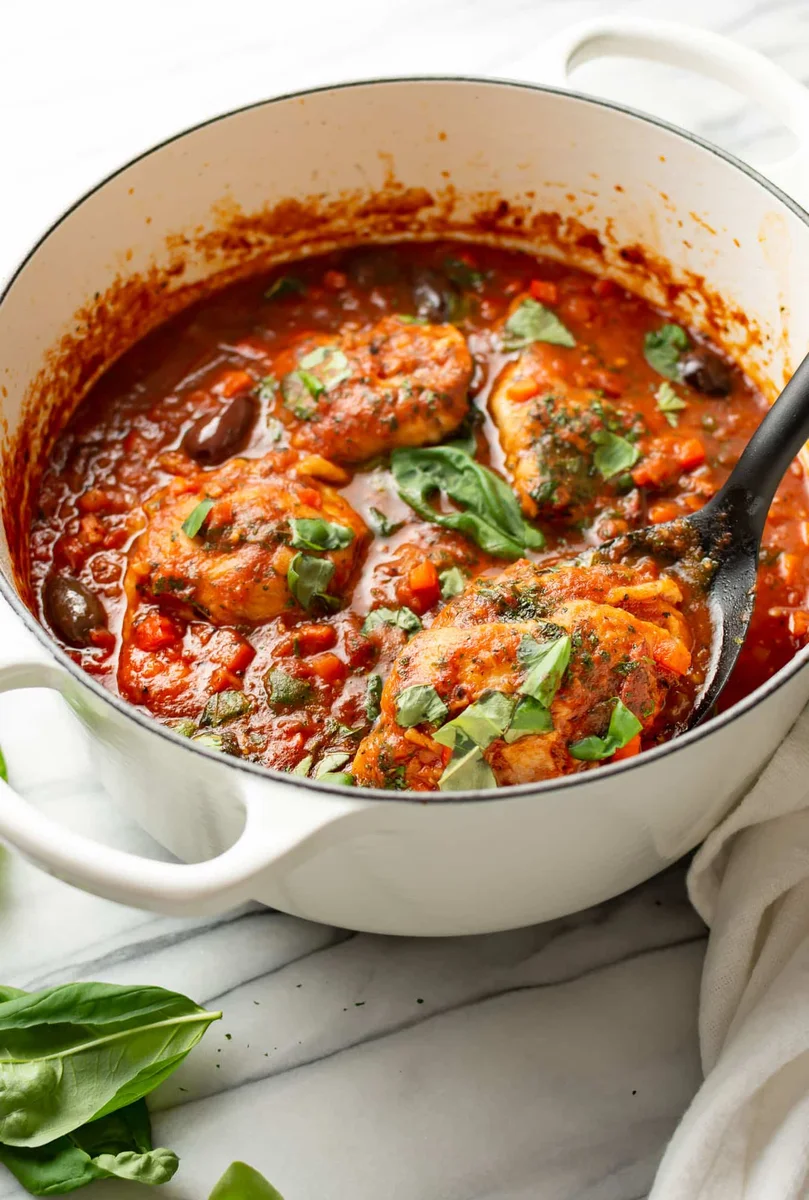
Chicken cacciatore is a rustic Italian-American stew of tender chicken simmered in a savoury tomato sauce with vegetables and herbs. This one-pot version is a comforting choice for a weeknight, with a short simmer that brings the flavours together.
Ingredients
- 6boneless, skinless chicken thighs (see note)
- to tastesalt and pepper
- as needed for dredgingflour
- 15 ml (1 tablespoon)olive oil
- 15 ml (1 tablespoon)butter
- ½ mediumonion, finely chopped
- 1 medium-to-largecarrot, peeled and finely chopped
- 1 mediumred bell pepper, finely chopped
- 6 clovesgarlic, minced
- 125 ml (½ cup)dry white wine or chicken broth
- 794 g (28 oz)tin of fire-roasted crushed tomatoes
- 15 ml (1 tablespoon)fresh thyme leaves
- 2.5 ml (½ teaspoon)dried oregano
- 35 g (¼ cup), or to taste; optionalpitted Kalamata olives
- 15 ml (1 tablespoon)fresh basil, chopped
- 15 ml (1 tablespoon)fresh parsley, chopped
Instructions
- 1
Season and coat
Season the chicken generously with salt and pepper. Coat each piece in flour, then shake off any excess.
- 2
Sear the chicken
Warm the olive oil and butter in a Dutch oven, soup pot or braiser over medium-high heat for a few minutes. Add the chicken and sear for 3–4 minutes per side, until golden, then transfer it to a plate.
- 3
Cook the onion
Add the onion to the pot and cook for 3 minutes.
- 4
Soften the vegetables
Add the carrot and red bell pepper. Cook for 5–7 minutes, stirring occasionally.
- 5
Add the garlic
Stir in the garlic and cook for 30 seconds.
- 6
Add wine and tomatoes
Pour in the white wine and crushed tomatoes, scraping the bottom of the pot to loosen any browned bits.
- 7
Stir in herbs
Mix in the thyme and oregano.
- 8
Simmer the stew
Return the chicken to the pot and spoon some sauce over it. Set the lid slightly ajar, lower the heat and simmer gently for at least 20 minutes, until the carrot is soft and the chicken is tender. Stir halfway through if you like. The sauce will thicken; if it gets too thick, add a splash of wine or chicken broth.
- 9
Finish and season
Taste and adjust the salt and pepper as needed, then stir in the Kalamata olives, basil and parsley.
What is chicken cacciatore?
Cacciatore means “hunter-style” in Italian, and the name is used for rustic preparations of meat cooked with vegetables and herbs. Chicken cacciatore has many regional and family variations, often built around a tomato-based sauce.
This Italian-American take uses fire-roasted crushed tomatoes, sweet vegetables, herbs and optional olives. Browning the chicken first adds savoury flavour to the pot before everything simmers together.
Nutrition and macros by portion
The nutrition label shows one serving as written: 240 calories, 22g protein, 13g carbs, 9g fat.
| Portion | Adjustment | kcal | Protein | Carbs | Fat |
|---|---|---|---|---|---|
| Lighter | Use less butter | 168 kcal | 15g | 9g | 6g |
| This serving | As written | 240 kcal | 22g | 13g | 9g |
| Hungry | Add extra chicken | 360 kcal | 33g | 20g | 14g |
The chicken supplies most of the protein, while the flour, vegetables and tomatoes contribute carbohydrates. Olive oil, butter and chicken account for much of the fat. Serve it with a generous portion of vegetables or salad, and choose a modest serving of pasta, rice or bread to balance the plate.
Why flour the chicken?
Lightly coating the thighs in flour helps them brown in the hot oil and butter. Shake off the excess so the coating does not clump or leave too much flour in the pot.
The browned pieces leave tasty bits on the bottom, which are loosened later with wine or broth and folded into the sauce.
Build the vegetable base
Small, evenly chopped pieces of onion, carrot and pepper soften in the time available and make the sauce easier to spoon over the chicken. Give the carrot and pepper their 5–7 minutes before adding the garlic.
Garlic needs only 30 seconds in the pot before the liquid goes in. Cooking it briefly helps it release its aroma without letting it scorch.
Simmer gently
Once the chicken is back in the pot, keep the heat low and leave the lid slightly ajar. A gentle simmer gives the carrot time to soften and the thighs time to become tender without aggressively reducing the sauce.
The recipe allows at least 20 minutes of simmering; check the vegetables and chicken for tenderness rather than relying only on the clock. If the sauce thickens too much, loosen it with a splash of wine or chicken broth.
Finish with olives and herbs
Stir in the olives, basil and parsley at the end, when the pot is seasoned. Kalamata olives bring a salty, tangy contrast to the tomato sauce, so taste before adding more salt.
The fresh herbs add a brighter finish than the dried oregano, which has already had time to flavour the simmering sauce.
What to serve alongside
Serve the chicken and plenty of sauce with pasta, polenta or crusty bread to catch the juices. For a simpler plate, pair it with steamed potatoes or rice.
A green salad or lightly cooked greens add freshness alongside the rich tomato stew. Spoon the sauce over the side if you want it to share the same flavours.
Recipe notes & tips
- Pat the chicken dry before flouring so the coating adheres evenly.
- Sear the thighs in batches if they crowd the pot.
- Keep the heat low after adding the chicken back so the sauce simmers gently.
- Taste the sauce before adding more salt because the olives can be salty.
- Use chicken broth instead of wine if you prefer not to cook with wine.
Variations
- Add mushrooms: Cook sliced mushrooms with the onion for an earthier sauce.
- Use green olives: Swap the Kalamata olives for another pitted olive you enjoy.
- Add chilli: Stir in a pinch of chilli flakes with the garlic for gentle heat.
- Choose bone-in thighs: Use them for a richer stew and allow extra simmering time until tender.
- Skip the olives: Leave them out for a milder, less briny finish.
Common mistakes to avoid
- Crowding the pot: The chicken may steam instead of browning; sear it in batches.
- Leaving excess flour on: Too much coating can clump in the sauce; shake each thigh well.
- Browning the garlic too long: It can turn bitter; cook it for only 30 seconds before adding liquid.
- Boiling the stew hard: The sauce can reduce too quickly; lower the heat to maintain a gentle simmer.
- Salting before tasting: Olives add saltiness; adjust the seasoning after they are stirred in.
How to store
Cool the stew and refrigerate it in an airtight container for up to 3–4 days. Reheat gently in a covered pan over a low heat, adding a splash of water or broth if the sauce has thickened; it can also be frozen for up to 3 months.
Frequently asked questions
Can I make chicken cacciatore without wine?
Yes. Use chicken broth in the same quantity. It will still help loosen the browned bits from the bottom of the pot.
Can I use bone-in chicken thighs?
Yes, but they may need more simmering time than boneless thighs. Cook until the meat is tender and cooked through.
How do I know when the chicken is done?
The thighs should be tender when pierced and cooked through at the thickest point. The carrot should also be soft before serving.
Can I leave out the olives?
Yes. They are optional, so you can omit them or add them only to individual portions.
What can I serve with chicken cacciatore?
Pasta, polenta, rice, potatoes or crusty bread all work well with the tomato sauce. A green salad or cooked greens make a fresh side.
Cook it from the original
This recipe comes from saltandlavender.com. Their page has the author’s own photos, notes and tips — the best place to cook it from.
Open the recipe on saltandlavender.com