
Easy Beef Stew with Thyme Dumplings
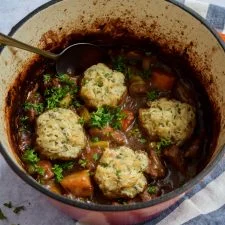
This British-style beef stew pairs slow-cooked beef and vegetables with fluffy thyme dumplings. It is a warming one-pot meal for a cold evening, with red wine and stock adding depth to the gravy.
Ingredients
- 1 large knobunsalted butter
- a splashlight oil
- 400 g (14 oz)cubed beef stewing steak
- 1 heaped tbspplain flour
- to tastesea salt and freshly ground black pepper
- 1leek
- 1brown onion
- 1 largecarrot
- 1 largecelery stick
- 1 smallpotato
- 1 large clovegarlic
- 250 mlchicken or beef stock
- 75 mlred wine
- 1/2 tbspbalsamic vinegar
- 1/2 tspWorcestershire sauce
- 1/2 tbspfresh thyme
- 65 g (2 oz), plus extra for shapingplain flour
- 30 g (1 oz)beef suet
- 1/2 tspbaking powder
- a pinchsalt
- 1 tbspfresh thyme
- 3–4 tbspcold water
Instructions
- 1
Heat and season
Preheat the oven to 180°C (350°F). Warm the butter and a splash of oil in a heavy-based, lidded casserole over a medium-high heat. Season the flour generously with salt and pepper in a shallow dish, then toss the beef in it to coat lightly.
- 2
Brown the beef
Brown the beef in two batches. Transfer each batch with tongs or a slotted spoon to a plate lined with kitchen paper to drain off excess fat.
- 3
Prepare vegetables
Trim the leek and cut it into 2 cm rings. Peel and cut the onion into wedges, and cut the peeled carrot into bite-sized chunks. Trim the celery and cut it into similar-sized pieces, then peel and cube the potato.
- 4
Soften the vegetables
Fry the vegetables in the remaining oil in the pan for 4–5 minutes, until they just begin to soften. Peel and crush the garlic, add it to the pan and cook for a further minute, until fragrant.
- 5
Add the liquids
Pour in a splash of stock and scrape the browned bits from the bottom of the casserole with a wooden spoon. Add the remaining stock, wine, balsamic vinegar, Worcestershire sauce and thyme.
- 6
Cook the stew
Bring the pan to the boil, cover it with the lid and transfer it to the oven. Cook for 1 hour 30 minutes, until the beef and vegetables are tender.
- 7
Mix the dumplings
While the stew cooks, combine the flour, suet, baking powder, thyme and a pinch of salt in a small or medium bowl. Add the cold water gradually, one spoonful at a time, and use an eating knife with a cutting motion to bring the ingredients into a sticky dough.
- 8
Check the stew
Take the stew out of the oven. Add a splash of water if it seems to be drying out; how much moisture remains depends on how tightly the casserole lid fits. Taste and add more salt and pepper if needed.
- 9
Shape the dumplings
Divide the dough into four equal pieces. With lightly floured hands, roll each piece into a small ball and drop them into the stew.
- 10
Bake uncovered
Return the casserole to the oven without its lid for 20 minutes, until the dumplings have puffed up and turned golden. Chopped flat-leaf or curly parsley can be sprinkled over the stew to serve, but it is optional.
What is beef stew with thyme dumplings?
Beef stew is a familiar British-style one-pot meal in which meat and vegetables cook slowly in a savoury liquid. This version adds red wine, stock and herbs to the gravy, then finishes the stew with suet dumplings flavoured with fresh thyme.
The method builds flavour by browning the beef and vegetables before the long oven cook. The dumplings are added near the end, so they cook on top of the stew rather than becoming part of the gravy.
Nutrition and macros by portion
The nutrition label shows one serving as written: 900 calories, 49g protein, 53g carbs, 49g fat.
| Portion | Adjustment | kcal | Protein | Carbs | Fat |
|---|---|---|---|---|---|
| Lighter | Smaller dumpling portion | 630 kcal | 34g | 37g | 34g |
| This serving | As written | 900 kcal | 49g | 53g | 49g |
| Hungry | Serve with mashed potatoes | 1350 kcal | 74g | 80g | 74g |
The beef supplies most of the protein, while the flour, potato and vegetables contribute much of the carbohydrate. Fat comes mainly from the butter, oil and beef suet, with the beef also contributing some. Serve with extra vegetables if you want to balance the plate without adding another large starchy side.
Why brown the beef first?
Beef coating: the seasoned flour gives the cubes a light coating that helps them brown in the hot fat. Work in batches so the meat can fry rather than crowding the pan.
Pan flavour: browned bits left behind are scraped into the stock and wine. They add savoury depth to the liquid as the stew cooks.
Preparing the vegetables
Even pieces: cut the carrot, celery and potato into similarly sized chunks so they cook at a similar pace. The leek is sliced into 2 cm rings, while the onion is cut into wedges.
Garlic: add it after the other vegetables have begun to soften and cook it for just a minute. This gives it time to release its aroma without leaving it to fry for the full vegetable cooking time.
Building the stew's flavour
Cooking liquid: chicken or beef stock both work here, with red wine providing a deeper, rounded note. Balsamic vinegar and Worcestershire sauce bring a little sharpness and savoury character.
Thyme: the stew uses half a tablespoon of fresh thyme, while another tablespoon goes into the dumpling dough. Keeping some in each part gives the herb a presence throughout the dish.
Getting the dumpling dough right
Water: add it gradually, a spoonful at a time, until the mixture comes together as a sticky dough. The recipe gives a range of 3–4 tablespoons, so stop once the dough has formed.
Shaping: divide the dough into four pieces and roll them with lightly floured hands. A little flour on your hands makes the sticky mixture easier to handle.
How to tell when it is ready
Stew: after 1 hour 30 minutes in the oven, the beef and vegetables should be tender. Check the liquid at this point and add a splash of water if it looks as though it is drying out.
Dumplings: bake the stew uncovered for a further 20 minutes. Look for dumplings that have puffed up and turned golden before serving.
What to serve with it
The dumplings make this a substantial meal, and the stew can be served straight from the casserole. Mustard mashed potatoes are another option for catching the gravy, as suggested with the dish.
A glass of red wine suits the flavours, while a little chopped parsley can add a fresh finish. Parsley is optional and can be left out.
Recipe notes & tips
- Brown the beef in two batches to help it colour rather than steam.
- Use a wooden spoon to lift the browned bits into the cooking liquid.
- Cut the vegetables into pieces of broadly similar size for more even cooking.
- Add dumpling water gradually, stopping when a sticky dough forms.
- Check the stew for moisture and seasoning before adding the dumplings.
- Keep the casserole uncovered for the final 20 minutes so the dumplings can turn golden.
Variations
- Stock choice: use chicken or beef stock, whichever you have to hand.
- Wine-free option: replace the red wine with extra stock.
- Herb change: use a little chopped rosemary in place of some of the thyme.
- Parsley finish: scatter chopped flat-leaf or curly parsley over the stew before serving.
- Potato side: serve with mustard mashed potatoes to catch the gravy.
Common mistakes to avoid
- Crowding the beef: it can steam instead of brown; cook it in two batches.
- Adding all the dumpling water at once: the dough may become too wet; add it a spoonful at a time.
- Skipping the pan scrape: browned bits add flavour, so loosen them with a splash of stock.
- Letting the stew dry out: check it before adding the dumplings and add a splash of water if needed.
- Leaving the lid on for the final bake: uncover the casserole so the dumplings can puff and brown.
How to store
Cool leftovers and refrigerate them in a covered container, then eat within 2 days. Reheat thoroughly in a covered pan over a low heat, adding a splash of water if the gravy has thickened; the dumplings may soften after storage.
Frequently asked questions
Can I make this without red wine?
Yes. Replace the 75 ml red wine with extra stock.
Can I prepare the dumplings while the stew cooks?
Yes. The method makes the dumpling dough while the stew is in the oven, then adds it for the final 20 minutes.
How do I know the beef is tender?
After the 1 hour 30 minute oven cook, check that the beef and vegetables are tender. If they are not, continue cooking until they are.
Why are my dumplings sticky?
The dough is meant to be sticky. Flour your hands lightly when shaping the four pieces into balls.
Can I use either chicken or beef stock?
Yes. The ingredient list allows either, so use whichever you prefer or have available.
Can I freeze the leftovers?
The recipe does not give freezing guidance. For best texture, refrigerate leftovers and reheat them thoroughly within 2 days.
Cook it from the original
This recipe comes from rachelphipps.com. Their page has the author’s own photos, notes and tips — the best place to cook it from.
Open the recipe on rachelphipps.com