
White Bolognese Sauce
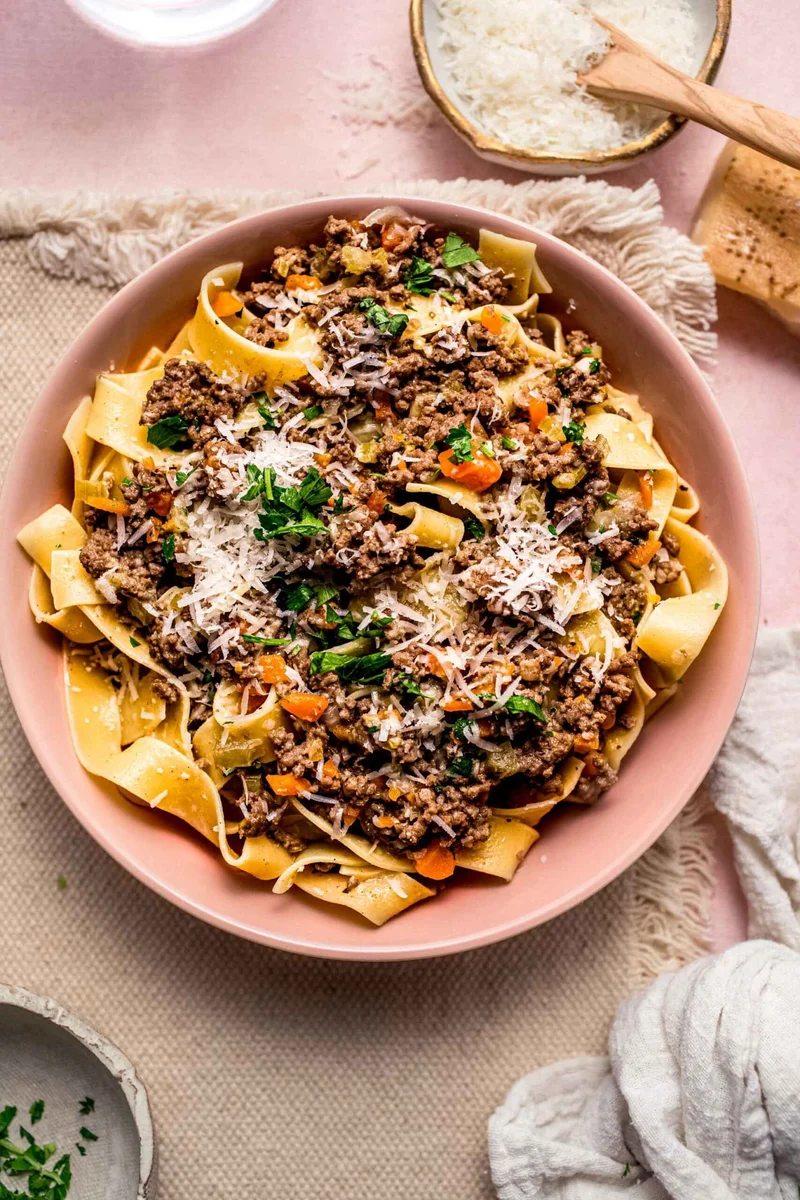
White Bolognese is a slow-simmered meat sauce made with beef, Italian sausage, wine and milk rather than tomatoes. It is a rich, gently spiced topping for pasta, with finely chopped vegetables adding sweetness and depth.
Ingredients
- 30 ml (2 tablespoons)extra-virgin olive oil
- 28 g (2 tablespoons)butter
- 454 g (1 pound)ground beef
- 340 g (¾ pound)sweet Italian sausage, casings removed
- 2 mediumcarrots, finely chopped
- 2 stalkscelery, finely chopped
- ½onion, minced
- 3 clovesgarlic, minced
- 1.25 ml (¼ teaspoon)nutmeg
- 0.6 ml (⅛ teaspoon)allspice
- 1bay leaf
- 360 ml (1½ cups)white wine or dry vermouth
- 240 ml (1 cup)chicken broth
- 240 ml (1 cup)2% milk
- 75 g (¾ cup)grated Parmesan cheese
- 30 ml (2 tablespoons)fresh parsley, chopped
- To tastesalt and pepper
Instructions
- 1
Brown the meat
Heat 30 ml (2 tablespoons) of olive oil in a Dutch oven or large frying pan over medium-high heat. Add 28 g (2 tablespoons) of butter; once the foaming subsides, add the 454 g of ground beef and 340 g of sausage. Break the meat up with a spoon as it cooks.
- 2
Soften the vegetables
Once the meat is browned, add the chopped carrots and celery, minced onion and garlic, bay leaf, nutmeg and allspice. Cover and cook for 10–12 minutes, stirring occasionally, until the vegetables have softened.
- 3
Simmer the sauce
Pour in 360 ml (1½ cups) of white wine and let it boil until it evaporates. Add 240 ml (1 cup) of chicken broth and 240 ml (1 cup) of milk. Bring to the boil, lower the heat and simmer gently for 30 minutes.
- 4
Cook the pasta
Meanwhile, bring a large pan of salted water to the boil and cook the pasta until al dente. Before draining, reserve 240 ml (1 cup) of the cooking water. Drain the pasta, then add it to the sauce with the Parmesan and reserved pasta water.
- 5
Season and serve
Season with salt and pepper to taste. Finish with the chopped parsley and extra Parmesan if desired.
What is white Bolognese?
White Bolognese is a tomato-free take on an Italian meat ragù, built around slowly cooked meat, vegetables and dairy. Here, beef and sweet Italian sausage give the sauce a savoury, substantial base.
Milk softens the sauce while white wine and a little warm spice add dimension. Finishing it with Parmesan and pasta water helps bring the sauce and pasta together.
Nutrition and macros by portion
The nutrition label shows one serving as written: 606 calories, 28g protein, 8g carbs, 45g fat.
| Portion | Adjustment | kcal | Protein | Carbs | Fat |
|---|---|---|---|---|---|
| Lighter | More vegetables, less pasta | 424 kcal | 20g | 6g | 31g |
| This serving | As written | 606 kcal | 28g | 8g | 45g |
| Hungry | Larger pasta portion | 909 kcal | 42g | 12g | 68g |
Most of the carbohydrates come from the pasta, while the beef, sausage, butter, oil, milk and Parmesan contribute much of the fat and the meat and cheese provide protein. Pair a moderate portion with a generous side of vegetables or salad to balance the plate.
Build flavour with the meat
Brown the beef and sausage in the oil and butter before adding the vegetables. Breaking the meat into small pieces as it cooks helps it distribute through the sauce.
Carrots, celery, onion and garlic form the aromatic base. Chop them finely so they soften into the sauce rather than leaving large, firm pieces.
Let the wine reduce
Wine reduction: after pouring in the wine, let it boil until it has evaporated before adding the broth and milk. This concentrates its flavour in the sauce.
Milk simmer: once the liquids come to the boil, turn the heat down and keep the sauce at a gentle simmer for 30 minutes. A low, steady heat helps the mixture thicken without catching.
Look for a cohesive sauce
The finished sauce should be thick enough to cling to the meat and vegetables, but still loose enough to coat the pasta. If it seems too tight when combined, use the reserved pasta water to loosen it.
Cook the pasta only to al dente before adding it to the sauce. It will continue to absorb liquid as it is tossed with the hot sauce and cheese.
Finish with pasta water
Reserved water: take a cup from the pasta pan before draining, as the recipe uses it to help combine the sauce, pasta and Parmesan. Add it with the pasta, then toss everything together.
Parmesan: stir it through at the end so it melts into the sauce. Add parsley and extra cheese at the table if you like.
What to serve alongside
Serve the sauce with the pasta of your choice, as the recipe does not specify a shape. A simple green salad or steamed vegetables make a fresh contrast to the rich meat sauce.
If serving bread alongside, keep portions modest: the sauce and pasta are already filling, and bread is best used to catch any sauce left on the plate.
Recipe notes & tips
- Use a wide, heavy-based pan so the meat browns evenly.
- Stir the vegetables occasionally while they cook covered.
- Let the wine reduce before adding the broth and milk.
- Keep the sauce at a gentle simmer during its 30-minute cooking time.
- Reserve the pasta water before draining, since it is added to the finished sauce.
- Add the Parmesan after the pasta has been drained and mixed with the sauce.
Variations
- Use vermouth: replace the white wine with dry vermouth, as suggested in the ingredient list.
- Adjust the spice: reduce the nutmeg or allspice slightly for a subtler seasoning.
- Add extra vegetables: increase the carrots or celery for a more vegetable-forward sauce.
- Finish with herbs: add a little extra chopped parsley when serving.
- Choose your pasta: use a shape that holds the meat sauce well, cooking it to al dente.
Common mistakes to avoid
- Adding wine too late: let it boil and evaporate before adding the broth and milk.
- Cooking at a high simmer: keep the heat low for the 30-minute simmer so the sauce does not catch.
- Cutting the vegetables too large: chop them finely so they soften into the sauce.
- Overcooking the pasta: stop at al dente, since it will be tossed with hot sauce.
- Forgetting pasta water: reserve 240 ml before draining so you can add it as directed.
- Draining all the pasta water: measure and set aside the reserved cup before pouring the rest away.
How to store
Refrigerate leftover sauce and pasta in an airtight container and use within 3 days. Reheat gently in a pan or microwave until piping hot; add a splash of water if the sauce has thickened. For best texture, store the sauce separately from the pasta when possible.
Frequently asked questions
Can I make the sauce ahead?
Yes. Prepare the sauce ahead, cool it promptly and refrigerate it in an airtight container. Reheat it gently before combining with freshly cooked pasta.
Can I use dry vermouth instead of white wine?
Yes. The recipe lists dry vermouth as an alternative to white wine; use the same amount.
What pasta should I use?
The recipe does not specify a pasta shape. Choose your preferred pasta and cook it until al dente.
Why reserve pasta water?
The method adds the reserved water to the sauce with the pasta and Parmesan. It helps loosen and bring the mixture together.
How do I know when the sauce is ready?
After 30 minutes of gentle simmering, it should be rich and cohesive. Once the pasta and reserved water are added, it should coat the pasta rather than sit separately.
Can I freeze the sauce?
The sauce can be frozen in an airtight container, preferably without the pasta. Thaw it in the fridge and reheat gently, stirring well.
Cook it from the original
This recipe comes from platingsandpairings.com. Their page has the author’s own photos, notes and tips — the best place to cook it from.
Open the recipe on platingsandpairings.com