
Authentic Canadian Poutine
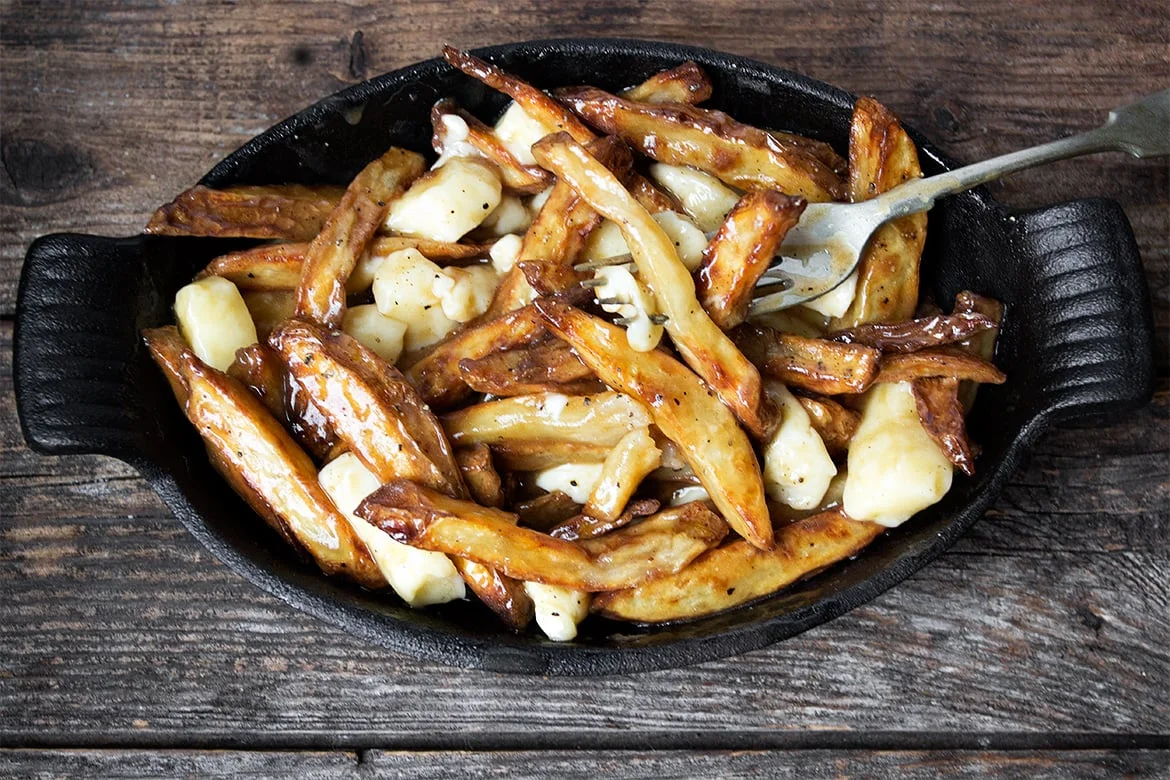
Canadian poutine brings crisp fries together with hot gravy and squeaky white cheddar cheese curds. This version uses a two-stage fry for a golden exterior and a beef-and-chicken gravy that clings to the chips.
Ingredients
- 45 ml (3 Tbsp)cornflour
- 30 ml (2 Tbsp)water
- 85 g (6 Tbsp)unsalted butter
- 30 g (1/4 cup)unbleached plain flour
- 568 ml (20 oz)beef stock
- 284 ml (10 oz)chicken stock
- to tastepepper
- 907 g (2 lbs; 3–4 medium potatoes)Russet potatoes
- as neededpeanut oil or another frying oil
- 240–360 ml (1–1 1/2 cups)white Cheddar cheese curds, or torn pieces of mozzarella
Instructions
- 1
Mix the slurry
In a small bowl, stir the cornflour into the water until dissolved, then set it aside.
- 2
Cook the roux
Melt the butter in a large saucepan. Add the flour and cook, stirring regularly, for about 5 minutes, until golden brown.
- 3
Finish the gravy
Pour in the beef and chicken stock and bring to the boil, whisking as you do. Stir in about half of the cornflour mixture and simmer for around a minute. For thicker gravy, add more slurry a little at a time as needed. Season with pepper, taste and add salt if necessary. Keep warm or make ahead and reheat while preparing the fries.
- 4
Soak the potatoes
For deep-fried fries, cut the potatoes into 1.25 cm (1/2-inch) sticks. Put them in a large bowl, cover completely with cold water and leave for at least 1 hour, or several hours. When ready to cook, heat oil in a deep fryer or a large, wide, heavy-based pot to 149°C (300°F).
- 5
Dry the fries
Lift the potatoes out of the water and lay them on kitchen paper. Blot away as much excess moisture as possible.
- 6
Fry in two stages
Fry the potatoes at 149°C (300°F) for 5–8 minutes, until they begin to cook but have not browned. Lift them out and spread them on a wire rack. Raise the oil temperature to 191°C (375°F); when it reaches that temperature, return the potatoes to the fryer and cook until golden brown. Transfer them to a bowl lined with kitchen paper.
- 7
Coat with gravy
Put the fried or baked fries in a large, clean bowl and season lightly with salt while they are still warm. Add a ladle of hot gravy and toss with tongs. Add more gravy as needed to coat most of the fries.
- 8
Add the curds
Toss the cheese curds with the hot fries and gravy. Finish with freshly ground pepper and serve immediately.
What is poutine?
Poutine is a Canadian dish associated with Quebec, built around fries, gravy and cheese curds. The hot gravy softens the curds slightly while leaving their characteristic springy texture.
This version makes a savoury gravy from beef and chicken stock, then coats the fries just before serving. That last-minute assembly helps preserve some crispness.
Nutrition and macros by portion
The nutrition label shows one serving as written: 528 calories, 10g protein, 70g carbs, 24g fat.
| Portion | Adjustment | kcal | Protein | Carbs | Fat |
|---|---|---|---|---|---|
| Lighter | Use less gravy and cheese | 370 kcal | 7g | 49g | 17g |
| This serving | As written | 528 kcal | 10g | 70g | 24g |
| Hungry | Add more fries | 792 kcal | 15g | 105g | 36g |
The potatoes and flour provide most of the carbohydrates, while butter and frying oil contribute much of the fat. The stock and cheese curds supply protein, with the cheese also adding fat. For a more balanced plate, serve a portion alongside a generous helping of vegetables or salad.
The gravy’s foundation
Roux: Cooking the butter and flour for about 5 minutes develops a golden base for the gravy. Stir regularly so it colours evenly without catching.
Stock: Beef and chicken stock combine for a rounded savoury flavour. Whisk as you pour them in to help keep the gravy smooth.
Getting the gravy thickness right
Slurry: The cornflour and water are mixed separately so the starch can be added without dry lumps. Start with about half, simmer for a minute, then add more in small increments if needed.
Final check: The gravy should coat the fries rather than run straight to the bottom of the bowl. Taste it before serving and adjust the pepper and salt as needed.
Why soak and fry twice?
Soaking: The cut potatoes rest in cold water for at least an hour. Drying them thoroughly afterwards is important, especially before they go into hot oil.
Two stages: The first fry at 149°C cooks the potatoes without browning them. The second, hotter fry at 191°C gives them a golden exterior.
Choosing the potatoes and cheese
Potatoes: Russets are specified for this recipe and are cut into 1.25 cm sticks. Keep the pieces fairly even so they cook at a similar pace.
Curds: White Cheddar cheese curds give the dish its classic bite. Torn mozzarella is offered as a substitute if curds are unavailable, though its texture will differ.
Timing the final assembly
Keep the gravy hot while the fries finish cooking, then season the fries as soon as they leave the oil. Toss them with gravy while warm so they are coated before the cheese goes in.
Serve straight away after adding the curds and pepper. Waiting gives the fries more time to soften under the gravy.
What to serve alongside
Poutine is filling on its own, but a crisp green salad or lightly dressed slaw can provide a fresh contrast. Serve either alongside rather than underneath, so the fries stay as crisp as possible.
For a larger spread, offer it as a shared side with grilled or roasted savoury dishes. Keep extra hot gravy nearby for anyone who wants more.
Recipe notes & tips
- Cut the potatoes into even 1.25 cm sticks so they cook at a similar rate.
- Blot the soaked potatoes thoroughly before frying to remove surface water.
- Use a thermometer to check that the oil reaches 149°C for the first fry and 191°C for the second.
- Add the cornflour slurry gradually so you can stop when the gravy reaches the thickness you want.
- Keep the gravy hot while the fries finish cooking, then assemble just before serving.
Variations
- Mozzarella swap: Use torn mozzarella pieces if white Cheddar curds are unavailable.
- Baked fries: Use baked fries in place of the deep-fried fries, as allowed in the assembly method.
- Pepper finish: Add freshly ground pepper at the table for a more pronounced peppery finish.
- Extra gravy: Serve additional hot gravy on the side for diners who prefer a more heavily coated portion.
Common mistakes to avoid
- Wet potatoes: Excess water can make frying hazardous; blot the sticks thoroughly before adding them to the oil.
- Skipping the soak: The method calls for at least an hour in cold water; allow that time before frying.
- Rushing the first fry: Do not wait for browning at 149°C; remove the fries after 5–8 minutes when they have just started to cook.
- Adding all the slurry at once: Start with about half and add the rest in small increments to avoid making the gravy too thick.
- Assembling too early: Toss the fries with gravy and curds just before serving so they do not sit and soften.
How to store
Store leftover fries, gravy and cheese separately in covered containers in the fridge and use within 2 days. Reheat the gravy in a saucepan and warm the fries in an oven until hot; assemble just before eating, though the fries will not be as crisp as freshly made.
Frequently asked questions
Can I make the gravy ahead?
Yes. The method allows the gravy to be made ahead; keep it warm or reheat it before the fries are ready.
Can I use mozzarella instead of cheese curds?
Yes. The recipe suggests torn chunks of mozzarella as the closest substitute, though they will not have the same curd texture.
Do the potatoes really need to soak?
The method calls for soaking them in cold water for at least an hour, or several hours. Drain and blot them thoroughly before frying.
How do I know when the gravy is thick enough?
It should coat the fries rather than immediately run off. Add the slurry gradually and stop when it reaches the consistency you prefer.
Can I bake the fries instead?
The assembly step allows fried or baked fries. The recipe does not give baking instructions, so prepare them using your preferred method and add the hot gravy and curds while they are warm.
Why are the fries fried twice?
The first fry at 149°C cooks the potato sticks without browning them. The second fry at 191°C cooks them until golden.
Cook it from the original
This recipe comes from seasonsandsuppers.ca. Their page has the author’s own photos, notes and tips — the best place to cook it from.
Open the recipe on seasonsandsuppers.ca