
Slow-braised beef and ale stew
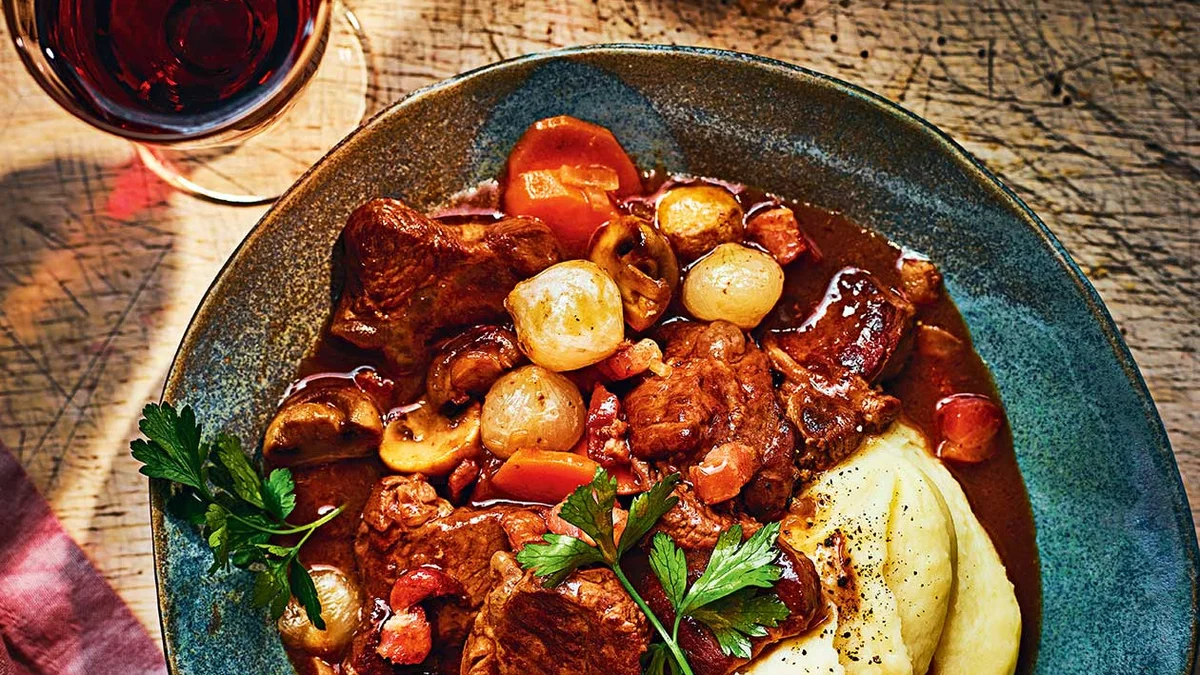
A slow-braised British beef stew with ale, bacon, root vegetables and mushrooms, cooked until the beef is tender and the gravy is rich. It takes time in the oven, but most of the cooking is hands-off, making it a comforting centrepiece for a meal with guests.
Ingredients
- 2–3 tbsprapeseed oil
- 1 x 160 g packsmoked bacon lardons
- 1.5 kgdiced beef shin
- 2 largecarrots, sliced into rounds
- 2echalion shallots, diced
- 3 clovesgarlic, crushed
- 6 sprigsparsley
- 500 mlmalty English ale, such as porter or stout
- 450 mlrich beef stock
- 1 tbsptomato purée
- 2bay leaves
- 60 gunsalted butter
- 3 tbspplain flour
- 200 gbutton mushrooms, halved
- 1 x 230 g jar (drained weight)silverskin onions
- to tastecreamy mashed potatoes (optional)
Instructions
- 1
Heat the oven
Preheat the oven to 160°C, 140°C fan or gas mark 3. Warm 1 tablespoon of oil in a large flameproof casserole or ovenproof sauté pan over medium heat. Fry the bacon lardons for about 8–10 minutes until crisp and golden, then lift them onto a plate with a slotted spoon.
- 2
Brown the beef
Turn the heat up to high and brown the beef in the bacon fat in 3–4 batches, allowing about 5 minutes per batch. Add another tablespoon of oil if needed. Season well and set the beef aside.
- 3
Build the stew
Lower the heat and cook the carrots and shallots for 5 minutes, until softened. Add the garlic and cook for a further 5 minutes. Separate the parsley stalks from the leaves, keeping the leaves for garnish. Pour in the ale and scrape the base of the pan, then add the stock, tomato purée, bay leaves and parsley stalks. Return the bacon, beef and any resting juices to the pan, and gradually bring the mixture to a simmer.
- 4
Thicken and braise
While the stew comes to a simmer, melt the butter in a separate small pan and stir in the flour to make a roux. Cook for 5 minutes, stirring, then mix it into the stew. Cover with a lid and cook in the oven for 2 hours.
- 5
Add the mushrooms
Towards the end of the first cooking time, heat the remaining oil in a frying pan. Cook the mushrooms and silverskin onions over medium-high heat for about 8–10 minutes, until golden and their liquid has evaporated. After 2 hours, take the stew out of the oven and stir them in. Return it to the oven uncovered for 20 minutes. Leave the stew to stand for 5–10 minutes, remove the bay leaves and parsley stalks, then scatter over the reserved parsley. Serve with creamy mashed potatoes if you like.
What is beef and ale stew?
This is a British-style braise: beef shin is cooked slowly in a savoury liquid until tender, with ale bringing malty depth to the gravy. Stews have long been a practical way to turn tougher cuts into a warming meal through gentle, extended cooking.
Here, bacon adds a smoky savouriness, while mushrooms and silverskin onions go in near the end so they keep more of their shape and flavour.
Nutrition and macros by portion
The nutrition label shows one serving as written: 744 calories, 72g protein, 16g carbs, 41g fat.
| Portion | Adjustment | kcal | Protein | Carbs | Fat |
|---|---|---|---|---|---|
| Lighter | More vegetables, less mash | 521 kcal | 50g | 11g | 29g |
| This serving | As written | 744 kcal | 72g | 16g | 41g |
| Hungry | Larger portion with mash | 1116 kcal | 108g | 24g | 62g |
The beef and bacon contribute most of the protein and fat, while the carrots, shallots and flour provide some of the carbohydrates. Serve with a generous portion of vegetables alongside the stew, and choose the amount of mash to suit the rest of the plate.
Why use beef shin?
Beef shin is a hardworking cut that benefits from a long, gentle braise. Its connective tissue softens during cooking, helping create a tender texture and a full-bodied stew.
Brown the meat in batches rather than crowding the pan. This gives the pieces room to colour before they are simmered in the ale and stock.
Building flavour in the pan
Bacon first: frying the lardons leaves savoury fat in the casserole, which helps brown the beef and vegetables. Lift out the bacon so it can be returned later without overcooking.
Deglazing: pour in the ale after softening the carrots and shallots, and scrape up the browned bits from the base. Stirring in the stock, tomato purée and herbs then forms the braising liquid.
Getting a smooth, thick gravy
Roux: cooking the flour with melted butter for 5 minutes helps it blend into the stew. Stir it in gradually and thoroughly so it thickens the liquid without leaving floury pockets.
Uncovered finish: adding the mushrooms and onions for the final 20 minutes uncovered gives the gravy a chance to reduce slightly. The vegetables should be golden from their separate frying before they go into the casserole.
How to tell when it is ready
The beef should be very tender after its covered oven braise. Check a piece with a fork; if it still feels firm, it needs more time to soften.
The mushrooms and onions should be golden, and their pan liquid should have evaporated before they are added. Resting the finished stew for 5–10 minutes lets it settle before serving.
What to serve with it
Creamy mashed potatoes are the suggested accompaniment and work well for catching the thick gravy. Spoon the stew over or alongside the mash.
For a lighter contrast, serve it with a green vegetable such as steamed cabbage or peas. Add the parsley leaves just before serving for a fresh finish.
Recipe notes & tips
- Pat the beef dry before browning so it colours more readily.
- Brown the beef in 3–4 batches to avoid overcrowding the casserole.
- Scrape the base of the pan well when adding the ale to loosen the browned flavourful bits.
- Keep the parsley leaves aside until serving so they stay fresh.
- Fry the mushrooms and silverskin onions until their liquid has evaporated before adding them to the stew.
Variations
- Change the ale: use porter or stout for the malty English ale specified in the recipe.
- Add root vegetables: include extra carrot for a more vegetable-forward stew.
- Serve with crusty bread: use bread to mop up the gravy instead of mashed potatoes.
- Use fresh herbs: scatter a little extra chopped parsley over each serving.
- Add greens: serve with cabbage or peas for a contrasting side.
Common mistakes to avoid
- Crowding the beef: it can steam rather than brown; cook it in 3–4 batches.
- Skipping the pan scrape: browned bits add flavour, so loosen them with the ale.
- Adding the mushrooms too early: fry them separately and stir them in for the final 20 minutes.
- Leaving the roux unattended: stir it as it cooks for 5 minutes to prevent it catching.
- Serving straight from the oven: rest the stew for 5–10 minutes before serving.
How to store
Cool leftovers promptly and keep them in a covered container in the fridge for up to 3 days. Reheat gently in a saucepan until piping hot, adding a splash of water or stock if the gravy has thickened too much.
Frequently asked questions
Can I use a different cut of beef?
Choose a stewing cut that can withstand a long, slow braise. The timing may vary depending on the size and tenderness of the pieces.
Which ale works best?
The recipe suggests a malty English ale such as porter or stout. Choose one whose flavour you enjoy drinking, as it will contribute to the gravy.
Can I make the stew ahead?
Yes. Cook it through, cool it promptly and refrigerate it in a covered container. Reheat gently until piping hot, and add a little liquid if needed.
How do I know the beef is tender?
Test a piece with a fork after the braising time. It should yield easily; if it is still firm, continue cooking until tender.
Do I have to serve it with mashed potatoes?
No, the mash is optional. The stew also goes well with bread or a green vegetable.
Cook it from the original
This recipe comes from sainsburysmagazine.co.uk. Their page has the author’s own photos, notes and tips — the best place to cook it from.
Open the recipe on sainsburysmagazine.co.uk