
Sashimi with hot olive oil
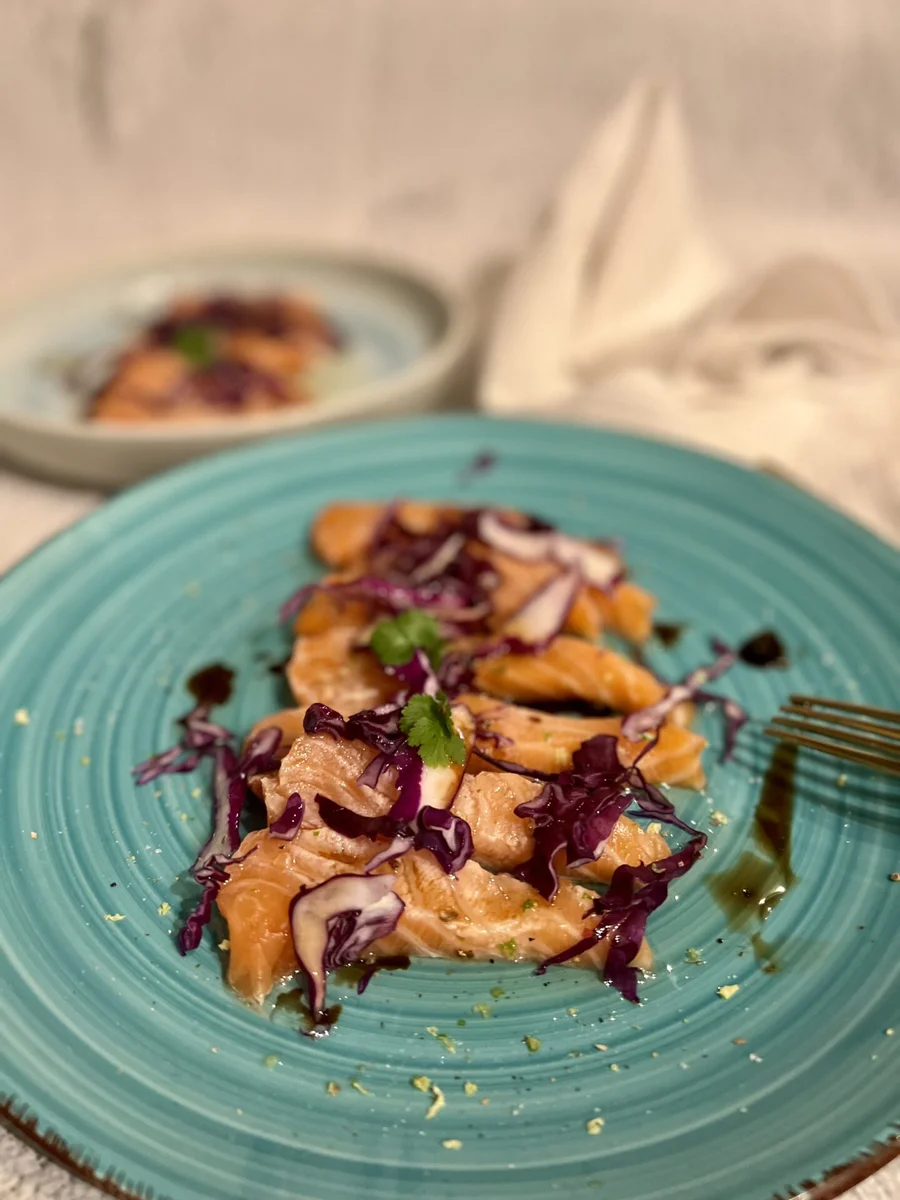
This quick sashimi pairs thin slices of fresh salmon with crisp red cabbage, lime and soy sauce, finished with hot olive oil. Serve it as a starter or a light dinner when you want a bright, savoury plate with very little cooking.
Ingredients
- 200 gfresh salmon fillet, skinless and pin-boned
- 100 gred cabbage, finely sliced or shredded
- 1lime, juiced and finely zested
- 45 ml (3 tbsp)olive oil
- 30 ml (2 tbsp)soy sauce
- to tastesalt and black pepper
- a littlefresh coriander, to garnish
Instructions
- 1
Check the salmon
Remove any skin and pin bones from the salmon fillet.
- 2
Slice the salmon
Cut the fillet into slices about 1 cm thick.
- 3
Season the fish
Arrange the slices on two plates and season with salt and pepper.
- 4
Prepare cabbage
Finely shred the red cabbage with a grater or slice it into thin strips with a knife.
- 5
Add cabbage
Scatter the cabbage over the salmon.
- 6
Dress with lime
Drizzle 1 tbsp lime juice and 1 tbsp soy sauce over the salmon.
- 7
Heat the oil
Warm the olive oil in a small saucepan until it just begins to smoke.
- 8
Pour over fish
Using a completely dry spoon, drizzle the hot oil over the sashimi.
- 9
Finish with zest
Sprinkle the lime zest over the top and serve.
- 10
Add coriander
If you like, finish with a little fresh coriander.
What is sashimi?
Sashimi is a Japanese way of serving carefully prepared raw fish in thin slices, often with simple seasonings that let its flavour show. This version adds red cabbage, lime and soy, then uses hot olive oil for a warm, aromatic finish.
The contrast is what makes the plate work: delicate salmon meets crunchy cabbage, sharp citrus and savoury soy. Use fish specifically suitable for eating raw, and keep it chilled until you are ready to prepare it.
Nutrition and macros by portion
The nutrition label shows one serving as written: 343 calories, 0g protein, 0g carbs, 0g fat.
| Portion | Adjustment | kcal | Protein | Carbs | Fat |
|---|---|---|---|---|---|
| Lighter | Use less olive oil | 240 kcal | 0g | 0g | 0g |
| This serving | As written | 343 kcal | 0g | 0g | 0g |
| Hungry | Serve with extra rice | 515 kcal | 0g | 0g | 0g |
The salmon contributes most of the protein, while the olive oil supplies most of the fat; the cabbage, lime and soy contribute relatively small amounts of carbohydrate. Pair a serving with rice or another grain and extra vegetables if you want a more substantial, balanced plate.
Choosing and slicing the salmon
Fresh fish: Choose salmon intended for raw consumption and keep it cold. The recipe calls for a skinless, pin-boned fillet, but check carefully for any bones before slicing.
Even slices: A sharp knife and a steady hand help produce slices around 1 cm thick. Consistent pieces are easier to arrange and season evenly.
Getting the cabbage right
Fine shreds: Slice or grate the red cabbage thinly so it sits lightly over the fish rather than overwhelming it. Its crisp texture brings contrast to the soft salmon.
Keep it fresh: Prepare the cabbage shortly before serving so it stays lively and crunchy. Spread it loosely over the fish instead of packing it down.
Balancing lime and soy
Citrus: The recipe uses 1 tbsp lime juice over the salmon, with the zest added at the end. Zest contributes fragrant lime aroma without making the dressing more liquid.
Seasoning: Soy sauce brings salt and savoury depth, so taste the combination before adding extra salt. Keep the pepper light enough that it does not mask the fish.
Handling the hot oil
Heat cue: The method heats the olive oil until it just begins to smoke. Stay beside the pan and take it off the heat as soon as that cue appears.
Dry spoon: Use a completely dry spoon to distribute the oil, as the recipe specifies. Pour slowly and carefully over the plates to avoid splashes.
When to serve it
Serve promptly: This dish is best assembled just before eating, while the cabbage is crisp and the hot oil is freshly poured. The listed preparation time is 20 minutes.
On the side: For a light meal, serve with rice or a simple cucumber salad. For a starter, keep the portions as plated and let the fresh flavours lead.
Recipe notes & tips
- Keep the salmon refrigerated until you are ready to slice and plate it.
- Use a sharp knife to cut clean slices without pressing or tearing the fish.
- Shred the cabbage finely so it is easy to eat alongside the salmon.
- Measure the lime juice and soy sauce before drizzling for even coverage.
- Take care when handling the hot oil and pour it slowly over the fish.
Variations
- Add cucumber: Slice it thinly for extra crunch and a fresh, cool contrast.
- Use spring onion: Scatter finely sliced spring onion over the finished plates.
- Change the citrus: Use lemon juice and zest in place of lime.
- Add chilli: Use a small amount of finely sliced chilli for a hotter finish.
- Swap the fish: Use another fish suitable for eating raw, keeping it chilled until serving.
Common mistakes to avoid
- Using unsuitable fish: Choose salmon specifically intended for raw consumption.
- Cutting uneven slices: Use a sharp knife and aim for pieces around 1 cm thick.
- Leaving cabbage in thick strips: Shred it finely so it sits comfortably on the fish.
- Overheating the oil: Remove the pan from the heat as soon as the oil begins to smoke.
- Using a wet spoon: Dry it completely before distributing the hot oil to reduce splashing.
How to store
This dish is best served immediately and is not suited to keeping once assembled. Keep the raw salmon refrigerated before preparation; do not leave the plated sashimi at room temperature.
Frequently asked questions
Can I prepare the salmon ahead?
You can prepare the cabbage and measure the seasonings ahead, but keep the salmon chilled and slice it shortly before serving.
Is the salmon cooked by the hot oil?
The oil is drizzled over the sashimi, but this does not make it a fully cooked fish dish. Use fish suitable for raw consumption.
Can I use bottled lime juice?
Fresh lime is preferable here because the recipe also uses the zest. If needed, bottled juice can replace the juice, but leave out the zest rather than substituting the peel of another fruit.
What can I serve with this as a main meal?
Rice makes a simple accompaniment, as does a light cucumber salad. Either adds substance without competing with the salmon, lime and soy.
Can I leave out the coriander?
Yes. It is an optional garnish, so you can omit it or serve it separately.
Cook it from the original
This recipe comes from sabrinastable.com. Their page has the author’s own photos, notes and tips — the best place to cook it from.
Open the recipe on sabrinastable.com