
Coq au vin
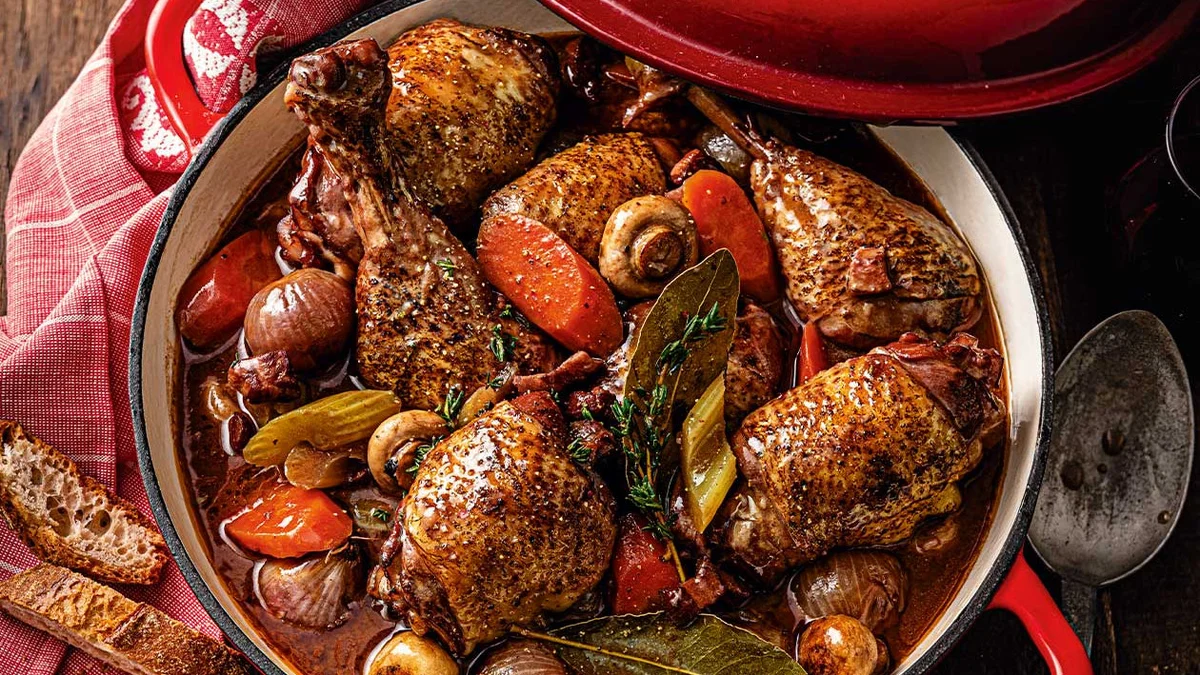
Coq au vin is a slow-braised French chicken stew with red wine, bacon, vegetables and a splash of brandy. It takes time, but much of the work is hands-off, and the finished dish is rich, savoury and made for serving with something to soak up the sauce.
Ingredients
- 4chicken legs, separated into thighs and drumsticks
- 2 largecarrots, peeled and cut into 1 cm-thick diagonal slices
- 2celery stalks, cut into 1 cm-thick diagonal slices
- 3garlic cloves, lightly smashed
- 2bay leaves
- 3 sprigsthyme
- 8peppercorns
- 600 mlpinot noir
- 16 smallshallots
- 160 gsmoked bacon lardons
- 1 tbsptomato purée
- 1 tbspplain flour
- 60 mlbrandy
- 250 mlbeef stock, made using 1/2 a stock cube
- 50 gbutter
- 200 gbutton mushrooms
- To servecrusty bread, steamed rice or mashed potatoes
Instructions
- 1
Marinate the chicken
Put the chicken, carrots, celery, garlic, bay leaves, thyme and peppercorns in a deep, wide non-metallic bowl or dish. Pour in the wine, aiming to submerge the ingredients as much as possible. Cover and refrigerate for at least 2 hours, ideally overnight, and up to 24 hours. Strain the chicken, keeping the wine and separating the herbs and vegetables. Discard the garlic and peppercorns. Pat the chicken dry with kitchen paper and season well.
- 2
Brown the chicken
Cover the shallots with freshly boiled water in a deep bowl and leave them for 20 minutes. Meanwhile, put a large casserole over a medium heat and add the lardons before it heats up. Fry for about 6–8 minutes, until beginning to crisp and turn golden, then lift them onto a plate with a slotted spoon. Sear the chicken in two batches in the bacon fat, cooking each side for 3–4 minutes until browned. Transfer it to the plate with the bacon.
- 3
Build the braise
Add the reserved vegetables to the casserole and sauté for 5 minutes, until they begin to turn golden. Stir in the tomato purée and cook for 1 minute, until darker, then add the flour and cook for another minute. Raise the heat to medium-high and pour in the brandy. Bring to the boil and cook until the brandy has evaporated. Return the chicken and bacon, along with their juices, to the casserole. Add the reserved wine, herbs and beef stock. Bring to the boil, cover and simmer gently for 50 minutes.
- 4
Cook the vegetables
While the chicken cooks, drain and peel the shallots. Melt the butter in a large frying pan, add the shallots and sauté for 5 minutes, until softened and lightly golden. Add the mushrooms with a large pinch of salt and sauté for a further 5 minutes.
- 5
Finish the stew
After the stew has cooked for 50 minutes, stir in the shallots and mushrooms, including any fat from the frying pan. Partially cover and simmer gently for a further 10 minutes. Season to taste and serve with mashed potatoes, rice or crusty bread.
What is coq au vin?
Coq au vin is a French braise in which chicken is cooked slowly with wine and savoury additions. The name means “rooster in wine”, and the dish is associated with traditional French home cooking.
This version marinates the chicken in pinot noir before braising it with bacon, vegetables and stock. Shallots and mushrooms are cooked separately and added near the end, so they keep more of their shape and texture.
Nutrition and macros by portion
The nutrition label shows one serving as written: 685 calories, 47g protein, 10g carbs, 33g fat.
| Portion | Adjustment | kcal | Protein | Carbs | Fat |
|---|---|---|---|---|---|
| Lighter | More vegetables, less bacon | 479 kcal | 33g | 7g | 23g |
| This serving | As written | 685 kcal | 47g | 10g | 33g |
| Hungry | Larger portion with potatoes | 1028 kcal | 71g | 15g | 50g |
The chicken and bacon contribute most of the protein and fat, while the vegetables and the accompanying bread, rice or potatoes supply much of the carbohydrate. Serve a generous portion of vegetables alongside and choose a measured portion of your preferred accompaniment to balance the plate.
Why marinate the chicken?
The wine marinade gives the chicken time to take on some of the wine’s flavour before cooking. Keeping the wine and the herbs and vegetables after straining means they can form the base of the braise.
Pat the chicken thoroughly dry before searing. A dry surface browns more readily than a wet one, and the browned pieces leave savoury residue in the casserole for the sauce.
Build flavour in stages
Bacon first: starting the lardons in a cool casserole lets their fat render as the pan warms. That fat is then used to brown the chicken.
Vegetables next: sauté the reserved carrots and celery before adding the tomato purée and flour. Cooking these briefly helps them blend into the braising base.
Brandy after: bring it to the boil and let it evaporate before adding the wine and stock. This sequence also gives you a chance to loosen the flavourful browned bits from the casserole.
Get the shallots and mushrooms right
Hot water loosens the shallot skins, making the small shallots easier to peel. The recipe gives them a separate spell in butter so they soften and colour before joining the stew.
Sauté the mushrooms until they have begun to soften, then add them near the end of the braise. This helps them retain more texture than if they simmered from the start.
Check the braise as it cooks
Keep the casserole at a gentle simmer once covered; a vigorous boil can make the chicken cook unevenly and the liquid reduce too quickly. The recipe calls for 50 minutes covered, followed by 10 minutes partially covered after the shallots and mushrooms go in.
Near the end, check that the chicken is cooked through and tender. If the sauce seems too thin, let it simmer uncovered for a little longer; if it has reduced more than you like, stir in a small splash of stock or water.
Serving coq au vin
Mashed potatoes, steamed rice and crusty bread are all suggested accompaniments. Each gives the wine-rich sauce somewhere to go, so choose whichever suits the meal.
For a fuller plate, serve the stew with a green vegetable alongside. Spoon the chicken, mushrooms and shallots over the starch, then add plenty of sauce.
Recipe notes & tips
- Marinate the chicken overnight when possible, but keep it refrigerated and within the stated 24-hour limit.
- Use a non-metallic dish for the wine marinade, as specified in the method.
- Sear the chicken in two batches so the pieces have room to brown.
- Keep the simmer low and steady during the covered braise.
- Prepare the shallots and mushrooms while the chicken cooks to keep the final stages moving.
- Taste the sauce before serving and adjust the seasoning to your preference.
Variations
- Change the wine: use another dry red wine in place of pinot noir.
- Use chicken pieces: thighs and drumsticks can be used separately if whole legs are inconvenient.
- Add root vegetables: include extra carrots alongside the listed vegetables.
- Choose a side: serve with crusty bread, steamed rice or mashed potatoes, as suggested.
- Make ahead: cook the stew in advance and reheat it gently before serving.
Common mistakes to avoid
- Skipping the drying step: wet chicken is harder to brown, so pat it dry before seasoning.
- Crowding the casserole: chicken can steam rather than sear, so brown it in the two batches specified.
- Boiling hard: a rapid boil can reduce the liquid too quickly, so keep the braise at a gentle simmer.
- Adding the mushrooms too early: they may lose their texture, so stir them in for the final 10 minutes.
- Leaving the shallots unpeeled: soak them in freshly boiled water for 20 minutes first to make peeling easier.
How to store
Cool leftovers promptly, transfer them to an airtight container and refrigerate for up to 3 days. Reheat gently in a covered saucepan until piping hot throughout, adding a splash of water or stock if the sauce has thickened.
Frequently asked questions
Can I marinate the chicken overnight?
Yes. The recipe recommends overnight marinating and allows up to 24 hours; keep the covered dish in the fridge.
Can I skip the marinade?
The marinade is a key part of this method and its wine is used in the braise. Skipping it changes the preparation and flavour, though the chicken can still be cooked using the remaining steps.
What can I use instead of pinot noir?
A different dry red wine can be used, though its flavour will affect the finished sauce.
How do I know when the chicken is done?
After the stated cooking time, check that the chicken is cooked through and tender. If it needs longer, continue simmering gently and check again.
Can I make coq au vin ahead?
Yes. Refrigerate it once cooled and reheat gently until piping hot throughout. The sauce may thicken in the fridge, so add a little water or stock if needed.
What should I serve with coq au vin?
The recipe suggests crusty bread, steamed rice or mashed potatoes. All work well for catching the sauce.
Cook it from the original
This recipe comes from sainsburysmagazine.co.uk. Their page has the author’s own photos, notes and tips — the best place to cook it from.
Open the recipe on sainsburysmagazine.co.uk