
Homemade lazy varenyky
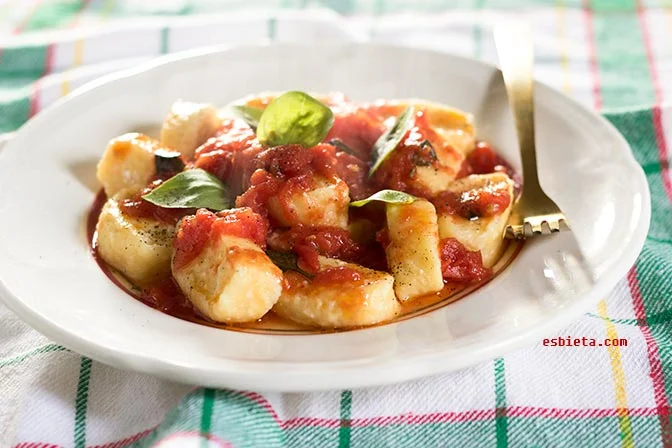
Homemade lazy varenyky are soft Ukrainian cheese dumplings served with a quick tomato, sugar and basil sauce. They make a comforting meal from a short list of ingredients and are ready in about 30 minutes.
Ingredients
- 500 gfresh cheese
- 2eggs
- 180–230 gplain flour
- 1 teaspoonsalt
- 1 tin (800 g)whole tomatoes
- 3–5 teaspoonssugar
- 1 pinchsalt
- 10–15 leavesbasil
- to tasteolive oil
Instructions
- 1
Combine cheese
Put the cheese, eggs and salt in a bowl.
- 2
Mix the dough
Break up the cheese with a potato masher, fork or your hands, then mix it with the eggs. Add the flour and mix again.
- 3
Shape a ball
Use one hand to bring the mixture together into a ball. There is no need to knead it.
- 4
Cook the tomatoes
Break up the tomatoes with your hands, add a small drizzle of olive oil and cook for 15–20 minutes, stirring from time to time.
- 5
Divide the dough
Split the dough into 3 portions.
- 6
Roll the dough
With lightly floured hands, roll each portion on a floured work surface into a sausage about 2 cm in diameter.
- 7
Cut the dumplings
Dust a knife with flour and cut the dough into slices 1 cm thick.
- 8
Flatten thick pieces
If any slices are thicker than the others, press them down gently with your fingers.
- 9
Boil the varenyky
Cook the varenyky in plenty of salted, boiling water.
- 10
Check for doneness
When they rise to the surface, taste one. If it is cooked to your liking, drain the dumplings; otherwise, continue cooking them briefly.
- 11
Season the sauce
Add the sugar, salt and basil to the tomatoes.
What are lazy varenyky?
Varenyky are Ukrainian dumplings, often made by enclosing a filling in dough. In this lazy version, fresh cheese is mixed into the dough itself, so the dumplings are shaped and cut rather than filled individually.
The cheese gives them a tender, soft texture, while a simple tomato sauce brings sweetness and the fragrance of basil.
Nutrition and macros by portion
The nutrition label shows one serving as written: 525 calories, 31g protein, 52g carbs, 21g fat.
| Portion | Adjustment | kcal | Protein | Carbs | Fat |
|---|---|---|---|---|---|
| Lighter | More vegetables, fewer dumplings | 368 kcal | 22g | 36g | 15g |
| This serving | As written | 525 kcal | 31g | 52g | 21g |
| Hungry | Larger dumpling portion | 788 kcal | 47g | 78g | 32g |
The flour and tomatoes provide most of the carbohydrates, while the fresh cheese and eggs contribute much of the protein and fat. Serve a portion with green vegetables or salad to add freshness and balance the meal.
Choosing the cheese
Fresh cheese: use a relatively firm, mild cheese that can be crumbled. If it is very wet, the dough may need more flour within the stated range.
Texture: break the cheese up well before adding the flour so the dough forms evenly and the cooked dumplings do not have large lumps.
Getting the dough right
Flour: start with the lower amount and add more as needed to bring the mixture together. The exact quantity depends on how moist the cheese is.
Handling: bring the dough into a ball without kneading. A light touch helps keep the dumplings soft rather than dense.
Shaping even dumplings
Rolls: divide the dough into 3 portions and roll each one to about 2 cm in diameter on a floured surface. Keep your hands and work surface lightly dusted so the dough is easier to handle.
Slices: cut pieces about 1 cm thick, then gently flatten any unusually thick ones. Similar-sized pieces cook more evenly.
Cooking and checking
Boiling water: use a generous amount of salted water and add the dumplings once it is boiling. Avoid crowding the pan; cook in batches if necessary.
Doneness: rising to the surface is the cue to taste one, not necessarily the end of cooking. Let them cook a little longer if the centre is still too soft or floury for your liking.
Making the tomato sauce
Tomatoes: break the whole tomatoes up by hand before simmering them with a drizzle of olive oil for 15–20 minutes. Stir occasionally as they cook.
Seasoning: add the sugar, salt and basil to the tomatoes as directed. Taste the sauce and adjust the sugar within the recipe’s range to suit the tomatoes.
Serving ideas
Serve the dumplings with the tomato and basil sauce while both are warm. A green salad or steamed vegetables make a fresh contrast to the soft, cheese-rich dumplings.
For a fuller meal, add a side of vegetables rather than extra sauce; the recipe already includes a substantial portion of dumplings.
Recipe notes & tips
- Begin with the lower amount of flour and add more only if the cheese mixture is too sticky to shape.
- Keep the work surface lightly floured to make rolling and cutting easier.
- Cut the dough into evenly sized slices so the dumplings finish cooking at a similar time.
- Stir the tomatoes occasionally during their 15–20 minute cooking time.
- Taste a dumpling after it floats, then decide whether it needs a little longer.
Variations
- Herb swap: use another soft herb in place of basil if that is what you have.
- Extra vegetables: serve with steamed greens or a crisp salad for a fresher plate.
- Smoother sauce: break the tomatoes up more thoroughly before cooking for a less chunky texture.
- Sweeter sauce: use the higher end of the sugar range if your tomatoes taste especially sharp.
- More basil: add the full 15 leaves for a more pronounced herbal flavour.
Common mistakes to avoid
- Adding all the flour at once: the cheese may not need the full amount, so start low and add gradually.
- Kneading the dough: this can make the dumplings dense; simply bring the mixture together into a ball.
- Making uneven slices: thick pieces take longer to cook, so cut them consistently and flatten any that are too chunky.
- Overcrowding the pot: the dumplings may cook unevenly; use plenty of water and cook in batches if needed.
- Draining without tasting: floating is a useful cue, but taste one to check the centre is cooked to your liking.
How to store
Refrigerate leftover dumplings and sauce in separate airtight containers for up to 3 days. Reheat gently in a pan with the sauce, or warm the dumplings briefly in hot water; avoid vigorous cooking, which can make them break apart.
Frequently asked questions
Can I use less flour?
Yes. Start at 180 g and add more only if the dough is too sticky to shape. The amount needed depends on the moisture in the fresh cheese.
Why are my dumplings falling apart?
The dough may be too wet or the water may be boiling too vigorously. Add flour gradually within the recipe’s range and keep the water at a steady boil.
Do the dumplings need to be kneaded?
No. Bring the mixture together into a ball, then divide and shape it. Kneading is not required for this recipe.
How do I know when they are cooked?
They rise to the surface first. Taste one at that point and continue cooking briefly if its centre is not yet cooked to your liking.
Can I make the tomato sauce ahead?
Yes. Cook the tomatoes and refrigerate the sauce in a covered container, then reheat it gently. Add the sugar, salt and basil as directed in the recipe.
Cook it from the original
This recipe comes from recetasdesbieta.com. Their page has the author’s own photos, notes and tips — the best place to cook it from.
Open the recipe on recetasdesbieta.com