
Traditional Italian Roast Pork with Chestnuts
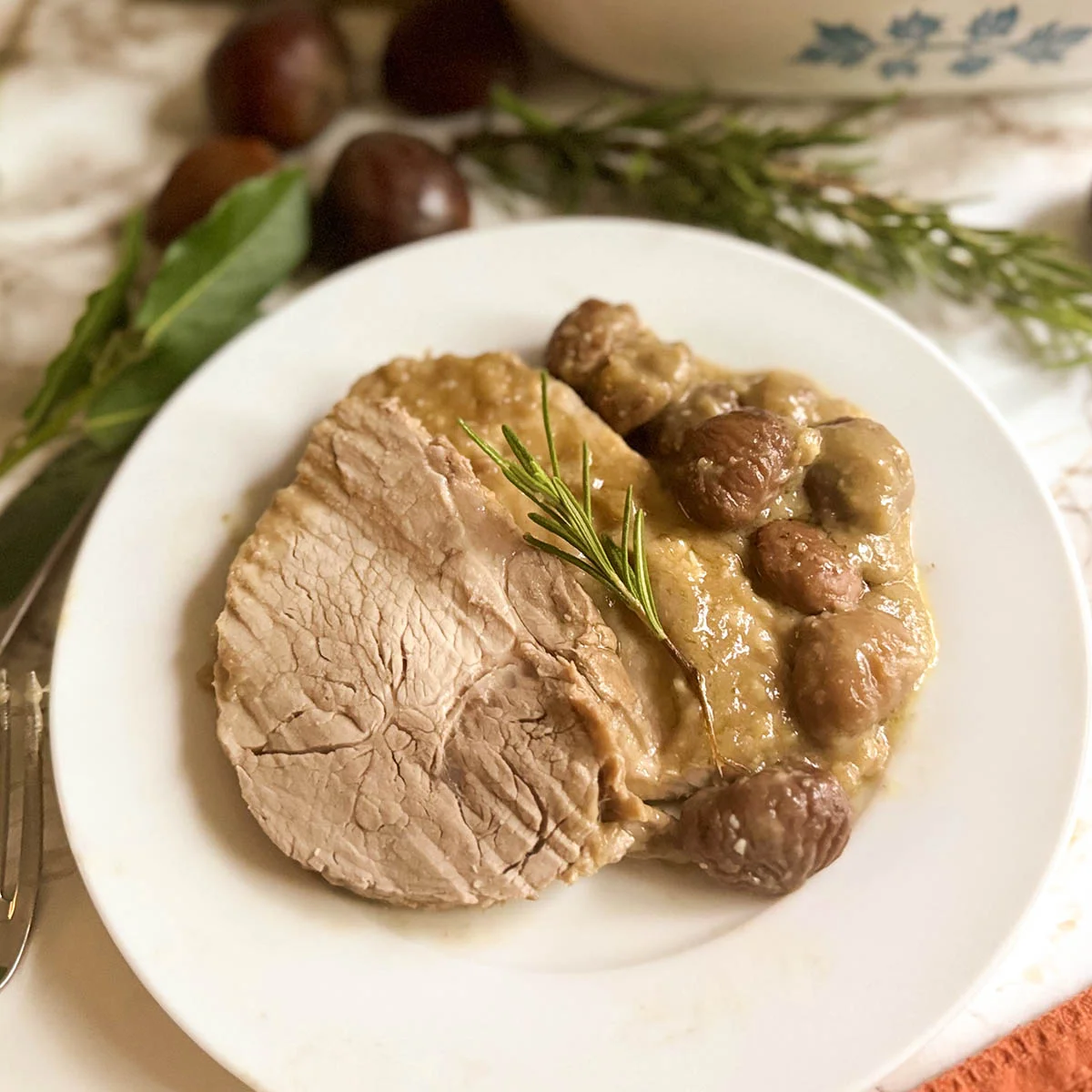
This Italian-style pork loin is gently braised with Marsala, herbs and chestnuts, then served with a smooth chestnut sauce. It makes a warming centrepiece for a Sunday lunch or festive meal, while the method keeps the cooking straightforward.
Ingredients
- 800 gpork loin
- 350 groasted, peeled chestnuts
- 2 clovesgarlic, peeled
- 1 mediumonion
- 2 leavesbay leaves
- 2 sprigsrosemary
- 200 mlMarsala wine
- 4 tablespoonsextra-virgin olive oil
- to tastesalt
Instructions
- 1
Marinate the pork
Drizzle a little olive oil over the pork loin and rub it over the surface. Put the pork in a large bowl with the rosemary, peeled garlic and a bay leaf, then pour in some of the Marsala. Cover and leave to marinate for about 1 hour.
- 2
Soften the onion
While the pork marinates, finely chop the onion. Heat 3 tablespoons of olive oil in a large pan over medium heat, add the onion and cook until soft and golden, stirring from time to time.
- 3
Dry the pork
After the hour of marinating, lift the pork out of the marinade and pat it dry if needed. Set the marinade aside.
- 4
Brown the pork
Add the pork to the pan with the onion and brown it on all sides.
- 5
Braise the pork
Pour the reserved marinade into the pan, including the garlic, rosemary and bay leaf. Cook for a few minutes to let the alcohol evaporate, then reduce the heat, season the pork with salt and cover the pan. Cook over low heat for about 50 minutes.
- 6
Turn and baste
Turn the pork a couple of times as it cooks and spoon the pan juices over any part that is not submerged. If the liquid reduces too much, add a ladleful of hot water or broth.
- 7
Add the chestnuts
After about 40 minutes of cooking, add the chestnuts to the pan. Ready-cooked, peeled chestnuts are convenient; if cooking them yourself, follow their preparation instructions and handle them gently to keep them whole.
- 8
Rest the pork
When the pork has cooked for about 50 minutes in total, turn off the heat. Transfer it to a chopping board and leave it to rest for a few minutes.
- 9
Blend the sauce
While the pork rests, remove the rosemary, bay leaves and some whole chestnuts from the pan. Blend the chestnuts, onion and garlic in the pan with an immersion blender until the sauce is smooth and creamy.
- 10
Slice the pork
Use a sharp knife to slice the rested pork and arrange the slices on a serving dish.
- 11
Serve with sauce
Spoon the chestnut sauce over the pork, then arrange the reserved whole chestnuts around it. Serve hot with extra sauce and chestnuts alongside.
What is Italian roast pork with chestnuts?
Pork cooked with chestnuts is a comforting combination associated with Italian autumn and winter cooking, when chestnuts are a familiar seasonal ingredient. This version braises pork loin with Marsala, onion and herbs, then turns some of the chestnuts into a creamy sauce.
The method is useful for a special meal without requiring complicated preparation: the pork marinates, cooks gently in a covered pan and rests while the sauce is blended.
Nutrition and macros by portion
The nutrition label shows one serving as written: 413 calories, 30g protein, 33g carbs, 14g fat.
| Portion | Adjustment | kcal | Protein | Carbs | Fat |
|---|---|---|---|---|---|
| Lighter | More greens, less sauce | 289 kcal | 21g | 23g | 10g |
| This serving | As written | 413 kcal | 30g | 33g | 14g |
| Hungry | Add potatoes or bread | 620 kcal | 45g | 50g | 21g |
The pork supplies most of the protein, while chestnuts contribute much of the carbohydrate and some of the fibre. Olive oil and pork provide much of the fat, with Marsala and chestnuts adding to the sauce. Pair a portion with green vegetables for a balanced plate, and add potatoes or bread if you want a more filling meal.
The pork and marinade
Pork loin: this lean cut benefits from gentle, covered cooking and a short rest before slicing. Browning it first adds colour and flavour to the pan.
Marsala and herbs: the wine, rosemary, garlic and bay leaves season the meat and become part of the braising liquid. Reserve the marinade so it can go into the pan with the browned pork.
Getting the chestnut sauce right
Whole chestnuts: add them after about 40 minutes of cooking so they warm through and take on some of the pan flavours. Set a few aside before blending for serving.
Blending: remove the rosemary and bay leaves first, then blend the chestnuts with the onion and garlic until smooth. If the mixture is too thick to blend easily, use some of the liquid already in the pan.
Browning and braising
Browning: turn the pork so all sides take on colour before adding the marinade. Avoid rushing this stage; the browned bits in the pan contribute flavour to the sauce.
Gentle cooking: keep the pan covered over low heat and turn the pork a couple of times. Spoon cooking juices over the exposed surface, and add a ladleful of hot water or broth if the pan becomes too dry.
Resting and slicing
Resting: take the pork out of the pan once it has cooked for about 50 minutes in total and leave it on a chopping board for a few minutes. This makes it easier to slice without losing as much of its juice.
Slicing: use a sharp knife and cut across the loin into even slices. Arrange them on a warm serving dish so the sauce can be spooned over just before serving.
When to serve it
This rich, savoury dish suits a Sunday lunch or a festive table, particularly in cooler weather. Serve it hot with the chestnut sauce and whole chestnuts kept visible around the pork.
A simple green vegetable or salad provides a fresh contrast, while potatoes or bread can be served for a more substantial meal.
Recipe notes & tips
- Use a pan large enough to hold the pork without crowding it.
- Pat the pork dry before browning to help it colour evenly.
- Keep the marinade to add to the pan after browning; it carries the herbs and garlic.
- Turn and baste the pork during cooking so the exposed surface stays moist.
- Set aside a few chestnuts before blending for a more attractive finish.
- Slice the pork after resting, rather than immediately after taking it from the pan.
Variations
- Use stock: replace some or all of the Marsala with broth for a less wine-forward sauce.
- Add sage: use a few sage leaves alongside the rosemary for a different herbal note.
- Keep it rustic: mash some of the chestnuts into the pan juices instead of blending the sauce completely smooth.
- Serve with polenta: offer soft polenta alongside to catch the chestnut sauce.
- Add root vegetables: serve roasted seasonal vegetables on the side for extra colour and texture.
Common mistakes to avoid
- Skipping the marinade: give the pork about 1 hour in the covered bowl so it can take on the wine and herbs.
- Browning only one side: turn the loin and colour it all around before adding the marinade.
- Cooking over high heat: keep the covered pan over low heat for the braise and check that the liquid is not reducing too quickly.
- Forgetting to baste: turn the pork and spoon juices over the exposed parts as it cooks.
- Blending the herbs: remove the rosemary and bay leaves before blending the sauce.
- Slicing straight away: rest the pork for a few minutes first to help it stay juicy.
How to store
Cool leftovers promptly, then store the pork and sauce together in a covered container in the fridge for up to 3 days. Reheat gently in a covered pan until hot throughout, adding a splash of water or broth if the sauce has thickened.
Frequently asked questions
Can I use ready-cooked chestnuts?
Yes. The recipe calls for roasted, peeled chestnuts, and ready-cooked ones are convenient. Add them after about 40 minutes of cooking, as directed.
Can I prepare the pork marinade ahead?
You can combine the pork, olive oil, rosemary, garlic, bay leaf and Marsala in the bowl ahead of cooking and keep it covered in the fridge. Allow about 1 hour for the marinating step.
What if the pan dries out?
Add a ladleful of hot water or broth, as needed, and continue cooking with the lid on. Keep spooning the pan juices over any exposed part of the pork.
How do I know when the pork is cooked?
Follow the recipe's approximate cooking time of 50 minutes after browning, and check the thickest part with a meat thermometer if you have one. Rest the pork before slicing.
Can I make the sauce without a blender?
Yes. Mash the cooked chestnuts, onion and garlic thoroughly with a fork or potato masher for a coarser sauce, or use a food processor if available.
What can I serve with it?
Green vegetables or a simple salad provide a fresh contrast. Potatoes, polenta or bread also work well with the chestnut sauce.
Cook it from the original
This recipe comes from recipesfromitaly.com. Their page has the author’s own photos, notes and tips — the best place to cook it from.
Open the recipe on recipesfromitaly.com