
Tomato Spinach Shrimp Pasta
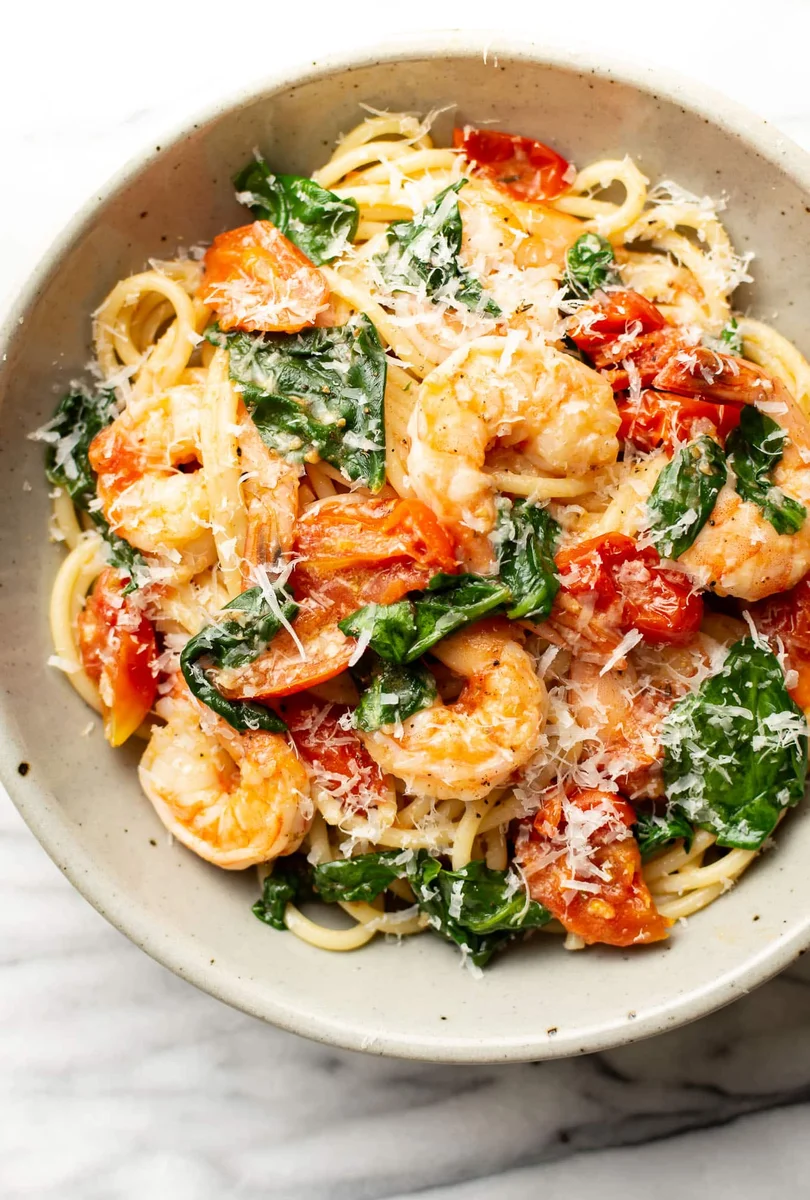
Tomato spinach shrimp pasta pairs spaghetti with juicy tomatoes, wilted spinach and tender shrimp in a quick garlic-butter sauce. It makes an easy, polished-tasting dinner in about 30 minutes.
Ingredients
- 227 g (8 oz)uncooked spaghetti
- 454 g (1 lb)uncooked shrimp, size 31–40 per pound, thawed and peeled; tails may be removed
- 15 ml (1 tablespoon)olive oil
- 30 g (2 tablespoons)butter
- 4 clovesgarlic, minced
- 283 g (10 oz)grape tomatoes, halved
- 60 ml (¼ cup)chicken broth
- 1.25 ml (¼ teaspoon)Italian seasoning
- 60 g (2 packed cups)fresh baby spinach
- to tastesalt and pepper
Instructions
- 1
Cook the spaghetti
Bring a pot of salted water to the boil. Cook the spaghetti al dente according to the packet directions.
- 2
Sauté the garlic
Meanwhile, heat the olive oil and butter in a frying pan over medium-high heat. When the pan is hot, add the garlic and cook for about 30 seconds.
- 3
Add the tomatoes
Stir in the tomatoes, chicken broth and Italian seasoning.
- 4
Soften the tomatoes
Cook, stirring occasionally, for about 5 minutes, until the tomatoes begin to lose their shape.
- 5
Cook shrimp and spinach
Add the shrimp, then the spinach, and reduce the heat to medium. Cook for about 5 minutes, stirring the spinach and turning the shrimp, until the shrimp are cooked through and the spinach has wilted.
- 6
Toss and season
Season with salt and pepper as needed, then toss with the drained spaghetti. For a looser sauce, stir in a little hot pasta water.
What is tomato spinach shrimp pasta?
This is an American-style pasta supper built around spaghetti, shrimp and a quick pan sauce of tomatoes, garlic and butter. It draws on familiar Italian-inspired flavours rather than one fixed traditional preparation.
The tomatoes soften into the cooking juices while spinach wilts around the shrimp, giving the pasta colour and a mix of textures. Cooking the seafood right in the tomato pan keeps the method straightforward and lets the flavours come together.
Nutrition and macros by portion
The nutrition label shows one serving as written: 427 calories, 32g protein, 47g carbs, 12g fat.
| Portion | Adjustment | kcal | Protein | Carbs | Fat |
|---|---|---|---|---|---|
| Lighter | Use less butter | 299 kcal | 22g | 33g | 8g |
| This serving | As written | 427 kcal | 32g | 47g | 12g |
| Hungry | Add extra spaghetti | 641 kcal | 48g | 71g | 18g |
The spaghetti supplies most of the carbohydrates, while the shrimp provides much of the protein. Olive oil and butter contribute most of the fat, with smaller amounts from the shrimp and other ingredients. Pair a portion with salad or extra vegetables for a more balanced plate.
Choosing the ingredients
Shrimp: The recipe calls for peeled, thawed shrimp sized 31–40 per pound. Removing the tails is optional, but tail-off shrimp are easier to toss through the pasta.
Tomatoes: Halved grape tomatoes soften quickly but retain some shape. Italian seasoning gives the sauce a savoury herb note without requiring several separate dried herbs.
Building the sauce
Garlic: Add it to the hot oil and butter and cook for about 30 seconds. Keep it moving and avoid letting it brown too far, which can make its flavour harsh.
Tomatoes: The chicken broth helps create liquid in the pan as the tomatoes cook. Give them about 5 minutes, until they start to slump, before adding the shrimp.
Cooking the shrimp
Heat: Once the shrimp go in, reduce the hob to medium so they cook steadily alongside the spinach. Turn them as needed during the roughly 5-minute cooking period.
Doneness: The shrimp should be opaque and cooked through, while the spinach should be wilted. Keep an eye on both rather than extending the cooking time unnecessarily.
Getting the pasta texture right
Spaghetti: Cook it al dente according to its packet, then drain it before tossing it with the pan ingredients. Starting the pasta while the sauce cooks helps the two parts finish at about the same time.
Pasta water: If the sauce seems too concentrated to coat the spaghetti, add a little hot pasta water. Add it gradually so the sauce loosens without becoming watery.
Timing the meal
Start the salted water and spaghetti first, then prepare the sauce while the pasta cooks. The tomatoes take about 5 minutes to soften, followed by about 5 minutes for the shrimp and spinach.
Have the shrimp thawed and peeled before heating the pan. That way, they can go straight in when the tomatoes are ready.
What to serve alongside
A crisp green salad or steamed vegetables make a simple side and add freshness to the meal. Crusty bread is also handy for soaking up any tomato-garlic juices left on the plate.
Recipe notes & tips
- Thaw the shrimp fully and pat them dry so excess water does not dilute the sauce.
- Have the garlic minced and the tomatoes halved before you start cooking.
- Reserve a little hot pasta water before draining the spaghetti.
- Stir the spinach through the pan so it wilts evenly.
- Taste for salt and pepper after tossing the pasta with the sauce.
Variations
- Add chilli: Sprinkle in chilli flakes with the garlic for a gentle heat.
- Use vegetable broth: Swap the chicken broth for vegetable broth.
- Finish with lemon: Add a squeeze of lemon juice just before serving for a brighter flavour.
- Add fresh herbs: Scatter chopped parsley or basil over the finished pasta.
- Change the pasta: Use linguine or another long pasta in place of spaghetti.
Common mistakes to avoid
- Overcooking the garlic: Cook it for about 30 seconds, stirring, so it does not turn bitter.
- Adding wet shrimp: Pat thawed shrimp dry before cooking to avoid watering down the pan.
- Crowding the pan: Use a pan large enough for the shrimp to sit in a fairly even layer and cook consistently.
- Overcooking the shrimp: Check for opaque flesh and stop cooking once they are cooked through.
- Adding too much pasta water: Stir in just a little at a time until the sauce reaches the consistency you want.
How to store
Refrigerate leftovers in a sealed container for up to 2 days. Reheat gently in a frying pan or microwave until hot throughout; add a splash of water if the pasta seems dry.
Frequently asked questions
Can I use frozen shrimp?
Yes. Thaw them fully before cooking, then peel them if needed and pat them dry.
How can I tell when the shrimp are cooked?
They should be opaque and cooked through. Check them during the stated cooking time, as their size and the pan can affect how quickly they cook.
Can I use a different type of tomato?
Yes. Use another small tomato variety, cut into halves or similar-sized pieces so it softens in roughly the same time.
What if the sauce is too thick?
Stir in a little hot pasta water until it loosens enough to coat the spaghetti.
Can I make it without butter?
You can leave out the butter and use olive oil in its place, though the sauce will taste less rich.
Can I prepare this ahead?
It is best cooked just before serving, since shrimp can become firm if reheated for too long. You can halve the tomatoes, mince the garlic and thaw the shrimp ahead of time.
Cook it from the original
This recipe comes from saltandlavender.com. Their page has the author’s own photos, notes and tips — the best place to cook it from.
Open the recipe on saltandlavender.com