
Lasagna with Bechamel Sauce
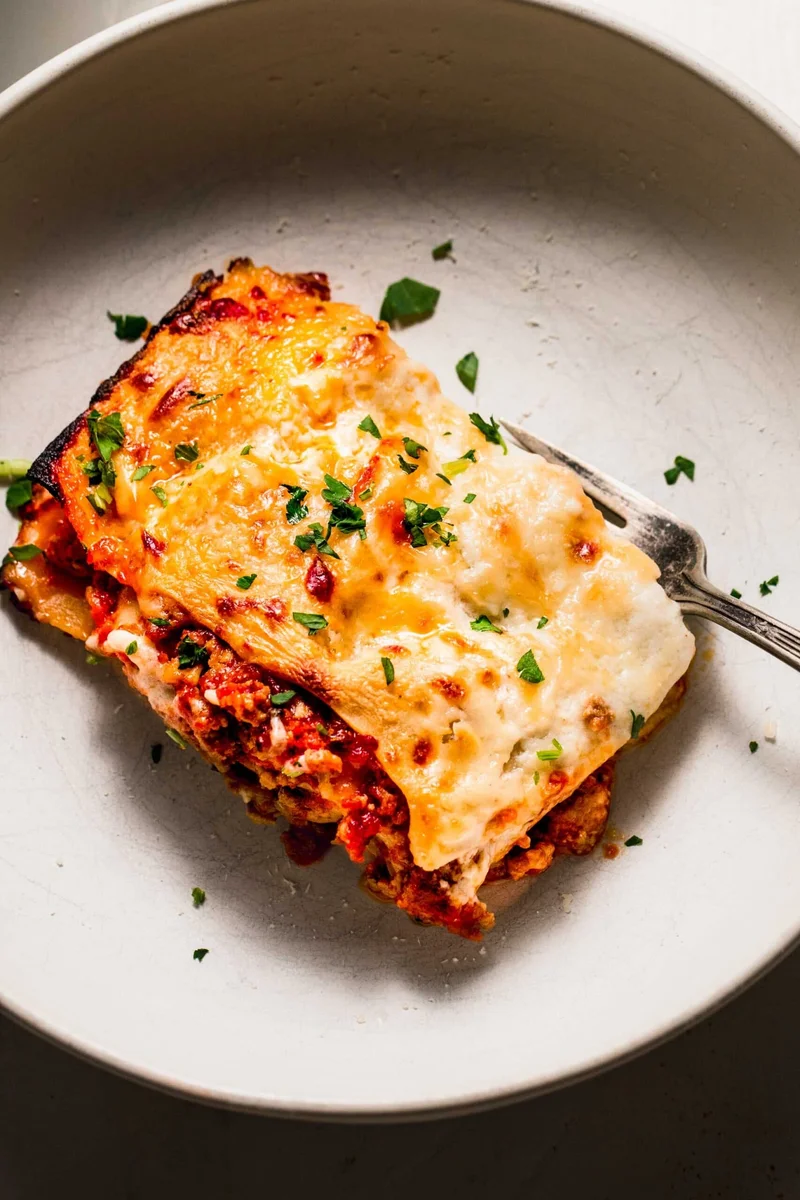
This Italian-style lasagna layers a slowly cooked beef and pork sauce with smooth homemade béchamel, Parmesan and no-boil pasta sheets. It takes time to build flavour, but the sauces can be prepared while the oven heats.
Ingredients
- ½ mediumyellow onion, roughly chopped
- 1 mediumcarrot, peeled and roughly chopped
- 1 stalkcelery, roughly chopped
- 794 g (28 oz)tin of whole San Marzano tomatoes, with juice
- 28 g (2 tablespoons)unsalted butter
- 340 g (12 oz)lean minced beef
- 340 g (12 oz)minced pork
- 355 ml (1½ cups)whole milk
- 237 ml (1 cup)dry white wine
- 45 ml (3 tablespoons)tomato paste
- 1½ teaspoonskosher salt
- ¼ teaspoonground black pepper
- 57 g (4 tablespoons)unsalted butter
- 30 g (¼ cup)plain flour
- 946 ml (4 cups)whole milk
- 1 teaspoonkosher salt
- ¼ teaspoongrated nutmeg
- 15 sheets (255 g; 9 oz)no-boil lasagne sheets
- 250 g (2½ cups)grated Parmesan
Instructions
- 1
Chop the vegetables
In a food processor, purée the onion, carrot and celery until finely chopped.
- 2
Soften the vegetables
Melt 28 g (2 tablespoons) butter in a large Dutch oven or heavy-based pot over medium heat. Add the vegetables and cook for about 5 minutes, until just softened.
- 3
Purée the tomatoes
Rinse the food processor bowl, add the tomatoes with their juice and pulse until roughly puréed. Set aside.
- 4
Brown the meat
Add the minced beef and pork to the vegetables. Cook for a couple of minutes, breaking the meat apart as you go.
- 5
Simmer with milk
Add 355 ml (1½ cups) milk and bring to a simmer. Continue breaking up the meat as it cooks, until the liquid has almost evaporated, 20–30 minutes.
- 6
Add the wine
Pour in 237 ml (1 cup) white wine and cook for a further 20–30 minutes, until absorbed.
- 7
Finish the sauce
Stir in the tomato paste, then add the puréed tomatoes, 1½ teaspoons salt and ¼ teaspoon black pepper. Simmer for about 15 minutes, until slightly thickened.
- 8
Cool the sauce
Set the meat sauce aside to cool slightly for about 30 minutes.
- 9
Make the roux
While the meat sauce cooks, melt 57 g (4 tablespoons) butter in a medium saucepan over medium heat. Add the flour and whisk for about 1 minute, until combined.
- 10
Whisk in milk
Add 946 ml (4 cups) milk, whisking constantly.
- 11
Thicken the béchamel
Raise the heat to medium-high and bring the mixture to the boil, continuing to whisk. Add 1 teaspoon salt and the nutmeg, lower the heat to a simmer and cook for about 20 minutes, stirring occasionally, until thickened.
- 12
Cool the béchamel
Set aside to cool slightly for about 30 minutes.
- 13
Heat the oven
Preheat the oven to 220°C (425°F).
- 14
Soak the sheets
Soak the 15 lasagne sheets in hot tap water for about 5 minutes, tossing them with your hands occasionally to stop them sticking.
- 15
Dry the sheets
Lift the sheets out of the water and pat them dry with a clean kitchen towel.
- 16
Prepare the dish
Spray a 23 × 33 cm (9 × 13-inch) baking dish with cooking spray.
- 17
Start the layers
Spread 1 cup of meat sauce over the bottom of the dish. Lay three lasagne sheets in a single layer on top.
- 18
Add the sauces
Spread about 1¼ cups more meat sauce over the sheets. Add ⅓ cup béchamel, then sprinkle over ⅓ cup Parmesan.
- 19
Complete the layers
Repeat the layering process three more times. Add the final three sheets, cover them completely with the remaining béchamel and sprinkle over the remaining Parmesan.
- 20
Cover the lasagna
Spray a large sheet of foil with non-stick cooking spray and use it to cover the dish.
- 21
Bake and serve
Bake for about 30 minutes, until bubbling. Remove the foil and raise the oven to 230°C (450°F). Bake uncovered for about 15 minutes, until the top is browned. Rest for 15 minutes before slicing and serving.
What is lasagna with béchamel?
Lasagna is an Italian baked pasta dish made by stacking sheets with sauce and other fillings. This version pairs a slow-cooked meat sauce with béchamel, a milk-based white sauce, rather than relying on tomato sauce alone.
The method draws on the classic Italian combination of meat ragù, béchamel and Parmesan. Cooking the sauce down in stages helps give the layers a rich flavour, while the creamy béchamel keeps the pasta moist.
Nutrition and macros by portion
The nutrition label shows one serving as written: 649 calories, 36g protein, 43g carbs, 34g fat.
| Portion | Adjustment | kcal | Protein | Carbs | Fat |
|---|---|---|---|---|---|
| Lighter | Smaller slice, extra vegetables | 454 kcal | 25g | 30g | 24g |
| This serving | As written | 649 kcal | 36g | 43g | 34g |
| Hungry | Larger slice | 974 kcal | 54g | 65g | 51g |
The lasagne sheets provide most of the carbohydrates, while the butter, whole milk, meat and Parmesan contribute much of the fat. Beef, pork, milk and Parmesan also supply protein. Serve a slice with salad or vegetables for a more balanced plate.
Building the meat sauce
Vegetable base: finely puréed onion, carrot and celery soften into the sauce and distribute their flavour throughout it.
Slow reduction: the milk and wine are each cooked down before the tomatoes go in. Allow the stated time for each stage, and look for the liquid to be mostly absorbed before moving on.
Getting smooth béchamel
Roux: whisking the flour into melted butter for about a minute helps it combine before the milk is added.
Steady whisking: add the milk while whisking, then keep whisking as it comes to the boil. Once it simmers, stir occasionally and cook until it has thickened.
Preparing the pasta sheets
Brief soak: the no-boil sheets are soaked in hot tap water for about 5 minutes, rather than cooked in a pan of boiling water. Toss them now and then so they do not stick together.
Drying: pat the sheets dry before layering. This makes them easier to handle and avoids adding excess water to the dish.
Layering for an even bake
Sauce first: spread a cup of meat sauce over the base before adding the first three sheets. It gives the bottom layer a coating of sauce.
Repeat evenly: distribute the meat sauce, béchamel and Parmesan across each set of sheets, then finish with the last sheets covered fully in béchamel and cheese.
Knowing when it is ready
Covered bake: bake at 220°C (425°F) for about 30 minutes, until the lasagna is bubbling. The foil helps cover the surface during this first part of baking.
Browned top: uncover, raise the oven to 230°C (450°F) and bake for about 15 minutes, until the top is browned. Rest for 15 minutes so the layers settle before slicing.
Serving suggestions
A crisp green salad or simply dressed leaves make a fresh contrast to the rich sauce and creamy layers. Steamed or roasted vegetables also work well alongside a slice.
Let the lasagna rest for the full 15 minutes, then cut it into portions and serve while warm.
Recipe notes & tips
- Give the meat sauce time to reduce after adding both the milk and the wine.
- Whisk continuously as you pour the milk into the roux to help keep the béchamel smooth.
- Toss the lasagne sheets during their soak to help prevent them sticking together.
- Pat the soaked sheets dry before assembling the dish.
- Cover the lasagna with foil for the first 30 minutes, then uncover it to brown the top.
- Rest the baked lasagna for 15 minutes before cutting so the layers can settle.
Variations
- Use another tomato tin: substitute another tin of whole tomatoes if San Marzano tomatoes are unavailable.
- Adjust the seasoning: taste the sauces and adjust the salt and pepper to suit your preference.
- Change the cheese: use another hard Italian-style cheese in place of some or all of the Parmesan.
- Make the sauce ahead: prepare the meat sauce in advance, then assemble and bake when ready.
- Serve with greens: add a green salad or cooked vegetables alongside each portion.
Common mistakes to avoid
- Rushing the reductions: the milk and wine should each cook down before the next stage; allow 20–30 minutes for each.
- Skipping the occasional toss: lasagne sheets can stick during soaking, so move them gently through the water now and then.
- Layering wet sheets: pat the pasta dry with a clean kitchen towel before assembling.
- Lumpy béchamel: whisk as the milk is added and while the sauce comes to the boil.
- Uncovering too soon: keep the foil on for the first 30 minutes, then remove it for the final browning.
- Slicing straight away: leave the lasagna to rest for 15 minutes before serving.
How to store
Refrigerate leftover lasagna in a covered container and eat within 3 days. Reheat portions in the oven or microwave until hot throughout.
Frequently asked questions
Can I make the meat sauce in advance?
Yes. Cook it as directed, let it cool and refrigerate it in a covered container until you are ready to assemble the lasagna.
Do I need to boil no-boil lasagne sheets?
No; this method soaks them in hot tap water for about 5 minutes. Toss them occasionally and pat them dry before layering.
Can I use a different type of lasagne sheet?
The recipe specifies no-boil sheets. Other sheets may need different preparation, so follow their packet instructions before assembling.
How do I know the lasagna is baked?
It should be bubbling after about 30 minutes covered, then browned on top after about 15 minutes uncovered at 230°C (450°F).
Why should I let it rest before slicing?
A 15-minute rest helps the layers settle, making the lasagna easier to portion.
What can I serve with this lasagna?
A green salad, simply dressed leaves or cooked vegetables make good accompaniments to its rich meat sauce and béchamel.
Cook it from the original
This recipe comes from platingsandpairings.com. Their page has the author’s own photos, notes and tips — the best place to cook it from.
Open the recipe on platingsandpairings.com