
Uova alla Monachina (Crispy Italian Béchamel-Stuffed Eggs)
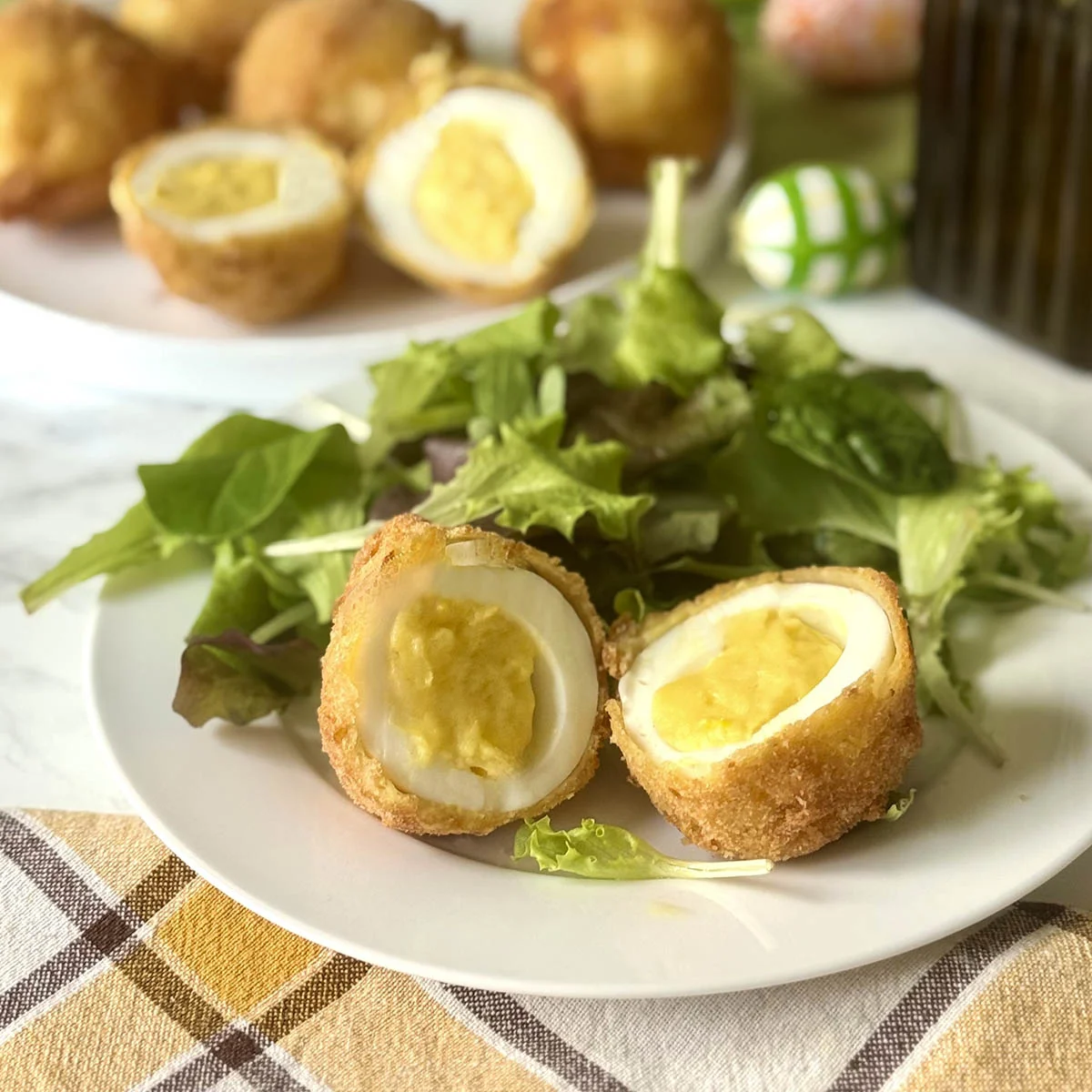
Uova alla Monachina are Neapolitan eggs filled with a smooth béchamel and yolk mixture, then coated and fried until crisp. They make a satisfying Italian appetiser, especially for a spring or Easter table.
Ingredients
- 6 largeeggs
- 200 ml (¾ cup), at room temperaturewhole milk
- 50 g (1.5 oz)plain flour
- 50 g (1.5 oz)grated Parmigiano Reggiano
- 40 gunsalted butter
- ½ teaspoonsalt
- to tastenutmeg
- to tasteblack pepper
- 100 g (1 cup)breadcrumbs
- 50 g (6 tablespoons)plain flour
- 2eggs
- 1 litre (4 cups), for fryingpeanut oil
Instructions
- 1
Boil the eggs
Put the six eggs in a saucepan and cover with cold water. Bring to the boil, then cook for 10 minutes.
- 2
Cool and peel
Transfer the cooked eggs straight into a bowl of cold water to stop them cooking. Leave them to cool completely, then peel carefully so the whites stay intact.
- 3
Separate the eggs
Cut each egg in half lengthways with a sharp knife. Remove the yolks and put them in a bowl; set the white halves aside on a tray.
- 4
Make the roux
Melt the butter in a saucepan over low heat. Stir in the first 50 g of flour to make a roux and cook for about 1 minute, stirring continuously. Slowly pour in the milk while whisking to prevent lumps.
- 5
Thicken and season
Bring the sauce to a gentle boil, stirring until it thickens. Season with salt, black pepper and nutmeg to taste; it should be thick enough to hold its shape once cool.
- 6
Blend the filling
Take the béchamel off the heat and add the reserved yolks. Blend with an immersion blender or food processor until smooth, then blend in the grated Parmigiano Reggiano.
- 7
Fill the whites
Spoon or pipe the filling generously into the egg white halves. Press the halves gently back together to reform whole eggs.
- 8
Chill the eggs
Place the stuffed eggs in the freezer for about 10–15 minutes, until the filling firms up enough to handle for breading.
- 9
Coat the eggs
Set out three bowls: one with the remaining 50 g flour, one with the breadcrumbs and one with the two beaten eggs. Dip each chilled egg in beaten egg, roll it in flour, dip it in beaten egg again, then coat it in breadcrumbs.
- 10
Heat the oil
Heat the peanut oil in a deep saucepan or frying pan to 180°C (350°F).
- 11
Fry until golden
Lower the breaded eggs carefully into the hot oil, frying only 2–3 at a time to help maintain its temperature. Fry for about 2–3 minutes, turning until golden and crisp all over, then lift out with a slotted spoon and drain on paper towels.
- 12
Serve hot
Serve the eggs hot, straight after frying, for the best crispness.
What are Uova alla Monachina?
Uova alla Monachina are a traditional Neapolitan appetiser: hard-boiled eggs are divided, filled with a rich yolk and béchamel mixture, put back together, breaded and fried. Their name and preparation belong to the cooking traditions of Naples, where they are especially associated with spring and Easter meals.
This version layers creamy filling and a crunchy shell around a whole egg. Chilling the filled eggs before coating helps keep that contrast neat through frying.
Nutrition and macros by portion
The nutrition label shows one serving as written: 311 calories, 16g protein, 27g carbs, 15g fat.
| Portion | Adjustment | kcal | Protein | Carbs | Fat |
|---|---|---|---|---|---|
| Lighter | Serve with extra greens | 218 kcal | 11g | 19g | 11g |
| This serving | As written | 311 kcal | 16g | 27g | 15g |
| Hungry | Add another stuffed egg | 467 kcal | 24g | 41g | 23g |
The eggs and Parmigiano Reggiano provide most of the protein, while the flour and breadcrumbs contribute much of the carbohydrate. Butter, cheese and the oil absorbed during frying supply most of the fat. Pair an egg with salad or vegetables to add freshness and round out the plate.
A smooth, thick béchamel
Butter and flour form the roux that gives the sauce body. Cook the roux for about a minute, then add the room-temperature milk gradually while whisking so it blends in smoothly.
Thickness matters here: the sauce needs to hold its shape once cooled, rather than running out of the egg whites. Stir as it thickens, then season with nutmeg, pepper and salt.
The filling and egg whites
Yolks first: blend the reserved yolks into the béchamel until smooth, then add the grated Parmigiano Reggiano. This makes a cohesive filling that can be spooned or piped into the whites.
Handle the whites gently when removing the yolks and cutting the eggs. Keeping them intact makes it easier to refill and press the halves together.
Why the short chill helps
The filled eggs spend 10–15 minutes in the freezer before breading. This firms the béchamel so the halves are easier to handle and less likely to shift while being coated.
Keep the chill brief as directed, then coat the eggs promptly. The sequence is egg, flour, egg again and finally breadcrumbs, giving the crumb a secure coating.
Frying for a crisp finish
Heat the peanut oil to 180°C before frying. Add only 2–3 eggs at a time, since too many in the pan can lower the oil temperature and interfere with even browning.
Use the stated 2–3 minutes as a guide and turn the eggs so they colour all over. Lift them out with a slotted spoon and let excess oil drain on paper towels.
Serving ideas
These eggs are at their crispest served hot just after frying, as the recipe directs. They work as an appetiser or as part of a larger spread of Italian-style small dishes.
For a more balanced plate, serve alongside a simply dressed green salad or seasonal vegetables. Their creamy filling and fried coating are substantial, so fresh, lightly dressed accompaniments provide contrast.
Recipe notes & tips
- Use eggs that are easy to peel, and cool them in cold water as soon as they finish boiling.
- Whisk the milk into the roux gradually to help keep the béchamel smooth.
- Blend the yolks and cheese into the sauce until the filling is even and creamy.
- Chill the re-formed eggs for the full 10–15 minutes so the filling firms up before coating.
- Fry only 2–3 eggs at a time and check that the oil is at 180°C before adding them.
- Drain the fried eggs briefly on paper towels and serve while the coating is still crisp.
Variations
- Peppery filling: Add extra black pepper to the béchamel to give the creamy centre more bite.
- More nutmeg: Grate in additional nutmeg to taste for a warmer, more aromatic filling.
- Different frying oil: Use another suitable frying oil if peanut oil is not available.
- Small appetisers: Cut the finished eggs into smaller pieces just before serving for a shared platter.
Common mistakes to avoid
- Lumpy béchamel: Pour in the milk slowly while whisking continuously.
- Thin filling: Keep stirring the sauce until it is thick enough to hold its shape when cooled.
- Broken egg whites: Peel gently and remove the yolks carefully to preserve the halves.
- Soft filling during coating: Chill the re-formed eggs for 10–15 minutes before breading.
- Loose coating: Follow the sequence of beaten egg, flour, beaten egg again and breadcrumbs.
- Crowded frying pan: Fry only 2–3 eggs at a time so the oil temperature is easier to maintain.
How to store
These are best served straight after frying, while the coating is crisp. If you have leftovers, refrigerate them in a covered container and eat within 2 days; reheat in an oven until hot, though the crust may be less crisp. Avoid storing them at room temperature.
Frequently asked questions
Can I make the filling ahead?
You can prepare the béchamel and yolk filling ahead and keep it covered in the fridge. Fill the whites, chill and bread them close to frying for the best texture.
Why do the stuffed eggs need chilling?
The short freezer chill firms the filling, making the re-formed eggs easier to coat without the halves slipping apart.
How do I know the oil is ready?
The recipe specifies 180°C. Use a kitchen thermometer to check the oil temperature before frying.
Why is the coating dipped in egg twice?
The method uses beaten egg before and after the flour, then breadcrumbs. That double egg dip helps create the recipe’s crisp outer coating.
Can I fry all the eggs at once?
No; fry only 2–3 at a time, as directed, to help the oil stay hot enough for even browning.
Can I serve these at room temperature?
They can be eaten after cooling, but the recipe recommends serving them hot and freshly fried for the best crisp texture.
Cook it from the original
This recipe comes from recipesfromitaly.com. Their page has the author’s own photos, notes and tips — the best place to cook it from.
Open the recipe on recipesfromitaly.com