
10-Minute Salmon With Yogurt Dill Sauce
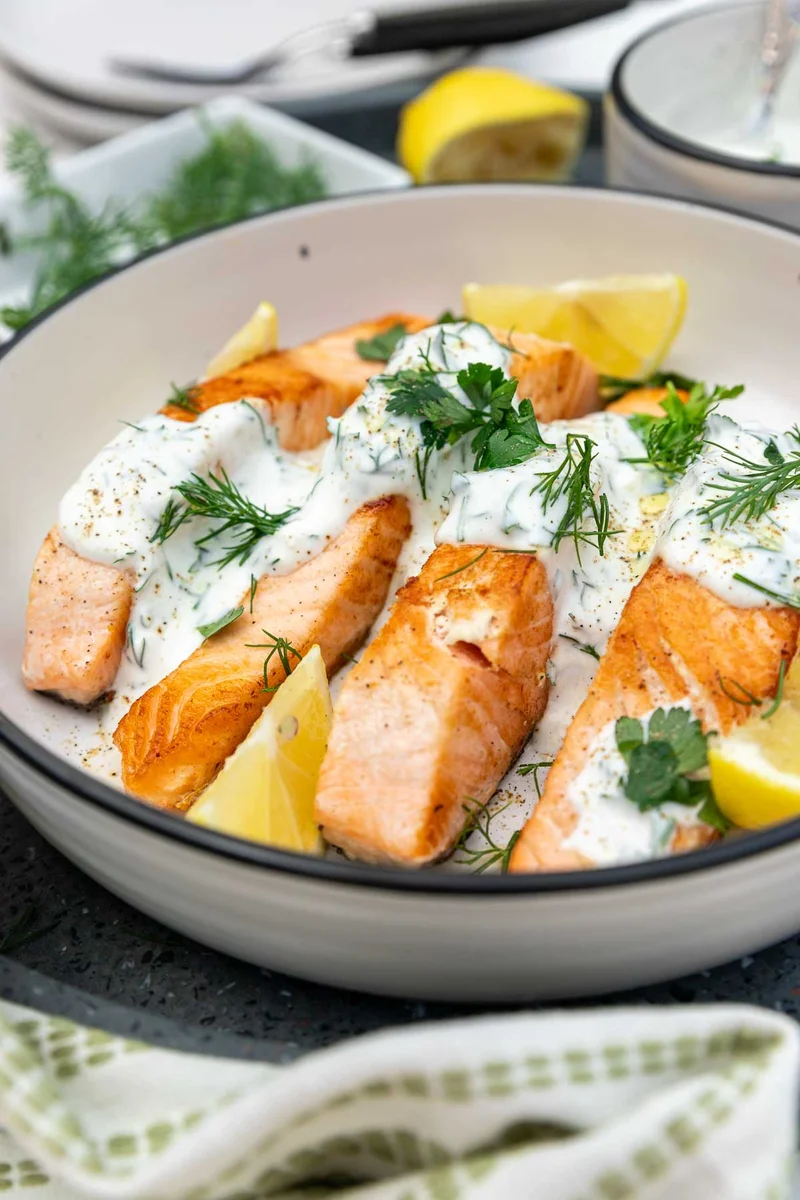
This Greek-inspired salmon pairs crisp, pan-seared skin with a cool sauce of Greek yoghurt, dill, parsley and lemon. It is a quick option for a weeknight dinner, but feels special enough to serve to guests.
Ingredients
- 454 g (1 lb)salmon, skin on, ideally in 4 thin portions
- 240 g (1 cup)Greek yoghurt
- 1 clovegarlic, crushed (use ½–1½ cloves to taste, depending on size)
- 30 ml (2 tablespoons)fresh dill, finely chopped, or 7.5 ml (1½ teaspoons) dried dill
- 30 ml (2 tablespoons)fresh parsley, finely chopped
- ½ lemonlemon juice (about 3 generous squeezes)
- 1.7 g (⅓ teaspoon), or to taste, plus extra for the salmonsalt
- 0.6 g (¼ teaspoon), or to taste, plus extra for the salmonpepper
- To tasteextra fresh herbs and lemon wedges, for serving
Instructions
- 1
Sear the salmon
Add a large drizzle of oil to a large frying pan and heat over medium-high heat until hot. Season the salmon all over with salt and pepper, then place it skin-side down in the pan. Cook without moving it for 4–5 minutes, until the skin is crisp.
- 2
Turn and finish
Carefully turn the salmon with a fish slice and cook for a further 2–3 minutes, or until just cooked through. Press gently so all parts touch the pan. If the portions are thick, briefly cook them on their sides too.
- 3
Mix the sauce
Meanwhile, stir the Greek yoghurt, crushed garlic, dill, parsley, lemon juice, salt and pepper together in a medium bowl until combined.
- 4
Serve with sauce
Spoon the yoghurt, dill and lemon sauce over the cooked salmon. Add extra fresh herbs if you like, and serve with lemon wedges for squeezing at the table.
What is salmon with yoghurt dill sauce?
This is a simple Greek-inspired pairing of pan-seared salmon and a tangy, herb-filled yoghurt sauce. Dill, parsley and lemon bring freshness, while the yoghurt gives the sauce a cool, creamy texture.
The method keeps the salmon in the spotlight: crisp the skin in a hot pan, cook the fish briefly on the other side, and serve it with the sauce. Thin portions help make the quick cooking time work.
Nutrition and macros by portion
The nutrition label shows one serving as written: 198 calories, 28g protein, 4g carbs, 7g fat.
| Portion | Adjustment | kcal | Protein | Carbs | Fat |
|---|---|---|---|---|---|
| Lighter | Use skim Greek yoghurt | 139 kcal | 20g | 3g | 5g |
| This serving | As written | 198 kcal | 28g | 4g | 7g |
| Hungry | Add a larger salmon portion | 297 kcal | 42g | 6g | 11g |
The salmon provides most of the protein and fat, while the yoghurt contributes some protein and the small amount of carbohydrate. Serve a portion with vegetables or a salad, and add a grain or potatoes if you would like a more substantial plate.
Choosing the salmon
Skin-on portions: The skin can turn crisp when it has uninterrupted contact with the hot pan. Choose four thin portions so they cook in the time given.
Even thickness: Portions of similar thickness are easier to cook evenly. If a piece is thicker, the method suggests briefly turning it onto its sides as well.
Getting crisp skin
Hot pan: Heat the pan over medium-high before adding the seasoned salmon. Starting skin-side down gives the skin time to crisp.
Leave it alone: Avoid moving the fish during the first 4–5 minutes. Once the skin is crisp, turn the salmon carefully with a fish slice.
Mixing the sauce
Yoghurt base: Greek yoghurt makes a thick, spoonable sauce. The recipe allows whole-milk or skim yoghurt; choose one made with milk and live yoghurt cultures if available.
Fresh herbs: Chop the dill and parsley finely so they spread through the sauce. If using dried dill instead, measure 7.5 ml (1½ teaspoons) and keep the parsley fresh.
Checking for doneness
First side: Cook the salmon skin-side down for 4–5 minutes, until the skin is crisp. Keep the heat at medium-high and let the fish make contact with the pan.
Second side: Cook for a further 2–3 minutes, until the salmon is just cooked through. Thicker portions may need brief cooking on their sides, as described in the method.
Serving the salmon
At the table: Spoon the sauce over the salmon just before serving, then offer extra lemon wedges and fresh herbs. This lets everyone add lemon to taste.
On the side: Serve with a quick vegetable side or another simple accompaniment to make it a fuller meal. Keep the sauce separate until serving if you want the skin to stay crisp.
Recipe notes & tips
- Pat the salmon skin dry before seasoning to help it crisp in the pan.
- Use a pan large enough to give the four portions space to make contact with its surface.
- Keep the salmon skin-side down and still for the full first 4–5 minutes.
- Taste the sauce before serving and adjust the salt, pepper or lemon to your liking.
- Spoon the sauce on at the last moment if you want to preserve the crisp skin.
Variations
- Dried dill: Replace the fresh dill with 7.5 ml (1½ teaspoons) dried dill, as suggested in the recipe.
- Garlic strength: Use anywhere from ½ to 1½ cloves to suit the size of the clove and your taste.
- Herb finish: Add extra fresh herbs at the table for a more aromatic finish.
- Extra lemon: Serve additional wedges so everyone can squeeze lemon over their own portion.
- Yoghurt choice: Use whole-milk or skim Greek yoghurt, depending on the texture and richness you prefer.
Common mistakes to avoid
- Moving the fish too soon: Leave it skin-side down for 4–5 minutes so the skin has time to crisp.
- Crowding the pan: Give the salmon room to touch the hot surface; cook in batches if needed.
- Overcooking the second side: Check after 2 minutes and stop once the salmon is just cooked through.
- Using thick portions without adjusting: Briefly cook thicker pieces on their sides too, as the method directs.
- Adding sauce too early: Spoon it on just before serving to help keep the salmon skin crisp.
How to store
Refrigerate leftover salmon and sauce separately in covered containers and use within 2 days. Reheat the salmon gently until hot throughout; the skin may lose its crispness. The sauce is best served cold and should not be reheated.
Frequently asked questions
Can I use dried dill instead of fresh?
Yes. Use 7.5 ml (1½ teaspoons) dried dill in place of the 30 ml (2 tablespoons) fresh dill.
Can I use skim Greek yoghurt?
Yes. The recipe works with either whole-milk or skim Greek yoghurt.
How do I know when the salmon is cooked?
The method says to cook it for 2–3 minutes after turning, until just cooked through. Thicker portions may need a few seconds on their sides as well.
Can I make the sauce ahead?
Yes, you can mix it ahead and keep it covered in the fridge. Spoon it over the salmon when serving.
What should I serve with it?
A quick vegetable side or salad works well. Potatoes or a grain are another option if you want a more filling meal.
Cook it from the original
This recipe comes from scrummylane.com. Their page has the author’s own photos, notes and tips — the best place to cook it from.
Open the recipe on scrummylane.com