
Burger buns
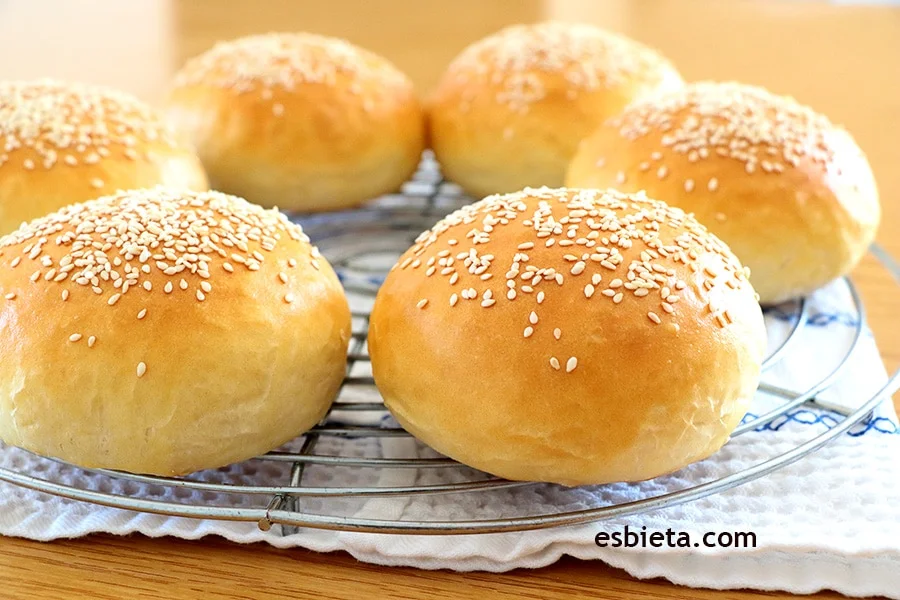
These soft, lightly enriched burger buns are made with a slow-risen yeast dough and finished with an egg wash and sesame seeds. They are sturdy enough to hold a filling while staying tender inside.
Ingredients
- 300 gstrong white bread flour
- 200 gmilk
- 6 gfresh yeast
- 6 gsalt
- 12 gsugar
- 20 gunsalted butter
- to tastesesame seeds
- as neededegg, for brushing
- 1 tbsp (15 ml)water, for the egg wash
- a splashoil, for greasing the bowl
- as neededflour, for dusting
Instructions
- 1
Heat the milk
Bring the milk to the boil in a pan and let it boil for 1 minute. Leave it to cool to 40°C; boil a little more than the recipe requires to allow for evaporation.
- 2
Mix the yeast
Put the sugar in a glass, crumble in the fresh yeast, then add the milk once it has cooled to 35–40°C. Stir until the yeast dissolves and leave the mixture for about 10 minutes to activate.
- 3
Combine dry ingredients
Sift the flour into a bowl, add the salt and stir to combine.
- 4
Form the dough
Add the yeast mixture to the flour and stir until no flour particles are visible. Cover the dough and leave it for about 20 minutes so the flour can absorb the liquid.
- 5
Knead in butter
Turn the dough out onto a clean, dry work surface and knead until smooth and blistered. After 10 minutes of kneading, work in half the butter, then add the rest and incorporate it. Knead for a further 5–8 minutes, stopping when the dough has the described smooth, blistered appearance.
- 6
First rise
Grease a container with a splash of oil, put in the dough and cover it. Leave it to rise until it is almost three times its original size; at 25°C, the recipe's dough took 1 hour 30 minutes.
- 7
Rise again
Once the first rise is complete, deflate the dough and leave it to rise again until it has tripled in size.
- 8
Shape the buns
Dust the work surface with flour, turn out the dough and knead it for 1 minute. Weigh it and divide it into 6 equal pieces, then shape them into balls.
- 9
Prepare the tray
Line a baking tray with baking paper. Arrange the dough balls on it and flatten them by hand; burger buns should be fairly flat.
- 10
Proof the buns
Cover the buns with cling film, dusting the film with flour first to help prevent sticking. Leave them to rise until they are about 2.5 times their original size.
- 11
Heat the oven
When 20 minutes remain in the final rise, heat the oven to 180°C with top and bottom heat.
- 12
Make the egg wash
Ten minutes before baking, beat an egg with 1 tablespoon of water. At 25°C, the buns in the recipe took 1 hour 10 minutes to rise.
- 13
Brush and top
Brush the risen buns with the beaten egg and sprinkle sesame seeds over them.
- 14
Bake the buns
Bake for 15–20 minutes, or until they are browned to your liking.
- 15
Cool before serving
Remove the buns from the oven and cool them on a wire rack for at least 20 minutes before eating.
What are burger buns?
Burger buns are round, leavened breads shaped to cradle a filling. This homemade version uses milk, a little sugar and butter for a soft crumb, with enough structure to hold its shape.
The recipe follows a straightforward yeast-dough approach rather than relying on a particular regional style. Long rises, careful shaping and a sesame-topped egg wash give these buns their distinctive finish.
Nutrition and macros by portion
The nutrition label shows one serving as written: 265 calories, 9g protein, 43g carbs, 6g fat.
| Portion | Adjustment | kcal | Protein | Carbs | Fat |
|---|---|---|---|---|---|
| Lighter | Smaller bun portion | 186 kcal | 6g | 30g | 4g |
| This serving | As written | 265 kcal | 9g | 43g | 6g |
| Hungry | Add a second bun | 398 kcal | 13g | 65g | 9g |
Most of the carbohydrates come from the flour, with smaller amounts from the milk and sugar; butter and the egg wash contribute much of the fat, while flour, milk and egg provide protein. Serve one bun with a protein-rich filling and vegetables or salad to round out the plate.
Choosing and handling the ingredients
Strong flour: its higher gluten-forming capacity helps the dough stretch and gives the buns enough structure for a burger.
Milk and butter: milk adds moisture and tenderness, while the butter is kneaded in gradually so it can be worked evenly through the dough.
Fresh yeast: crumble it into the sugar and lukewarm milk, then give it about 10 minutes to activate. The milk should be 35–40°C when you mix it with the yeast.
Why the dough rests
Initial rest: after mixing, cover the dough for about 20 minutes. This gives the flour time to take up the liquid before you start kneading.
Long rises: the dough rises twice before shaping, then once more as formed buns. Use the stated size increases as your guide, since the recipe's times at 25°C are examples rather than fixed proofing times.
Kneading and adding butter
Develop the dough: knead until it looks smooth and develops blisters, then begin adding the butter after 10 minutes of kneading.
Add in stages: incorporate half the butter before adding the remainder. The dough may feel slippery at first; keep kneading until the butter is absorbed and the dough is smooth again.
Shaping and proofing
Even portions: weigh the dough before dividing it into 6 pieces so the buns bake at a similar pace.
Flat rounds: shape each portion into a ball, then flatten it by hand. Leave plenty of room for the final rise, and dust the cling film with flour so it is less likely to stick.
Colour, texture and doneness
Egg wash: brush the risen buns just before baking for a glossy, browned surface. The tablespoon of water thins the beaten egg so it is easier to spread.
Baking cues: bake at 180°C for 15–20 minutes, using the colour you prefer as the cue to take them out. Cool them on a rack for at least 20 minutes so the crumb can settle before slicing.
How to serve them
These buns work with burgers, grilled vegetables or other sandwich fillings. Their fairly flat shape gives a broad surface for layering without making the finished sandwich too tall.
For a balanced plate, pair a bun and its filling with a generous serving of salad or vegetables. Split and lightly toast the cut sides if you want a firmer surface for a juicy filling.
Recipe notes & tips
- Boil extra milk because some will evaporate, then measure the amount needed.
- Check the milk temperature before adding the yeast; it should be 35–40°C.
- Use the dough's size and appearance, not the clock alone, to judge each rise.
- Weigh the dough portions so all 6 buns are evenly sized.
- Dust the cling film with flour before covering the buns to reduce sticking.
- Let the baked buns cool on a wire rack for at least 20 minutes before slicing.
Variations
- Poppy seed topping: use poppy seeds instead of sesame seeds.
- Mixed seeds: replace the sesame topping with a seed mix.
- Plain tops: skip the sesame seeds for buns without a seeded finish.
- Softer crust: leave the buns to cool under a clean tea towel.
- Toasted serving: split the cooled buns and toast the cut sides before filling.
Common mistakes to avoid
- Milk too hot: let it cool to 35–40°C before mixing it with the yeast.
- Rushed proofing: wait for the dough to reach the stated size rather than shaping it early.
- Butter added all at once: incorporate it in two additions so it is easier to work into the dough.
- Uneven portions: weigh the dough and divide it into 6 equal pieces.
- Sticky covering: dust the cling film with flour before laying it over the buns.
- Slicing too soon: cool the buns on a rack for at least 20 minutes before eating.
How to store
Once fully cool, store the buns in an airtight container or bag at room temperature for up to 2 days. Rewarm briefly in a low oven, or split and toast them; freeze for longer storage and thaw before reheating.
Frequently asked questions
Can I use dried yeast instead of fresh yeast?
This recipe specifies 6 g fresh yeast. If substituting dried yeast, follow the conversion on its packaging and check whether it needs to be activated first.
How long should the dough take to rise?
At 25°C, the first rise took 1 hour 30 minutes and the final shaped rise took 1 hour 10 minutes in the recipe. Temperature and dough conditions can affect the timing, so follow the stated size cues.
Why does the milk need to be boiled?
The method boils the milk for 1 minute, then cools it before it is mixed with the yeast. Boil a little extra to account for evaporation.
Why flatten the dough balls?
The recipe calls for fairly flat buns, which gives them a broad shape suited to holding a burger filling. Flatten each ball by hand before the final rise.
Can I leave off the sesame seeds?
Yes. The buns can be baked without them, or you can use another seed topping.
When can I slice the buns?
Wait until they have cooled on a wire rack for at least 20 minutes. This helps the crumb settle and makes the buns easier to cut.
Cook it from the original
This recipe comes from recetasdesbieta.com. Their page has the author’s own photos, notes and tips — the best place to cook it from.
Open the recipe on recetasdesbieta.com