
Duck confit with apples
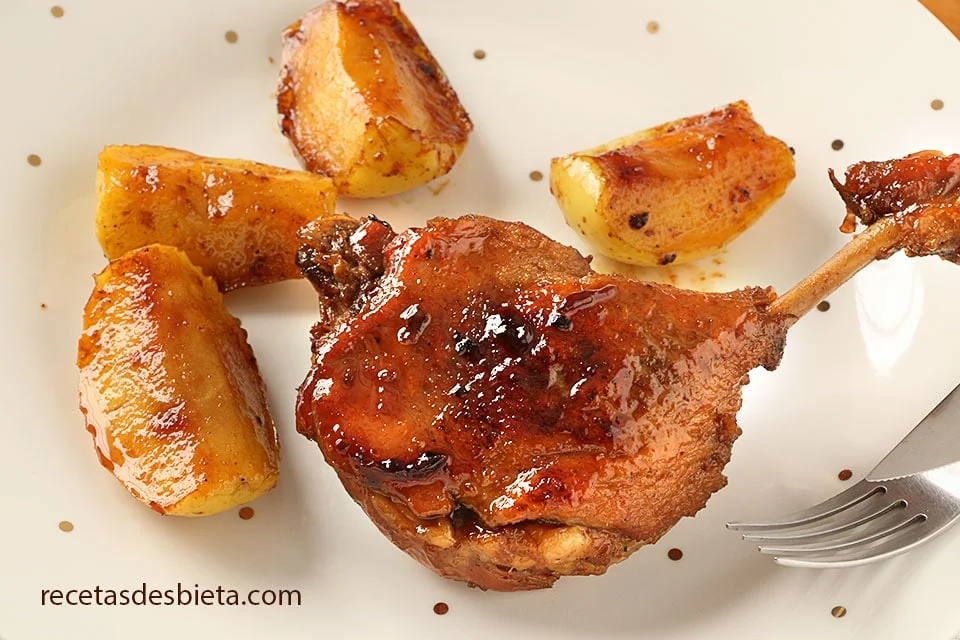
Duck confit with apples is a slow-cooked, cider-braised duck dish with tender fruit and crisp, browned skin. It takes time on the hob, but most of the cooking is hands-off and the result makes a generous centrepiece for a relaxed meal.
Ingredients
- 2–3 kgduck
- 2–4apples
- 1 bottlecider
- 8–10whole peppercorns
- to tasteground black pepper
- to tastesalt
- 1–2bay leaves
Instructions
- 1
Prepare the duck
If using a whole duck, cut it into pieces. Otherwise, ask the butcher to cut it into 8 pieces. Keep the carcass to make stock another time.
- 2
Render the fat
Put the duck pieces skin-side down in a frying pan without oil. Cook over a medium heat until the fat has rendered and the skin is browned. Turn the pieces and brown the other sides, then lift them out of the pan.
- 3
Save the fat
Pour off the duck fat and keep it for frying potatoes or adding to a stew. Store it in the fridge.
- 4
Season the duck
Return the duck pieces to the pan with the skin facing upwards. Season with salt and ground black pepper to taste.
- 5
Add the cider
Pour in the entire bottle of cider. Add the whole peppercorns and bay leaves, then bring the liquid to the boil.
- 6
Cook slowly
Once the cider is boiling, lower the heat and cook for about 2 hours. Turn the duck pieces from time to time during cooking.
- 7
Prepare the apples
Remove the cores from the apples and cut each apple into 4 pieces. Leave the skins on so the apples hold their shape.
- 8
Cook the apples
After the duck has cooked for 2 hours, tuck the apple pieces into the spaces between the duck. Cook for 10–15 minutes, until the apples are soft but not falling apart, then remove them from the pan.
- 9
Reduce the liquid
Turn the heat up to evaporate the cooking liquid. When only a little remains, turn the duck pieces so they caramelise on all sides. Once well browned, remove them from the pan.
- 10
Caramelise and serve
Put the apples back in the pan and caramelise them. When they are golden, remove them and serve with the duck.
What is duck confit with apples?
Duck confit is associated with south-western French cooking, where duck is traditionally cooked slowly in its own fat. This recipe takes a different route: the duck is first browned, then cooked gently in cider before the liquid is reduced.
Apples bring a sweet, soft counterpoint to the rich meat. Keeping their skins on helps the pieces hold together as they cook.
Nutrition and macros by portion
The nutrition label shows one serving as written: 850 calories, 55g protein, 23g carbs, 62g fat.
| Portion | Adjustment | kcal | Protein | Carbs | Fat |
|---|---|---|---|---|---|
| Lighter | Smaller duck portion | 595 kcal | 39g | 16g | 43g |
| This serving | As written | 850 kcal | 55g | 23g | 62g |
| Hungry | Extra potatoes on the side | 1275 kcal | 83g | 35g | 93g |
Duck supplies most of the protein and fat, while the apples and cider contribute most of the carbohydrates and sugars. Pair a portion with plenty of green vegetables and a modest serving of potatoes to make the plate more balanced.
Start by rendering the duck
Skin first: placing the pieces skin-side down in a dry pan lets their fat render gradually without adding oil. A medium heat gives the fat time to melt while the skin browns.
Save the fat: pour it off before adding the cider and keep it chilled for another use. It is also worth keeping the carcass separately for stock.
Keep the cider at a gentle simmer
Low heat: once the cider comes to the boil, reduce the heat and let the duck cook gently for about 2 hours. Turn the pieces occasionally so they cook evenly in the liquid.
Check the pan: the recipe gives a cooking time, but the pan should stay at a gentle simmer rather than boiling vigorously. Avoid letting the liquid disappear before the duck has had time to cook.
Add the apples near the end
Late addition: tuck the apple pieces between the duck only after its 2-hour cook. This gives them time to soften without becoming mushy.
Keep the skin: the apples are cored and quartered but not peeled, which helps them stay intact. Remove them after 10–15 minutes, when tender.
Reduce for a browned finish
Duck first: remove the apples, then raise the heat to reduce the remaining cooking liquid. Turn the duck as the liquid dwindles so the pieces can caramelise on all sides.
Apples last: once the duck is browned, take it out and return the apples to the pan to caramelise. Keep an eye on them as they colour.
What to serve alongside it
A simple green vegetable, such as green beans or cabbage, adds freshness beside the rich duck and sweet apples. Boiled or roasted potatoes also make a useful base for the pan juices.
The apples are part of the dish, not just a garnish, so serve them alongside the duck and share any remaining reduced juices at the table.
Recipe notes & tips
- Ask the butcher to cut a whole duck into 8 pieces if you do not want to portion it yourself.
- Begin with a dry pan; the duck releases its own fat as it browns.
- Keep the heat moderate while browning so the skin has time to render.
- Turn the duck occasionally during its slow cook in cider.
- Leave the apple skins on to help the pieces keep their shape.
- Save the rendered duck fat in the fridge for another recipe.
Variations
- Use firm apples: choose fruit that can hold its shape during cooking.
- Add a little thyme: tuck a sprig into the cider for an aromatic note.
- Use dry cider: it gives the braising liquid a less sweet flavour.
- Serve with potatoes: spoon the reduced cooking juices over boiled or roasted potatoes.
- Make stock: simmer the reserved duck carcass separately for a later meal.
Common mistakes to avoid
- Adding oil at the start: the duck releases its own fat, so begin in a dry pan.
- Cooking over high heat throughout: the duck needs a gentle simmer for its long cook; lower the heat after the cider boils.
- Adding apples too early: they can break down during the long braise, so add them after 2 hours.
- Peeled apples: the skins help the pieces stay together, so leave them on.
- Reducing before the duck is ready: keep enough liquid in the pan during the slow cook, then raise the heat for the final browning.
- Leaving the duck unturned: turn the pieces occasionally while they cook and again as the liquid reduces.
How to store
Refrigerate leftovers in a covered container within 2 hours and use within 3 days. Reheat gently in a pan until piping hot throughout, adding a splash of water if the sauce has become too concentrated.
Frequently asked questions
Can I use a whole duck?
Yes. Cut it into pieces first, or ask a butcher to divide it into 8 pieces. Keep the carcass for stock.
Do I need to add oil?
No. Start the duck in a dry pan, skin-side down, so its own fat can render.
When should I add the apples?
Add them after the duck has cooked for 2 hours. Cook them for 10–15 minutes, until soft but still holding their shape.
Can I peel the apples?
The recipe leaves them unpeeled because the skin helps keep the pieces intact. Remove the cores and quarter the apples instead.
How do I know the duck is ready?
The recipe calls for about 2 hours of gentle cooking before the apples are added, followed by reducing the liquid until the duck caramelises. Check that the duck is cooked through before serving.
What can I do with the rendered duck fat?
Strain and refrigerate it, then use it to fry potatoes or add richness to a stew.
Cook it from the original
This recipe comes from recetasdesbieta.com. Their page has the author’s own photos, notes and tips — the best place to cook it from.
Open the recipe on recetasdesbieta.com