
Lao Steak with Jeow Bee
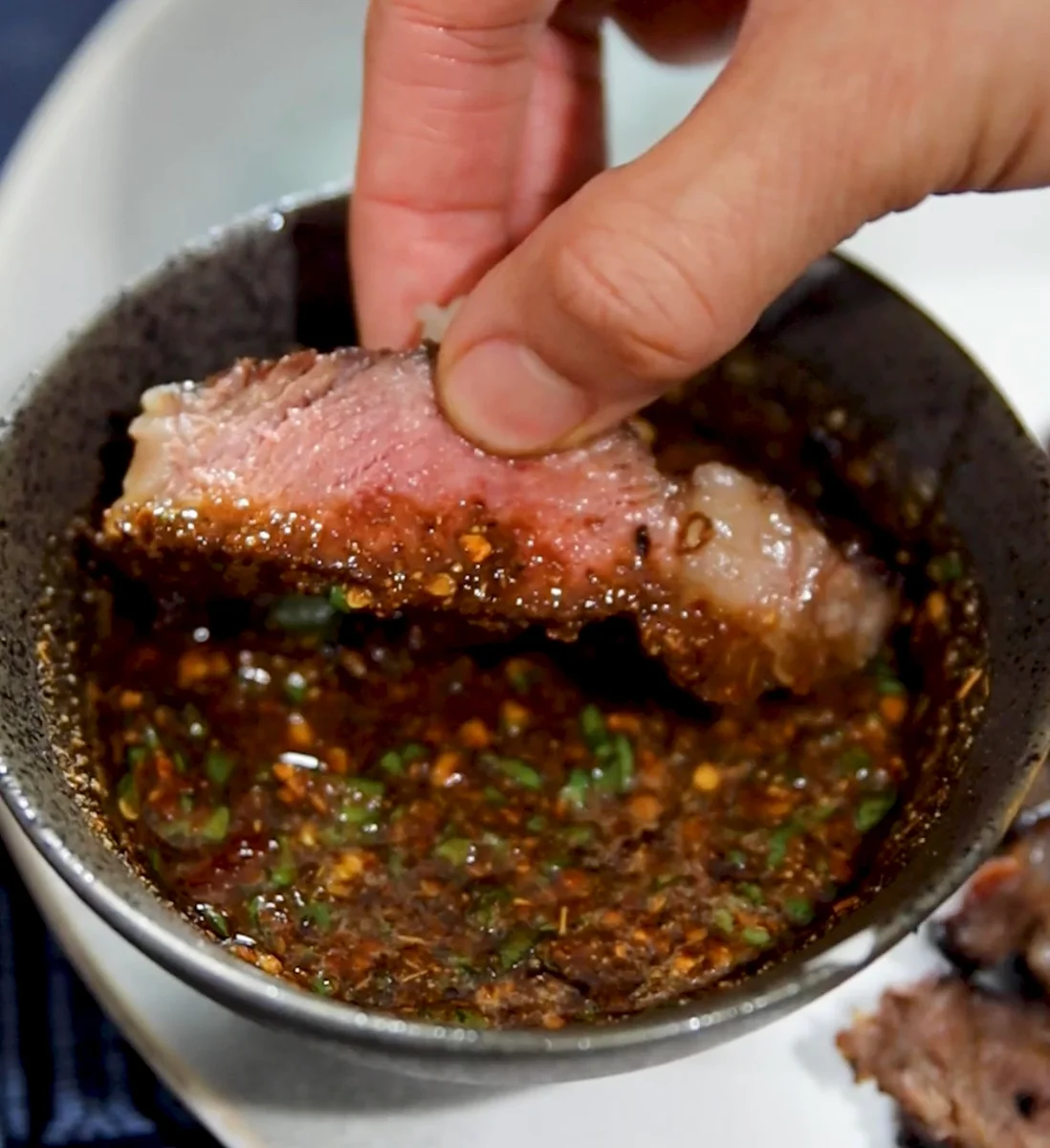
Lao steak is seasoned, seared and finished in a hot oven, then served with jeow bee, a punchy Lao dipping sauce. Make it for a barbecue-style meal and serve it with sticky rice to catch the savoury, peppery sauce.
Ingredients
- 5 ml (1 tsp)Salt
- 1.25 ml (1/4 tsp)MSG
- 2.5 ml (1/2 tsp)Sugar
- 2.5 ml (1/2 tsp)Black pepper
- 2.5 ml (1/2 tsp)Onion powder
- 2.5 ml (1/2 tsp)Ground coriander
- 2.5 ml (1/2 tsp)Paprika
- 30 ml (2 tbsp)Oyster sauce
- 15 ml (1 tbsp; 3 cloves)Garlic, minced
- 1Rib-eye steak
- 30 ml (2 tbsp)Crushed pepper
- 15 ml (1 tbsp)Khao kua (toasted rice powder)
- 2.5 ml (1/2 tsp)MSG
- 15 ml (1 tbsp)Padaek
- 30 ml (2 tbsp)Fish sauce
- 15 ml (1 tbsp)Beef bile
- A littleGreen onion and coriander leaves, sliced
- 15 ml (1 tbsp)Water
Instructions
- 1
Mix the seasonings
Combine the dry steak seasonings, from the salt through the paprika, in a small bowl. The method mentions dill seed, but none is listed in the ingredients.
- 2
Dry the steak
Pat the steak dry with paper towels.
- 3
Season both sides
Rub the dry seasoning mix over both sides of the steak.
- 4
Add sauce and garlic
Add the oyster sauce and minced garlic, then rub them over the steak so the seasoning is evenly distributed.
- 5
Marinate the steak
Leave the steak to marinate for 1 hour or overnight.
- 6
Heat the oven
Preheat the oven to 230 °C (450 °F).
- 7
Heat the skillet
Heat a cast-iron skillet for 5 minutes until very hot, then add vegetable oil.
- 8
Sear and roast
Cook the steak for 2 minutes on each side, then transfer the skillet to the oven for 6 minutes.
- 9
Check the temperature
Take the steak out and check that it has reached 54 °C (130 °F) for medium-rare.
- 10
Rest the steak
Let the steak rest for 5 minutes before serving.
- 11
Mix dry dip ingredients
In a bowl, mix the crushed pepper, khao kua and MSG.
- 12
Add wet ingredients
Stir in the padaek, fish sauce and beef bile.
- 13
Stir in the herbs
Add the sliced green onion and coriander leaves, then mix.
- 14
Loosen the dip
Add the water and stir to dilute and loosen the mixture.
- 15
Taste and adjust
Taste the jeow bee and adjust it to your preference.
What is Lao steak with jeow bee?
This dish pairs seasoned steak with jeow bee, a savoury Lao dipping sauce, and is intended to be eaten with sticky rice. It suits the communal, grilled-meat feel of a Lao barbecue.
Here, the steak is seared and finished in the oven, while the dip brings together crushed pepper, toasted rice powder, fermented fish seasoning, herbs and beef bile. The contrast between a browned steak and a sharp, textured sauce makes the pairing work.
Nutrition and macros by portion
The nutrition label shows one serving as written: 360 calories, 24g protein, 9g carbs, 25g fat.
| Portion | Adjustment | kcal | Protein | Carbs | Fat |
|---|---|---|---|---|---|
| Lighter | Use a smaller steak portion | 252 kcal | 17g | 6g | 18g |
| This serving | As written | 360 kcal | 24g | 9g | 25g |
| Hungry | Add more sticky rice | 540 kcal | 36g | 14g | 38g |
The steak provides most of the protein and much of the fat, while the sugar and toasted rice powder contribute carbohydrates. Oyster sauce, fish sauce, padaek and added salt make the dish relatively sodium-rich; serve it with sticky rice and a generous portion of vegetables to round out the plate.
Seasoning the steak
Dry rub: salt, sugar, pepper, onion powder, coriander and paprika season the meat before the oyster sauce and garlic are added. Patting the steak dry first helps the seasoning cling and gives the surface a better chance to brown.
Marinating: the recipe allows 1 hour or overnight. Keep the steak covered in the fridge if marinating overnight, then take it out while the oven and pan heat.
Building the jeow bee
Dry base: crushed pepper and khao kua give the dip its heat and toasted, grainy character. Mix these with the MSG before adding the liquid ingredients so they are distributed evenly.
Savoury ingredients: padaek, fish sauce and beef bile give the dip its distinctive fermented and intense savoury notes. Add the herbs and water last, then taste before serving.
Getting a good sear
Hot pan: give the cast-iron skillet the full 5 minutes to heat, then add the vegetable oil as directed. The steak should sizzle when it touches the pan.
Oven finish: sear each side for 2 minutes, then move the skillet to the 230 °C oven for 6 minutes. The recipe’s timing is a guide; steak thickness and starting temperature affect how quickly it cooks.
Checking doneness
Temperature: check the thickest part of the steak with a thermometer; the recipe calls for 54 °C for medium-rare. If it has not reached that temperature, continue cooking and check again.
Resting: leave the steak for 5 minutes before slicing or serving. This pause also gives you time to finish adjusting the dip.
Serving the meal
Sticky rice: serve it alongside the steak and jeow bee, as suggested in the dish description. It is handy for scooping up the dip as well as balancing its bold flavour.
Fresh herbs: keep the sliced green onion and coriander in the sauce, and serve the dip at the table so everyone can choose how much to use.
Recipe notes & tips
- Measure the dry steak seasonings before you start, and keep the dip ingredients separate from them.
- Marinate overnight in the fridge if you want to prepare the steak ahead.
- Use a thermometer in the thickest part of the steak to check for the stated 54 °C medium-rare temperature.
- Let the steak rest for the full 5 minutes before serving.
- Add the water to the jeow bee gradually so you can stop when it reaches your preferred consistency.
- Serve the dip on the side, as its fermented and peppery flavours are strong.
Variations
- Adjust the heat: use less crushed pepper for a milder jeow bee.
- Change the consistency: add water a little at a time for a looser dip.
- Add fresh herbs: increase the green onion or coriander to make the dip more herb-forward.
- Choose another steak cut: use a similarly thick steak and check its temperature rather than relying only on the timing.
- Serve with greens: add steamed or grilled vegetables alongside the sticky rice.
Common mistakes to avoid
- Skipping the drying step: moisture can hinder browning, so pat the steak dry before seasoning.
- Using a cool skillet: the steak may not sear properly, so heat the cast-iron pan for the full 5 minutes.
- Relying only on the cooking time: steak thickness varies, so check the centre with a thermometer.
- Cutting the steak straight away: juices can escape, so leave it to rest for 5 minutes.
- Adding all the water at once: the dip can become too thin, so stir it in gradually.
- Overlooking the seasoning note: the method refers to dill seed, but it is absent from the ingredient list; do not add it unless you have a separate source for that quantity.
How to store
Refrigerate leftover steak and jeow bee separately in covered containers and use within 3 days. Reheat the steak gently in a covered pan or microwave until hot; serve the dip cold or let it come to room temperature.
Frequently asked questions
Can I marinate the steak overnight?
Yes. The method allows overnight marinating; cover the steak and keep it refrigerated.
What is khao kua?
Khao kua is toasted rice powder, used here to give the jeow bee a toasted flavour and a slightly textured body.
What is padaek?
Padaek is a fermented fish seasoning used in Lao cooking. It contributes a distinctive savoury flavour to the dip.
Can I make the jeow bee less spicy?
Yes. Reduce the crushed pepper, then taste and adjust the dip before serving.
Why does the method mention dill seed?
The method refers to dry seasonings from salt to dill seed, but dill seed is not included in the provided ingredient list. The listed steak seasonings finish with paprika.
What should I serve with the steak?
Serve it with sticky rice, as suggested in the dish description. Vegetables are also a useful accompaniment.
Cook it from the original
This recipe comes from saengskitchen.com. Their page has the author’s own photos, notes and tips — the best place to cook it from.
Open the recipe on saengskitchen.com