
Fajita Vegetables (Copycat Chipotle)
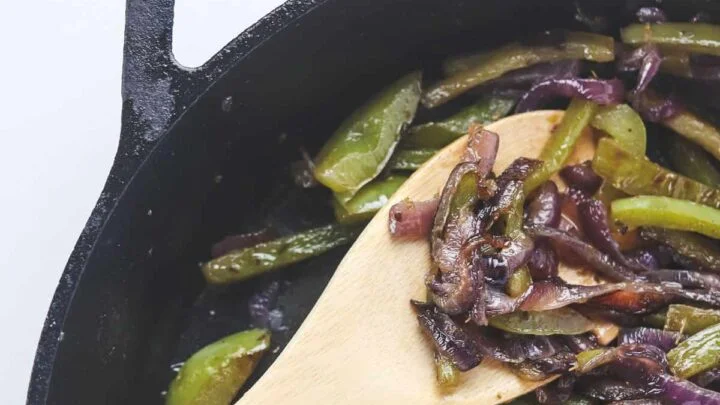
These quick fajita vegetables pair sweet, tender peppers and onion with oregano, cooked in a hot skillet. Make them as a warm topping for tacos, burrito bowls or other Mexican-inspired meals.
Ingredients
- 2 tablespoonsolive oil
- 2 largegreen peppers
- 1 largered onion
- 1/2 teaspoon (or 1 tablespoon fresh)dried oregano (or fresh oregano)
- 1/2 teaspoonsalt
Instructions
- 1
Slice the vegetables
Core the peppers and cut them into thin strips. Slice the red onion into thin strips as well.
- 2
Heat the skillet
Set a large cast-iron skillet over medium heat and add the olive oil.
- 3
Sauté the vegetables
When the oil is hot, add the peppers, onion, oregano and salt. Sauté for about 10 minutes, stirring frequently, until the vegetables are tender.
- 4
Serve warm
Take the skillet off the heat and serve the vegetables warm.
What are fajita vegetables?
Fajita vegetables are strips of peppers and onion cooked until tender, often served alongside or inside tortillas. Fajita-style cooking is associated with Tex-Mex food, and this version takes its cue from the pepper-and-onion topping served at Chipotle.
A short skillet cook keeps the vegetables distinct rather than turning them into a sauce. Oregano and salt give them a simple savoury flavour that works across tacos, bowls and other dishes.
Nutrition and macros by portion
The nutrition label shows one serving as written: 45 calories, 0g protein, 4g carbs, 3g fat.
| Portion | Adjustment | kcal | Protein | Carbs | Fat |
|---|---|---|---|---|---|
| Lighter | Use less olive oil | 31 kcal | 0g | 3g | 2g |
| This serving | As written | 45 kcal | 0g | 4g | 3g |
| Hungry | Larger vegetable portion | 68 kcal | 0g | 6g | 5g |
The olive oil supplies most of the fat, while the peppers and onion contribute carbohydrates; there is little protein in the listed ingredients. To make a more balanced plate, serve a portion with beans or another protein-rich filling and a grain such as rice.
Choosing and cutting the vegetables
Peppers: Choose large, firm green peppers and remove their cores before slicing. Thin, even strips cook at a similar pace.
Onion: A large red onion brings sweetness and colour as it softens. Cut it into strips about as thick as the pepper strips.
Getting the skillet ready
Cast iron: Heat the large skillet over medium heat before adding the oil, as directed. A hot pan helps the vegetables start cooking promptly.
Oil: Add the olive oil to the preheated pan and wait until it is hot before adding the vegetables. Keep the heat at medium so they can soften without scorching.
Sautéing for the right texture
Stirring: Stir frequently as the vegetables cook for about 10 minutes. This helps them cook evenly and prevents the strips from sitting against the hot pan for too long.
Doneness: Look for tender vegetables that still hold their shape. If they need more time to reach that texture, continue cooking and keep stirring.
Seasoning the vegetables
Oregano: Dried oregano is added with the vegetables; fresh oregano is offered as an alternative. The listed swap is 1 tablespoon fresh oregano for 1/2 teaspoon dried.
Salt: Add the salt with the oregano so it seasons the vegetables as they cook. Taste at the end and adjust only if needed.
Serving ideas
Tacos and bowls: Spoon the warm vegetables into tacos or over a burrito bowl. They also make a colourful topping for other Mexican-inspired dishes.
A balanced plate: Pair them with a protein-rich filling and a source of grains or beans for a more substantial meal. Serve straight from the skillet while warm.
Recipe notes & tips
- Cut the peppers and onion into similarly sized strips so they soften at about the same rate.
- Preheat the skillet before adding the olive oil.
- Wait until the oil is hot before adding the vegetables.
- Stir frequently during the 10-minute sauté.
- Use the listed fresh oregano alternative if you do not have dried oregano.
Variations
- Use mixed peppers: Replace some green pepper with another colour for a different look.
- Choose fresh oregano: Use 1 tablespoon fresh oregano in place of 1/2 teaspoon dried.
- Add spice: Serve with a separate spicy salsa or hot sauce.
- Make it a taco filling: Add the warm vegetables to tortillas with your chosen filling.
- Top a bowl: Spoon the vegetables over a rice or bean bowl.
Common mistakes to avoid
- Uneven strips: Cut the peppers and onion to similar thickness so they cook more evenly.
- Adding vegetables too soon: Let the oil become hot before putting the sliced vegetables in the pan.
- Infrequent stirring: Stir often during cooking to help the vegetables soften evenly.
- Overcooking: Check for tenderness at about 10 minutes and take the skillet off the heat once the vegetables are tender.
- Serving cold: Serve the vegetables warm, as directed.
How to store
Refrigerate leftovers in a covered container for up to 3–4 days. Reheat in a skillet over medium heat, stirring until warmed through, or use a microwave-safe dish.
Frequently asked questions
Can I use fresh oregano instead of dried?
Yes. The recipe gives 1 tablespoon fresh oregano as the alternative to 1/2 teaspoon dried oregano.
Can I use a different type of skillet?
The method specifies a large cast-iron skillet. Use a large skillet that can hold the vegetables in a reasonably even layer if you do not have cast iron.
How do I know when the vegetables are done?
They should be tender after about 10 minutes of sautéing while still holding their shape. Stir frequently as they cook.
Can I prepare the vegetables ahead of time?
You can slice the peppers and onion in advance and keep them covered in the refrigerator. Cook them in the skillet shortly before serving for the warmest result.
What can I serve these vegetables with?
Use them as a warm topping for tacos, burrito bowls or other Mexican-inspired dishes. They pair well with a protein-rich filling and rice or beans.
Cook it from the original
This recipe comes from skinnycomfort.com. Their page has the author’s own photos, notes and tips — the best place to cook it from.
Open the recipe on skinnycomfort.com