
Asparagus Prosciutto Phyllo Tart
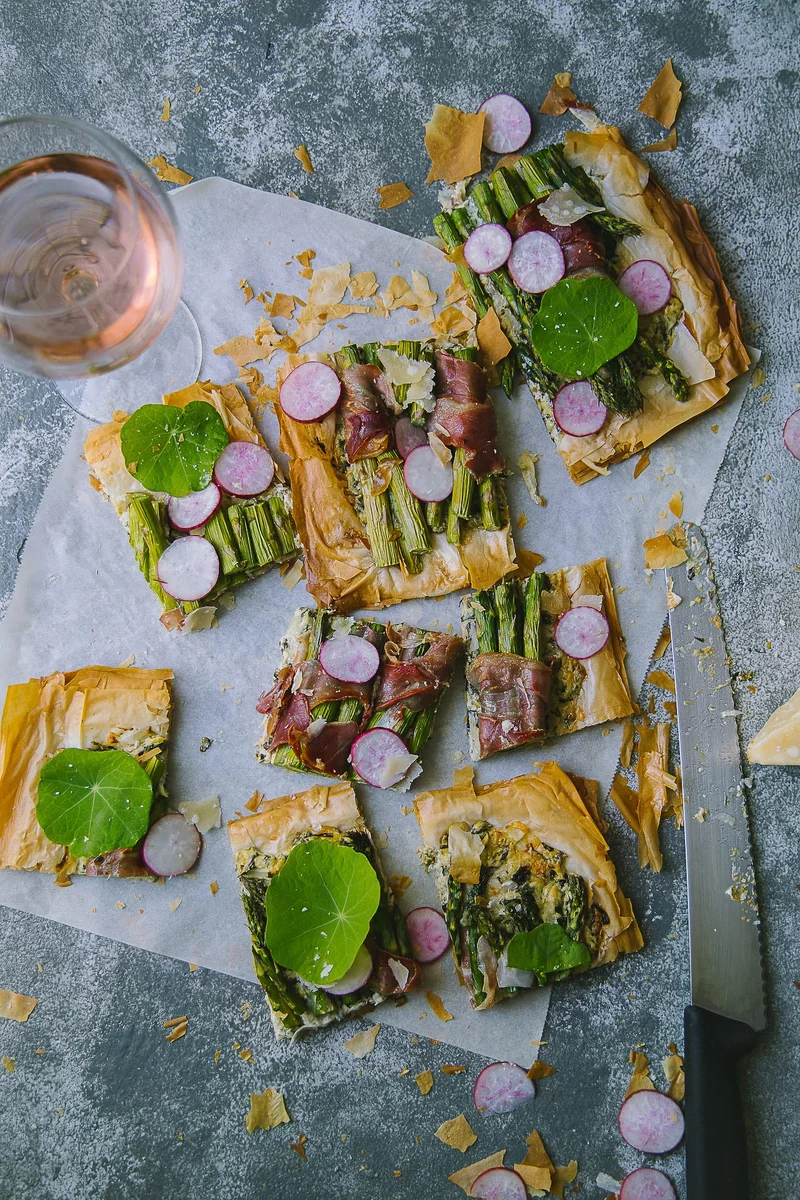
This crisp phyllo tart layers asparagus and prosciutto over spinach-artichoke dip for an easy warm appetiser or light meal. It is a useful choice when you want flaky pastry without making dough from scratch.
Ingredients
- 1/2 packetphyllo pastry sheets
- 15 to 16asparagus spears, ends trimmed
- 12 slicesprosciutto
- 120 ml (1/2 cup)spinach-artichoke dip
- as neededoil, for brushing the phyllo sheets
- to tastethinly sliced radish and nasturtium leaves, optional garnish
Instructions
- 1
Preheat the oven
Heat the oven to 200°C (400°F).
- 2
Cover the pastry
Unwrap the thawed phyllo sheets and keep a damp kitchen towel nearby to cover them.
- 3
Cut the sheets
While the sheets are still stacked together, cut the stack in half lengthwise. Roll up the half you are not using and return it to the freezer.
- 4
Prepare the oil
Set out everything needed to assemble the tart. Pour some oil into a bowl and have a pastry brush ready.
- 5
Layer the phyllo
Place one phyllo sheet on a baking tray and brush it with oil. Add another sheet and brush it too; repeat until all the sheets are layered. Small tears are fine.
- 6
Add the toppings
Spoon the spinach-artichoke dip over the pastry and spread it evenly. Arrange the asparagus and prosciutto on top.
- 7
Bake until golden
Bake for 20 to 25 minutes, until the edges are golden brown.
- 8
Garnish the tart
Finish with sliced radish and a few nasturtium leaves.
- 9
Serve while warm
Serve straight away while the tart is still warm.
What is a phyllo tart?
Phyllo is a paper-thin pastry used in cooking across the Eastern Mediterranean and beyond. This tart is a simple, savoury way to use it, rather than a traditional named dish.
Here, crisp pastry supports creamy spinach-artichoke dip, tender asparagus and salty prosciutto. Layering and brushing the sheets gives the base its flaky texture.
Nutrition and macros by portion
The nutrition label shows one serving as written: 290 calories, 14g protein, 16g carbs, 15g fat.
| Portion | Adjustment | kcal | Protein | Carbs | Fat |
|---|---|---|---|---|---|
| Lighter | Use less dip and oil | 203 kcal | 10g | 11g | 11g |
| This serving | As written | 290 kcal | 14g | 16g | 15g |
| Hungry | Serve a larger slice | 435 kcal | 21g | 24g | 23g |
The phyllo provides most of the carbohydrates, while the brushing oil and dip contribute much of the fat; prosciutto supplies most of the protein and a substantial share of the salt. Balance a serving with a generous green salad or another lightly dressed vegetable side.
Keep the phyllo manageable
Thawed pastry: keep the unused sheets covered with a damp towel while you work, as exposed phyllo can dry out quickly and become brittle.
Small tears: carry on if a sheet splits slightly; the overlapping layers help make a sturdy base.
Build crisp layers
Oil: brush each sheet lightly before adding the next so the layers can bake up crisp. Avoid leaving dry patches, but do not soak the pastry.
Tray: lay the sheets flat on the baking tray and keep the topping spread within the pastry edges.
Balance the toppings
Dip: spread it in an even layer so each bite gets some creamy filling without weighing down one area of the pastry.
Asparagus: arrange the trimmed spears across the surface, then add the prosciutto. Even spacing helps the tart bake consistently and makes it easier to portion.
Watch for doneness
Edges: use the stated 20 to 25 minutes as a guide, and look for a golden-brown finish around the pastry.
Oven: ovens can vary, so check near the end of the baking time. Let the tart come out once the phyllo is visibly crisp and coloured.
Serve it warm
Garnish: add the radish and nasturtium leaves after baking so they stay fresh and bright.
On the side: pair a slice with a green salad or simple vegetable soup for a fuller meal. The tart is also easy to serve in smaller pieces as an appetiser.
Recipe notes & tips
- Keep the unused phyllo covered as you assemble the tart.
- Brush the sheets evenly but lightly to avoid greasy patches.
- Trim the woody ends from the asparagus before arranging the spears.
- Spread the dip in a thin, even layer so the pastry can crisp.
- Check the pastry near the end of baking, as browning can happen quickly.
- Add the optional garnish just before serving.
Variations
- Add lemon: grate a little lemon zest over the tart after baking for a fresh finish.
- Use feta: crumble a small amount over the dip for a tangy variation.
- Swap the greens: use thinly sliced spring onions in place of the radish garnish.
- Make it vegetarian: omit the prosciutto and add extra asparagus.
- Add herbs: scatter chopped parsley over the tart just before serving.
Common mistakes to avoid
- Leaving phyllo uncovered: it dries and becomes fragile, so keep the stack under a damp towel.
- Using too much oil: excess can make the layers greasy, so brush on a thin coating.
- Spreading dip too thickly: a heavy layer can soften the base, so keep it even and moderate.
- Crowding the toppings: packed asparagus can bake unevenly, so space the spears across the tart.
- Skipping the colour check: pastry may need a little more or less time, so use golden edges as the cue.
How to store
For the best crisp texture, serve the tart as soon as it is baked. Refrigerate leftovers in a covered container for up to 2 days, then reheat on a baking tray in a 180°C oven until hot; the pastry may soften in storage.
Frequently asked questions
Can I use frozen phyllo?
Yes, thaw it according to the packet directions before opening. Keep the thawed sheets covered with a damp towel while assembling.
Can I prepare the tart ahead?
You can trim the asparagus and prepare the other toppings ahead, but assemble and bake the tart close to serving so the phyllo stays crisp.
How do I know when the tart is ready?
Bake for 20 to 25 minutes and look for golden-brown edges and crisp-looking pastry.
Can I leave out the prosciutto?
Yes. Omit it for a vegetarian tart, or use extra asparagus to fill the space.
What can I use instead of nasturtium leaves?
The garnish is optional. Leave it off or use a few fresh herb leaves if you have them.
Can I freeze leftover baked tart?
Freezing is not ideal because the pastry can lose its crisp texture. Refrigerate leftovers and reheat them in the oven instead.
Cook it from the original
This recipe comes from playfulcooking.com. Their page has the author’s own photos, notes and tips — the best place to cook it from.
Open the recipe on playfulcooking.com