
Indian Masala Chai (Spiced Milk Tea)
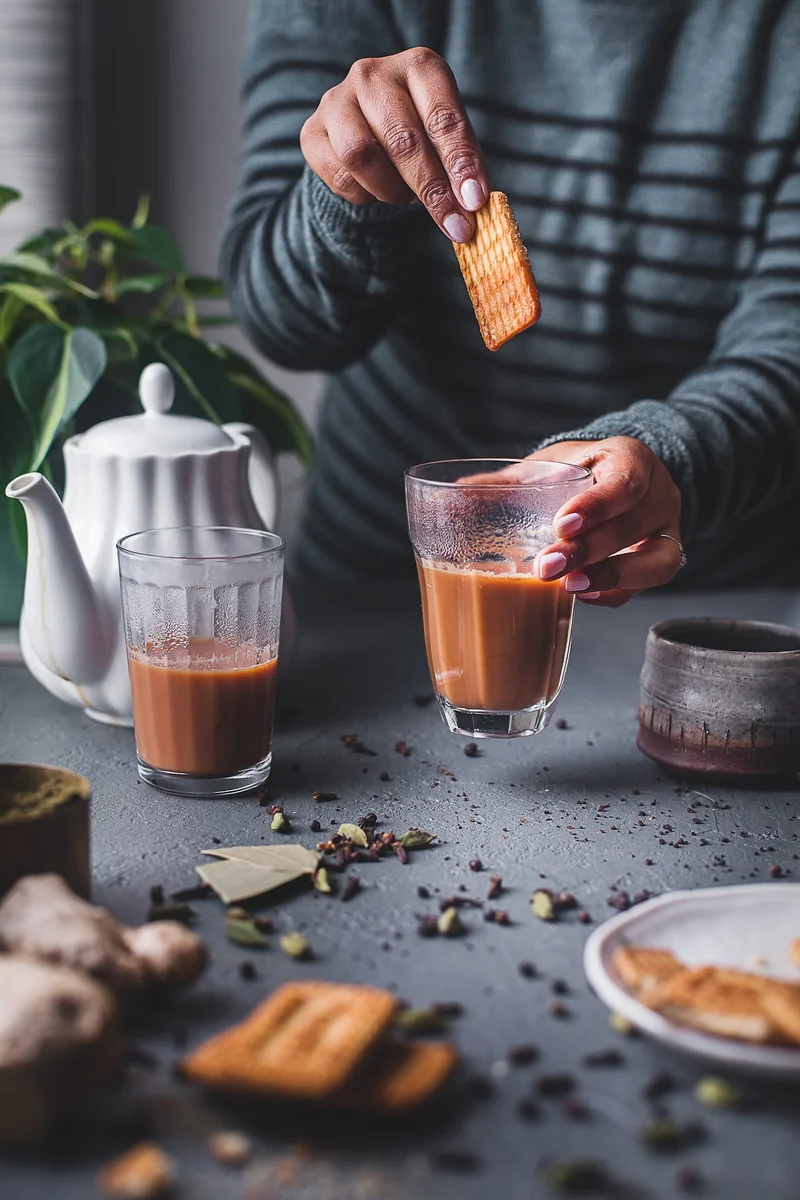
Indian masala chai is black tea simmered with milk, sugar, ginger and a fragrant blend of spices. This quick stovetop version makes four warm, sweet cups, with the spice mix freshly ground for a fuller aroma.
Ingredients
- 240 ml (1 cup)water
- 240 ml (1 cup)whole milk
- 2 tablespoonssugar
- 1 tablespoonblack tea leaves
- 23 g (0.80 oz)fresh ginger
- 7 g (0.25 oz)bay leaves
- 16 g (0.55 oz)green cardamom
- 8.5 g (0.30 oz)cloves
- 8.5 g (0.30 oz)black pepper
Instructions
- 1
Grind the spices
Grind the spices together for the chai masala, choosing either a fine or coarse texture.
- 2
Combine the chai
Set a heavy-based saucepan over high heat. Add the water, milk, sugar and tea leaves, mix, then stir in the chai masala and continue heating.
- 3
Add the ginger
When the milk is warm, grate or pound the fresh ginger and add it to the pan.
- 4
Simmer the tea
When the milk comes to a boil, reduce the heat to medium and simmer for 3 minutes, or until the tea turns darker and a thin skin begins to form on the surface.
- 5
Strain and serve
Strain the tea and serve it warm straight away.
What is masala chai?
Masala chai is Indian spiced tea made by simmering black tea with milk, sweetener and aromatic spices. The exact blend varies from kitchen to kitchen, and this version combines cardamom, cloves, black pepper and bay with fresh ginger.
Grinding the spices just before cooking helps their aromas come through in a short simmer. Milk softens the spices and gives the tea its rounded, comforting character.
Nutrition and macros by portion
The nutrition label shows one serving as written: 63 calories, 2g protein, 11g carbs, 2g fat.
| Portion | Adjustment | kcal | Protein | Carbs | Fat |
|---|---|---|---|---|---|
| Lighter | Use less sugar | 44 kcal | 1g | 8g | 1g |
| This serving | As written | 63 kcal | 2g | 11g | 2g |
| Hungry | Serve with a snack | 95 kcal | 3g | 17g | 3g |
The milk contributes most of the protein and fat, while the sugar and milk provide most of the carbohydrates. Serve a cup alongside a savoury snack or breakfast with vegetables or fruit to make it part of a more varied plate.
The spice blend
Whole spices: grind the bay leaves, cardamom, cloves and black pepper together, as directed, to make the chai masala. A coarse grind leaves a more rustic cup, while a finer grind releases the flavours more quickly but may need careful straining.
Fresh ginger: add it after the milk has warmed rather than grinding it into the dry mix. Grating or pounding it helps it release its sharp, warming flavour into the simmering tea.
Choose the right pan
Heavy base: a heavy-based saucepan heats more evenly, which is useful when milk is brought to a boil. Use a pan with enough room for the mixture to rise as it heats.
Watch closely: milk can foam up quickly once boiling, so stay by the hob and be ready to lower the heat.
Watch the simmer
Boil cue: wait for the milk to come to a boil before reducing the heat to medium. The recipe then simmers the chai for 3 minutes.
Colour cue: look for a darker shade and a thin skin forming on top. These are the visual signs given in the method that the tea has simmered long enough.
Strain for a smooth cup
Fine particles: the freshly ground spices and tea leaves need to be caught before serving. Pour the chai through a fine sieve into cups or a warmed teapot.
Serve promptly: this tea is intended to be served warm straight after straining, while its spice aroma is at its most noticeable.
Serve it with
A small sweet: biscuits or a lightly sweetened baked treat make a simple match for the spiced milk tea. Choose something that will not overpower the cardamom and ginger.
A savoury bite: serve it alongside a savoury breakfast or snack if you want a contrast to the chai’s sugar and milk.
Recipe notes & tips
- Grind the dry spices immediately before making the chai for a more aromatic blend.
- Keep a close eye on the saucepan as milk approaches a boil.
- Grate or pound the ginger so it can flavour the tea during the short simmer.
- Use a fine sieve if you prefer fewer spice particles in the cup.
- Serve as soon as the chai has been strained.
Variations
- Reduce the sweetness: use less sugar for a less sweet cup.
- Make it stronger: simmer the tea for longer than 3 minutes, watching the colour and milk closely.
- Use a coarse grind: leave the spices more roughly ground for a rustic, aromatic brew.
- Adjust the spice balance: use less black pepper for a gentler heat.
- Use a plant-based milk: substitute a plant-based alternative for the whole milk, noting that the flavour and texture will change.
Common mistakes to avoid
- Walking away as it heats: milk can rise quickly at a boil, so watch the pan and lower the heat promptly.
- Adding ginger too early: add it once the milk is warm, as the method specifies.
- Skipping the simmer: give the chai the full 3 minutes at medium heat for the stated colour and surface cues.
- Grinding too finely: very fine spice particles can pass through a coarse strainer, so use a fine sieve.
- Leaving the spices in the finished tea: strain before serving to remove the leaves and ground spices.
How to store
For the best flavour, drink the chai freshly made. If needed, refrigerate leftovers in a covered container for up to 2 days and reheat gently in a saucepan, without letting the milk boil over.
Frequently asked questions
Can I make the chai masala ahead?
Yes. Grind the dry spices ahead and keep them in an airtight container, away from heat and light. Add the fresh ginger separately while making the tea.
Do I have to use whole milk?
Whole milk is what this recipe calls for and gives the chai a full texture. You can substitute another milk, but the result will differ.
How do I stop the milk boiling over?
Stay beside the pan as it heats and reduce the heat as soon as the milk boils. A heavy-based saucepan with room at the top also helps.
Can I make the tea less sweet?
Yes. Reduce the 2 tablespoons of sugar to suit your taste; the spices and tea will still flavour the drink.
Why should I strain the chai?
Straining removes the tea leaves and ground spices, making the finished drink easier to sip.
Cook it from the original
This recipe comes from playfulcooking.com. Their page has the author’s own photos, notes and tips — the best place to cook it from.
Open the recipe on playfulcooking.com