
Labra (Mix Vegetable Medley)
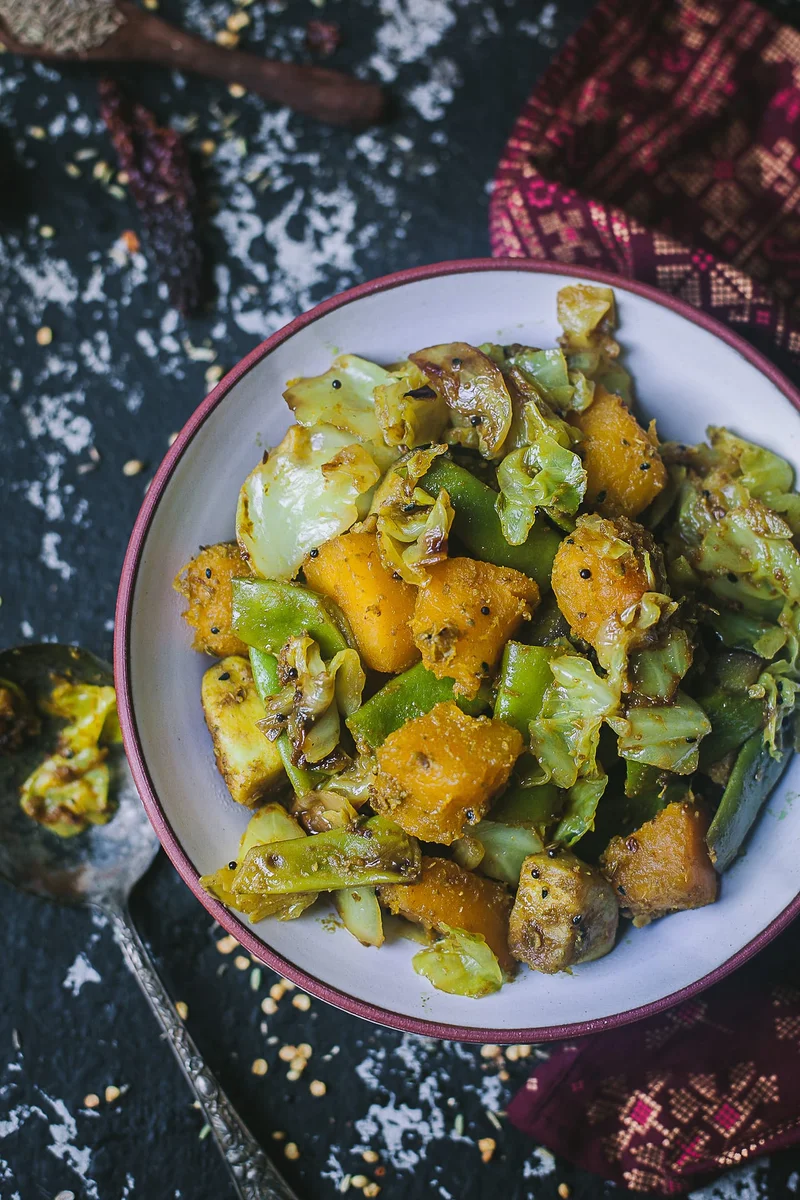
Labra is a Bengali-style medley of vegetables cooked with whole spices and a freshly ground spice blend. Staggering the vegetables as they go into the pan helps the firmer pumpkin and sweet potato soften without overcooking the rest.
Ingredients
- 324 g (11.45 oz)pumpkin
- 248 g (8.75 oz)aubergine
- 330 g (11.7 oz)cabbage
- 137 g (4.85 oz)sweet potato
- 154 g (5.45 oz)flat green beans
- 1 tablespooncumin seeds
- 1 tablespooncoriander seeds
- 1 tablespoonfennel seeds
- 2 tablespoonsmustard oil
- 1 tablespoonpaanch phoron
- 2dried red chillies
- 1 teaspoonsalt
- 1/2 teaspoonsugar
- 1/2 teaspoonturmeric
Instructions
- 1
Prepare vegetables
Peel the pumpkin and sweet potato and trim the ends of the beans. Cut all the vegetables into chunks slightly larger than bite-sized.
- 2
Toast and grind
In a pan over medium heat, dry-roast the cumin, coriander and fennel seeds for a few seconds. Grind them with a pestle and mortar or spice grinder, then set aside.
- 3
Mix paanch phoron
If making paanch phoron at home, combine equal portions of fenugreek, cumin, nigella, black mustard and fennel seeds. It is also available from Indian food shops.
- 4
Cook firm vegetables
Set a large, heavy-based pan over medium heat and add the oil. Once hot, add the paanch phoron and dried red chillies; let them sizzle for a few seconds. Add the pumpkin and sweet potato with the salt, sugar and turmeric. Stir, cover and cook for 10 minutes, stirring once halfway through.
- 5
Add remaining vegetables
After 10 minutes, add the remaining vegetables and stir to combine. Cover and cook for 5 minutes.
- 6
Finish with spices
Once the vegetables have released their juices and softened, sprinkle in the reserved ground spice mixture. Toss to coat and cook for 2 more minutes.
- 7
Check seasoning
Taste and add more salt if needed.
What is labra?
Labra is a Bengali vegetable medley, often associated with home cooking and festive meals. It brings several vegetables together in one pan, seasoned with whole spices and a fragrant ground blend.
This version uses pumpkin, sweet potato, aubergine, cabbage and flat green beans. Adding the firmer vegetables first gives them a head start while keeping the later additions from cooking for too long.
Nutrition and macros by portion
The nutrition label shows one serving as written: 185 calories, 5g protein, 30g carbs, 7g fat.
| Portion | Adjustment | kcal | Protein | Carbs | Fat |
|---|---|---|---|---|---|
| Lighter | Use less mustard oil | 130 kcal | 4g | 21g | 5g |
| This serving | As written | 185 kcal | 5g | 30g | 7g |
| Hungry | Serve with extra rice | 278 kcal | 8g | 45g | 11g |
The pumpkin, sweet potato and other vegetables provide most of the carbohydrates, while mustard oil supplies most of the fat. This vegetable dish has little protein on its own; serve it with dal or another protein-rich accompaniment to make a more balanced plate.
The spice blend
Freshly toasted seeds: cumin, coriander and fennel are roasted briefly, then ground. Keep the pan moving and take them off the heat once fragrant so they do not burn.
Paanch phoron: this whole-spice mixture seasons the oil at the start. If mixing it yourself, use equal portions of fenugreek, cumin, nigella, black mustard and fennel seeds.
Why the vegetables go in stages
Firm first: pumpkin and sweet potato need more time to soften, so they cook under cover with the salt, sugar and turmeric for 10 minutes.
Tender later: the other vegetables go in for the final 5 minutes of covered cooking. This helps them soften while retaining some shape.
Managing the pan
Heavy-based cookware: a large pan distributes heat more evenly and gives the vegetables room to cook together. Keep the heat at medium and stir as directed to reduce the chance of sticking.
Covered cooking: the vegetables release their own juices as they soften. Avoid adding water unless the pan is catching; the method relies on those juices to cook the mixture.
Texture and doneness
Tender chunks: check that the pumpkin and sweet potato are soft enough to pierce but still hold their shape. The cabbage, aubergine and beans should be softened after their shorter cooking time.
Final seasoning: mix in the ground spices for the last 2 minutes, then taste for salt. The vegetables should be coated in the spiced juices rather than dry.
Serving ideas
Serve labra hot as a vegetable side or as part of a larger meal. Rice or flatbreads make a simple accompaniment and can help catch the cooking juices.
For a fuller plate, pair it with a protein-rich dish such as dal or beans. Keep the accompaniments simply seasoned so the aromatic spices remain prominent.
Recipe notes & tips
- Cut the vegetables into similarly sized chunks so they cook at a similar rate within each stage.
- Have the ground spice mixture ready before you start cooking the vegetables.
- Toast the seeds only briefly; take them off the heat as soon as they smell fragrant.
- Use a pan with a well-fitting lid to keep the vegetables covered as they soften.
- Taste for salt at the end, since the vegetables release juices as they cook.
Variations
- Adjust the heat: use one dried chilli instead of two for a milder dish.
- Change the vegetables: replace one vegetable with another firm seasonal vegetable, adding it at the stage that suits its cooking time.
- Make paanch phoron: mix equal portions of fenugreek, cumin, nigella, black mustard and fennel seeds.
- Serve with dal: add a bowl of dal alongside for a more substantial meal.
- Use a different oil: choose another cooking oil if mustard oil is unavailable, noting that the flavour will change.
Common mistakes to avoid
- Burning the toasted seeds: roast them only for a few seconds and remove them as soon as they are fragrant.
- Adding every vegetable at once: start with pumpkin and sweet potato so they have time to soften.
- Cutting uneven chunks: keep the pieces similar in size within each vegetable to encourage even cooking.
- Cooking uncovered: keep the lid on during the timed stages so the vegetables can soften in their released juices.
- Skipping the final taste: check the seasoning after cooking and add salt if needed.
How to store
Cool leftovers promptly and store them in a covered container in the fridge for up to 3 days. Reheat in a covered pan over a low heat until hot throughout, adding a small splash of water if needed.
Frequently asked questions
Can I make paanch phoron at home?
Yes. Mix equal portions of fenugreek, cumin, nigella, black mustard and fennel seeds, as described in the method.
Can I use a different mix of vegetables?
You can swap in similar vegetables, but account for how quickly they soften. Add firmer vegetables earlier and more tender ones later.
Do I need to add water?
The vegetables are expected to release juices as they cook. Keep the pan covered; add only a small splash if the mixture begins to catch.
How can I tell when the vegetables are done?
The pumpkin and sweet potato should be easy to pierce but still hold their shape, and the remaining vegetables should be softened after their shorter cooking stage.
What can I serve with labra?
Serve it with rice or flatbreads, or include it alongside dal as part of a larger meal.
Can I make it less spicy?
Use one dried red chilli instead of two, or leave the chillies out if you prefer no chilli heat.
Cook it from the original
This recipe comes from playfulcooking.com. Their page has the author’s own photos, notes and tips — the best place to cook it from.
Open the recipe on playfulcooking.com