
Chicken Teriyaki Noodle Soup | Slimming & Weight Watchers Friendly
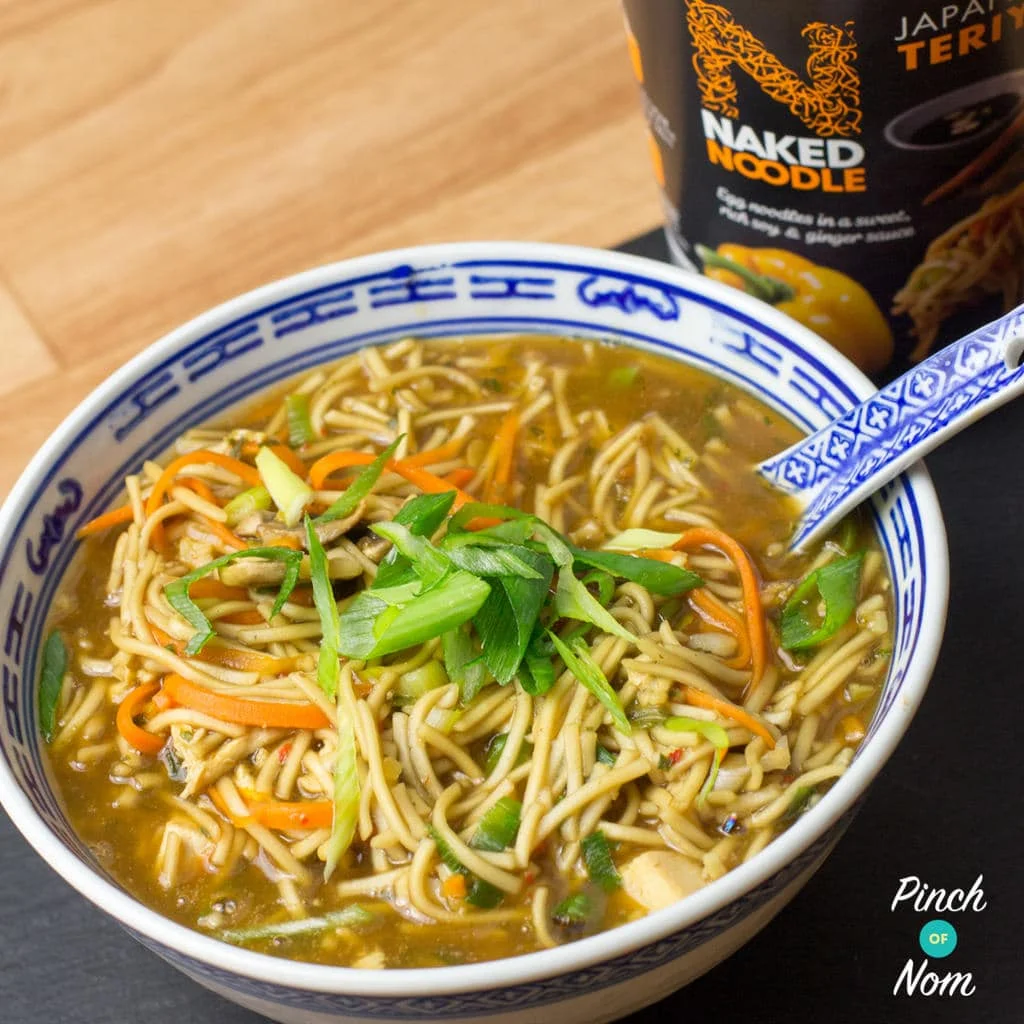
This quick chicken teriyaki noodle soup combines a ready-made teriyaki noodle pot with chicken, vegetables and hot stock. It makes a warming, flavour-packed lunch in about 10 minutes.
Ingredients
- 1Japanese teriyaki Naked Noodle Pot
- 2spring onions, chopped
- 2 or 3mushrooms, sliced
- 1 clovegarlic, finely chopped
- 1 piece (about the size of a £1 coin)fresh ginger, finely chopped
- 200 mlchicken stock
- 1/2cooked chicken breast, cut into small pieces
- 1 mediumcarrot, cut into thin strips
Instructions
- 1
Add boiling water
Pour boiling water into the Naked Noodle Pot.
- 2
Stand and stir
Cover the pot and leave it for 2 minutes, then stir.
- 3
Heat the pan
Meanwhile, heat a wok or frying pan and coat it with low-calorie cooking spray.
- 4
Sauté the vegetables
Add the spring onion, ginger, garlic, mushrooms and carrot. Sauté for a few minutes.
- 5
Simmer chicken
Add the chicken and stock, then simmer for 30–40 seconds.
- 6
Combine and serve
Stir in the prepared noodle pot and serve with a little more finely chopped spring onion on top.
What is chicken teriyaki noodle soup?
This is a quick, Asian-inspired soup that pairs teriyaki-seasoned noodles with chicken, mushrooms and fresh vegetables. Teriyaki is a Japanese-style seasoning, while this version uses a ready-made noodle pot to keep preparation brief.
The vegetables are briefly sautéed before the stock and chicken go in, giving the broth a savoury base without a long simmer.
Nutrition and macros by portion
The nutrition label shows one serving as written: 534 calories, 36g protein, 13g carbs, 9g fat.
| Portion | Adjustment | kcal | Protein | Carbs | Fat |
|---|---|---|---|---|---|
| Lighter | More mushrooms, less noodles | 374 kcal | 25g | 9g | 6g |
| This serving | As written | 534 kcal | 36g | 13g | 9g |
| Hungry | Add another chicken portion | 801 kcal | 54g | 20g | 14g |
The noodles and carrot provide most of the carbohydrates, while the chicken is the main source of protein. The cooking spray and noodle pot contribute fat, and the stock and seasoned noodles are likely to account for much of the salt. For a more rounded plate, serve with extra non-starchy vegetables on the side.
The noodle pot and stock
Noodle pot: prepare it with boiling water first, following the first two steps, so the noodles are ready to stir into the soup at the end.
Stock: the 200 ml of chicken stock brings the sautéed ingredients together as a broth. The noodle pot already supplies teriyaki seasoning, so the recipe does not call for extra sauce.
Build flavour in the pan
Aromatics: give the spring onion, ginger and garlic a few minutes in the hot pan to release their fragrance. Keep them moving so the garlic does not catch.
Vegetables: the sliced mushrooms and thin carrot strips cook quickly alongside the aromatics. Cutting the carrot into thin strips helps it soften in the short cooking time.
Keep the chicken tender
Cooked chicken: use chicken that is already cooked and cut it into small pieces so it warms through rapidly. It only needs 30–40 seconds simmering with the stock.
Texture: avoid extending the simmer unnecessarily, as the chicken can become dry and the vegetables will lose some bite.
Timing and serving
The noodle pot stands for 2 minutes while the vegetables are cooking, making the two parts easy to prepare in parallel. Once the chicken and stock have simmered for 30–40 seconds, stir in the noodles and serve promptly.
Finish with finely chopped spring onion for a fresh contrast to the savoury broth. This soup works as a quick lunch on its own or with a simple side salad.
Recipe notes & tips
- Chop the ginger and garlic finely so they cook quickly and distribute through the soup.
- Slice the mushrooms and carrot before heating the pan to keep the cooking stages moving.
- Use fully cooked chicken, since the brief simmer is only intended to warm it through.
- Keep the noodle pot covered for the full 2 minutes before stirring.
- Serve soon after adding the noodles, as they continue to soften in the hot broth.
Variations
- Extra greens: add a handful of finely sliced greens to the pan with the mushrooms.
- More ginger: add a little extra finely chopped ginger for a sharper aromatic note.
- Milder bowl: use less ginger and garlic if you prefer a gentler flavour.
- Fresh finish: add a squeeze of lime just before serving for a bright contrast.
- More vegetables: add thinly sliced pepper with the carrot and mushrooms.
Common mistakes to avoid
- Adding the noodles too soon: they can become overly soft, so stir them in just before serving.
- Using raw chicken: the recipe's brief simmer is for cooked chicken; cook raw chicken fully before using it.
- Burning the garlic: sauté over a controlled heat and keep the ingredients moving.
- Cutting the carrot too thick: thick pieces may stay firm, so make thin strips.
- Skipping the noodle-pot rest: cover it for 2 minutes so the noodles have time to soften before stirring.
How to store
This soup is best eaten freshly made, as the noodles continue to absorb the broth. If needed, refrigerate leftovers promptly in a covered container and eat within 1–2 days; reheat until piping hot, adding a splash of stock or water if the noodles have thickened the soup.
Frequently asked questions
Can I make this soup ahead?
It is best assembled just before serving because the noodles soften as they sit. You can chop the vegetables and chicken ahead, then cook the soup when you are ready to eat.
Can I use leftover cooked chicken?
Yes. Cut it into small pieces and add it with the stock, allowing 30–40 seconds to simmer as directed.
Can I use a different noodle pot?
You can use another teriyaki noodle pot, but its flavour and preparation instructions may differ. Prepare it according to its pack directions.
How do I stop the noodles going soggy?
Prepare the noodle pot while the vegetables cook, then stir it into the soup at the end. Serve promptly.
Can I make it without a wok?
Yes, use a frying pan large enough to hold the vegetables, chicken and stock.
Cook it from the original
This recipe comes from pinchofnom.com. Their page has the author’s own photos, notes and tips — the best place to cook it from.
Open the recipe on pinchofnom.com