
Potato And Kale Paratha
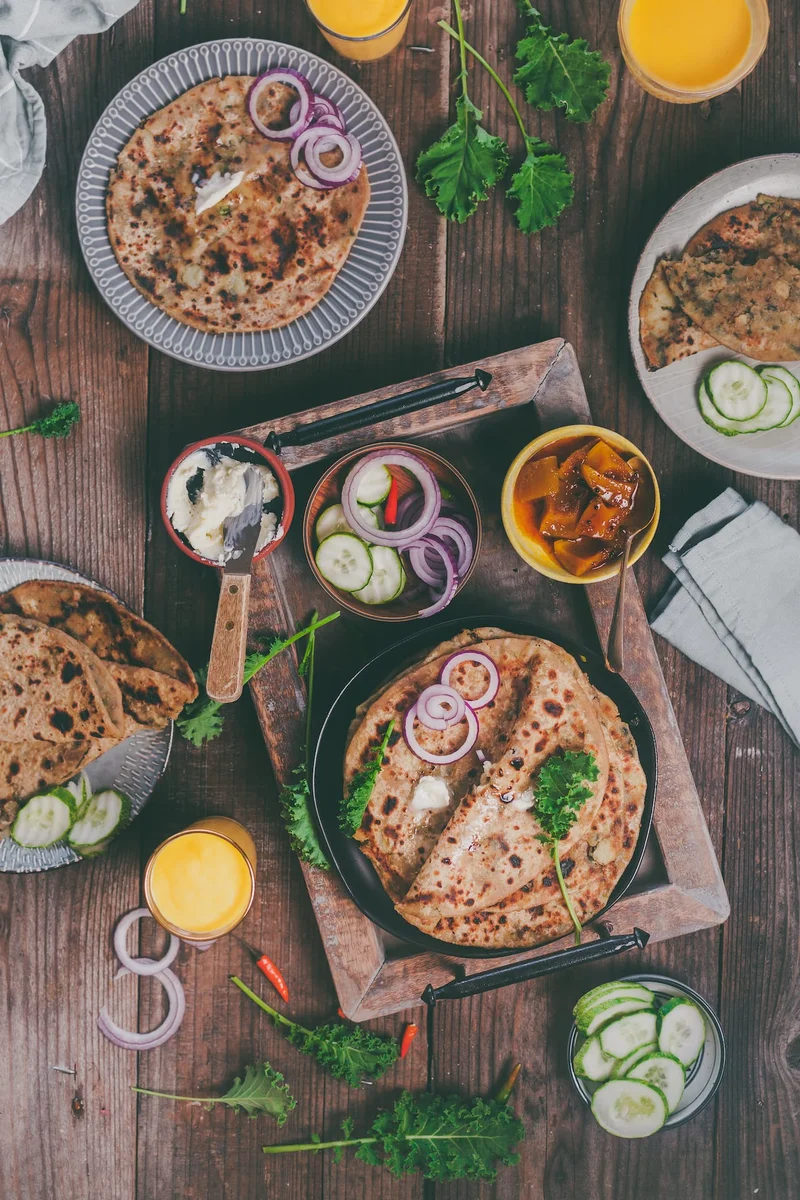
These whole-wheat parathas are filled with spiced mashed potato and finely chopped kale, then cooked on a hot skillet until golden and lightly charred. Serve them warm with yoghurt or raita and a tangy pickle for a comforting meal.
Ingredients
- 360 g (3 cups)whole-wheat flour
- 1 teaspooncarom seeds (ajwain)
- 1 teaspoonsalt
- 1 tablespoonoil
- 240 ml (1 cup)hot water
- 96 g (3 oz)fresh kale, very finely chopped
- 398 g (14.05 oz)potatoes
- 1 teaspoonoil
- ½ teaspooncumin powder
- 1green chilli, finely chopped
- ½ teaspoon (optional)aamchur (dried mango powder)
- to tastesalt
- as neededghee or oil, for cooking the parathas
Instructions
- 1
Mix the dough
Put the flour, carom seeds, 1 teaspoon salt and 1 tablespoon oil in a bowl and mix. Add the hot water gradually, kneading until you have a soft dough; adjust the water as needed for your flour. Cover with a tea towel and set aside.
- 2
Cook the potatoes
Steam the potatoes, or boil them with their skins on. To boil them, halve the potatoes and put them in a pan with enough water to cover. Add 1 tablespoon salt and bring to the boil over high heat, then reduce the heat to medium and cook for 15–20 minutes, until fork-tender. Peel and mash.
- 3
Cook the kale
Heat a heavy-based skillet over medium heat and add 1 teaspoon oil. Once hot, add the cumin seeds and green chilli and sauté for a few seconds. Add the kale, cumin powder and salt, and cook for 2 minutes, stirring. Add the mashed potatoes and cook for a further 2 minutes.
- 4
Season the filling
If using, add the aamchur and mix it through the potato and kale filling.
- 5
Divide the portions
Divide the dough into 9 portions and divide the filling into 9 portions.
- 6
Shape the dough
Flatten one dough portion into a disc, then roll it a little with a rolling pin or by hand, just enough to hold the filling. If it feels sticky, dust it with flour.
- 7
Add the filling
Put one portion of filling in the centre of the dough. Pinch the edges together firmly to seal, shape it into a ball, then flatten it and dust with a little flour.
- 8
Roll the paratha
Place the filled dough on a floured work surface and gently roll from the centre outwards, turning it as you go to make a disc. The shape need not be perfect; aim to spread the filling evenly. If filling breaks through, dust the spot with flour and continue rolling until thin.
- 9
Cook until charred
Heat a flat skillet over medium-high heat. Add a rolled disc and sear for 1 minute, then carefully flip it. Spread ½ teaspoon ghee over the cooked side and cook for 1 minute. Flip again, add ½ teaspoon ghee to the other side and press the paratha with the back of a spatula as it cooks, until browned and charred in places. Transfer to a plate.
- 10
Cook the rest
Repeat with the remaining dough and filling, cooking each paratha in the same way.
- 11
Serve warm
Serve the parathas warm, with an optional knob of butter, plain yoghurt or raita, and spicy, tangy pickle.
What is potato and kale paratha?
Paratha is a South Asian flatbread, commonly made with whole-wheat flour and cooked on a griddle or skillet. Stuffed versions enclose a seasoned filling in the dough before being rolled and cooked.
This version combines familiar potato filling with finely chopped kale. The greens add colour and balance the soft, starchy centre, while cooking the bread with ghee helps it brown and develop crisp spots.
Nutrition and macros by portion
The nutrition label shows one serving as written: 240 calories, 7g protein, 42g carbs, 7g fat.
| Portion | Adjustment | kcal | Protein | Carbs | Fat |
|---|---|---|---|---|---|
| Lighter | Use less cooking ghee | 168 kcal | 5g | 29g | 5g |
| This serving | As written | 240 kcal | 7g | 42g | 7g |
| Hungry | Serve an extra paratha | 360 kcal | 11g | 63g | 11g |
The whole-wheat flour and potatoes provide most of the carbohydrates, while the flour and kale contribute some protein and fibre. Oil in the dough and ghee or oil on the skillet supply most of the fat. Pair a paratha with yoghurt and extra vegetables or salad for a more balanced plate.
Build a soft dough
Flour first: mix it with the carom seeds, salt and oil before adding water. Pour the hot water in gradually and stop once the dough is soft and workable; the amount it takes can vary with the flour.
Rest briefly: cover the dough while you prepare the filling. This keeps the surface from drying and makes it easier to shape.
Keep the filling dry
Potatoes: cook them until a fork passes through easily, then peel and mash. If they are waterlogged, the filling can make the dough damp and harder to seal.
Kale: cook it with the chilli and seasonings for 2 minutes, then add the mashed potatoes and cook for another 2 minutes. The filling should be combined and manageable, rather than wet.
Seal before rolling
Even portions: dividing both the dough and filling into 9 pieces makes it easier to keep the stuffed breads a similar size. Pinch the dough edges together firmly around each mound of filling.
Gentle pressure: roll from the centre outwards and turn the dough as you work. If filling breaks through, dust the spot with flour and continue gently so the disc stays intact.
Look for colour and doneness
Hot skillet: let the pan heat over medium-high before adding the rolled paratha. The first side sears for 1 minute before you flip it.
Golden patches: cook each side with ½ teaspoon ghee, pressing lightly with a spatula to help the surface brown. Take the paratha off the heat once it has charred patches and is cooked through.
Serve it with something cool
Yoghurt or raita: a cool, plain accompaniment contrasts with the warm, spiced filling. A tangy pickle brings a sharper, spicier note.
Serve the parathas soon after cooking for the best contrast between their browned exterior and soft centre. A small knob of butter on top is optional.
Recipe notes & tips
- Add the hot water gradually so the dough stays soft rather than sticky.
- Mash the potatoes while they are warm for an easy-to-mix filling.
- Divide the filling evenly before stuffing so each paratha is similarly filled.
- Dust the work surface lightly if the dough sticks, but avoid adding too much flour.
- Turn the paratha as you roll it to help keep the filling spread evenly.
- Cook each paratha in a properly heated skillet for browned patches.
Variations
- Add fresh herbs: Stir chopped coriander into the filling before dividing it.
- Adjust the chilli: Use less green chilli for a milder filling or more for extra heat.
- Skip the aamchur: Leave out the dried mango powder if you do not have it.
- Use butter: Cook with butter instead of ghee for a different rich flavour.
- Serve with raita: Pair the warm parathas with a seasoned yoghurt accompaniment.
Common mistakes to avoid
- Adding all the water at once: Add it gradually so you can stop when the dough is soft.
- Using wet potatoes: Drain boiled potatoes well before peeling and mashing.
- Overfilling the dough: Use one of the 9 filling portions and seal the edges firmly.
- Rolling too forcefully: Roll gently from the centre outwards to reduce filling breakouts.
- Starting with a cool skillet: Heat the pan before adding each disc so it can sear.
- Leaving parathas uncovered: Serve promptly or cover them to keep them warm and soft.
How to store
Cool leftovers, then refrigerate in an airtight container for up to 3 days. Reheat in a dry skillet over medium heat, turning until warmed through; add a little ghee if desired.
Frequently asked questions
Can I make the filling ahead?
Yes. Prepare it ahead and refrigerate it in a covered container, then divide it into 9 portions when ready to stuff the dough.
How can I tell when the potatoes are ready?
A fork should pass through them easily after 15–20 minutes of boiling. Drain them well before peeling and mashing.
What if the dough feels sticky?
Dust it lightly with flour while shaping and rolling. Add only a little at a time so the paratha does not become tough.
Can I leave out the aamchur?
Yes. It is optional, so you can omit it without changing the method.
What should I serve with these parathas?
Serve them warm with plain yoghurt or raita and a spicy, tangy pickle. Butter on top is optional.
Cook it from the original
This recipe comes from playfulcooking.com. Their page has the author’s own photos, notes and tips — the best place to cook it from.
Open the recipe on playfulcooking.com