
Biscoff Swiss Roll | Slimming & Weight Watchers Friendly
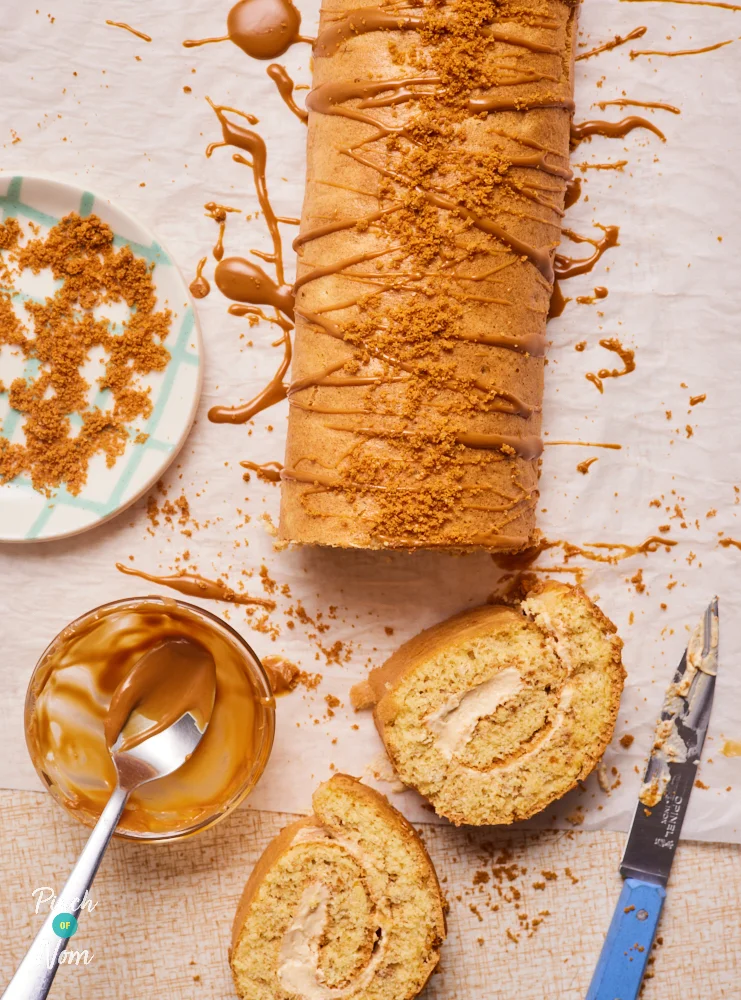
A light, airy sponge is flavoured with finely crushed Biscoff biscuits, rolled around a creamy Biscoff and yoghurt filling, then finished with a drizzle and biscuit crumbs. It makes 12 slices and is a useful bake when you want a spiced, sweet treat with a soft, rollable texture.
Ingredients
- 100 gself-raising flour
- 40 gwhite granulated sweetener
- 40 gcaster sugar
- 4 mediumeggs
- 4Lotus Biscoff biscuits, crushed very finely
- 1/2 tspvanilla essence
- al gustolow-calorie cooking spray
- 50 mllight double cream alternative
- 50 g0% fat Greek yoghurt
- 10 gLotus Biscoff spread
- 1Lotus Biscoff biscuit, crushed very finely
- 1/2 tspvanilla essence
- 1Lotus Biscoff biscuit, crushed
- 1 tspLotus Biscoff spread
Instructions
- 1
Prepare the tray
Heat the oven to 190°C. Spray a baking tray with low-calorie cooking spray and line it with non-stick baking paper.
- 2
Whisk the eggs
Put the eggs, caster sugar and sweetener in a large mixing bowl. Beat with an electric hand whisk for 2 minutes, add the vanilla and whisk for another 2 minutes. The mixture should be thick, have tripled in volume and leave visible ribbons when you lift out the beaters.
- 3
Fold in flour
Stir the finely crushed biscuits and flour together in a bowl. Fold half into the egg mixture with a spatula, then fold in the rest until no pockets of flour remain, taking care not to knock out the air.
- 4
Spread the batter
Pour the mixture into the lined tray and gently spread it to the corners in an even layer. Level the surface, as this sponge will not level itself in the oven.
- 5
Bake the sponge
Bake for around 12–13 minutes, until the top has just started to colour. Press the sponge gently with a finger; it is ready when it springs back.
- 6
Roll and cool
Lay a piece of non-stick baking paper larger than the tray on the work surface. Turn the cooked cake out onto it and peel away the paper from the cake. Score the long edge nearest you 1 cm from the edge, then roll the cake from that edge with the clean paper rolled inside. Leave it to cool completely.
- 7
Whip the cream
While the cake cools, put the light double cream alternative in a mixing bowl. Whisk on high speed for about 2 minutes, until soft peaks form.
- 8
Make the filling
Melt the 10 g of Biscoff spread in a small microwave-safe bowl in short bursts until smooth and runny. Add it to the whipped cream alternative with the yoghurt, vanilla and finely crushed biscuit. Fold gently until combined, keeping as much air in the mixture as possible, then refrigerate until needed.
- 9
Fill the roll
When the cake is completely cool, carefully unroll it. Spread the filling over the sponge, re-roll it and refrigerate briefly to firm up.
- 10
Finish and serve
Melt the remaining Biscoff spread in a small microwave-safe bowl in short bursts until smooth and runny. Drizzle it over the roll, scatter over the crushed biscuit, cut into 12 slices and serve.
What is a Swiss roll?
A Swiss roll is a thin sponge cake rolled around a filling, a familiar style of bake in Britain and elsewhere. Its name does not necessarily point to a Swiss origin, and recipes vary in flavour and filling.
Here, finely crushed Biscoff biscuits flavour the sponge, while whipped cream alternative, Greek yoghurt and spread make a tangy, spiced filling. Rolling the sponge while warm helps it take shape before it is filled.
Nutrition and macros by portion
The nutrition label shows one serving as written: 109 calories, 4g protein, 17g carbs, 4g fat.
| Portion | Adjustment | kcal | Protein | Carbs | Fat |
|---|---|---|---|---|---|
| Lighter | Smaller, thinner slice | 76 kcal | 3g | 12g | 3g |
| This serving | As written | 109 kcal | 4g | 17g | 4g |
| Hungry | Larger slice with fruit | 164 kcal | 6g | 26g | 6g |
The sponge's carbohydrates come mainly from the flour, sugar and sweetener, with more from the biscuits and spread; the eggs and yoghurt contribute protein. The cream alternative and Biscoff spread provide much of the fat. Pair a slice with fresh fruit or yoghurt if you want to balance its sweetness with something fresh.
Why the sponge needs air
Whisking the eggs with both sugars builds the volume that makes this sponge light. Look for a thick mixture with visible ribbons that briefly sit on the surface when the beaters are lifted.
Fold the flour and biscuit crumbs in gradually and gently. Stirring vigorously at this stage can deflate the mixture and leave the baked sponge less pliable.
Crush the biscuits finely
Fine crumbs distribute the Biscoff flavour through the sponge without leaving large, heavy pieces. Crush the biscuits thoroughly before combining them with the flour.
Keep the topping biscuit crushed separately as directed; it can be less fine than the crumbs folded into the cake and filling.
Roll while warm
The sponge is rolled as soon as it comes out of the oven, before it cools and becomes less flexible. The score 1 cm from the long edge gives the roll a starting crease.
Use the clean baking paper to guide the roll, with the paper winding inside the cake. Let the rolled sponge cool completely before unrolling it to add the filling.
Check the bake
Bake for around 12–13 minutes at 190°C, watching for the top to just begin to colour. The spring-back test is a useful cue: a gentle press should leave the sponge springing back.
Avoid waiting for a deeply browned top, which can make a thin sponge drier and more liable to crack when rolled.
Keep the filling light
Whip the cream alternative only until it forms soft peaks, then fold in the yoghurt, melted spread, vanilla and biscuit crumbs. Gentle folding helps retain the air whipped into the cream.
Chill the filling until assembly and refrigerate the finished roll briefly so it firms up for slicing.
Serving ideas
The roll is sweet and spiced, so plain tea or coffee makes a simple accompaniment. For a fresh contrast, serve a slice with berries or sliced fruit.
Use a sharp knife and wipe it between cuts for neater portions, especially once the topping has set in the fridge.
Recipe notes & tips
- Line the tray with baking paper before you start mixing so the batter can go straight into the oven.
- Make sure the egg mixture has thickened and shows ribbons before folding in the dry ingredients.
- Fold in the flour and crumbs in two additions to help avoid pockets of flour.
- Use a clean piece of baking paper for the first roll so the cake does not stick to the tray lining.
- Let the sponge cool completely before spreading on the filling.
- Melt the spread in short microwave bursts, checking it between each one.
Variations
- Add extra spice: Fold a pinch of cinnamon into the flour and biscuit crumbs.
- Use a different biscuit: Swap the Biscoff biscuits for another finely crushed spiced biscuit.
- Add fruit: Serve slices with berries for a fresh contrast.
- Make a stronger topping: Add a little more crushed biscuit over the drizzle before it sets.
- Change the filling: Use a different thick yoghurt in place of the Greek yoghurt.
Common mistakes to avoid
- Under-whisking the eggs: Keep beating until the mixture is thick, tripled in volume and leaves ribbons.
- Overmixing the batter: Fold gently and stop as soon as the flour is incorporated to retain the air.
- Uneven spreading: Level the batter to the tray corners before baking, as the sponge will not self-level.
- Overbaking the sponge: Check at 12 minutes and remove it when it springs back and has only just begun to colour.
- Rolling after cooling: Roll the sponge while it is warm so it can take shape without cracking.
- Filling a warm cake: Wait until the sponge is completely cool so the filling holds its texture.
How to store
Keep the finished roll covered in the fridge and eat within 2 days. Serve chilled; freezing is not recommended here because the whipped filling may change texture when thawed.
Frequently asked questions
Why did my Swiss roll crack?
It may have cooled before it was rolled, been overbaked or lost too much air during mixing. Roll it while warm, use the paper to guide it, and check for doneness from 12 minutes.
How do I know the sponge is cooked?
The top should have just started to colour, and the sponge should spring back when gently pressed. The stated bake time is around 12–13 minutes.
Can I make the filling ahead?
Yes. Prepare it while the sponge cools and keep it in the fridge until you are ready to assemble the roll.
Can I assemble the roll before it has cooled?
No. Let the sponge cool completely after its first roll, then unroll and spread on the filling. A warm sponge may soften the filling.
How should I cut neat slices?
Chill the filled roll briefly to firm it, then use a sharp knife. Wiping the blade between cuts helps keep the slices tidy.
Can I use another cream alternative?
The recipe specifies a light double cream alternative, which is whipped to soft peaks. A replacement needs to whip in a similar way for the filling to hold its texture.
Cook it from the original
This recipe comes from pinchofnom.com. Their page has the author’s own photos, notes and tips — the best place to cook it from.
Open the recipe on pinchofnom.com