
Quiche Crust Recipe (Pâte Brisée)
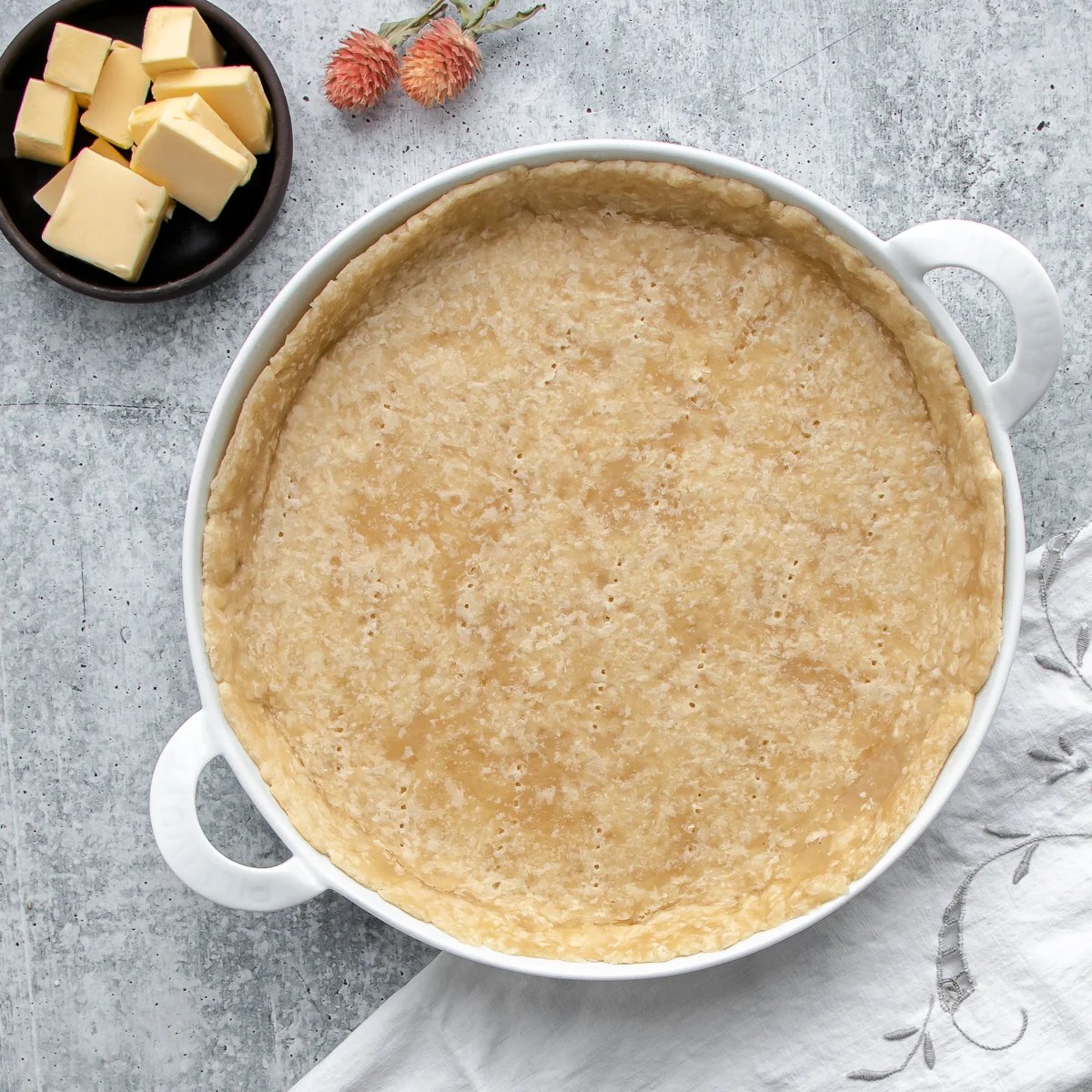
Pâte brisée is a buttery, crisp pastry crust for quiche or pie. This version is made in a food processor, chilled, then blind baked until lightly golden before you add your chosen filling.
Ingredients
- 175 g (1¼ cups; 6.2 oz)plain flour
- ½ teaspoonsalt
- 1 tablespoongranulated sugar
- 113 g (½ cup; 1 stick)cold butter, cut into small cubes
- 30–60 ml (2–4 tablespoons)very cold water
Instructions
- 1
Combine dry ingredients
Add the flour, salt and sugar to a food processor and process for a few seconds to combine. You can do this by hand with a pastry cutter instead.
- 2
Mix in butter
Add the cold butter and pulse about 15 times, until the mixture resembles coarse crumbs; uneven pieces, including a few larger ones, are fine. Add 30 ml (2 tablespoons) of water and pulse, then add more water 15 ml (1 tablespoon) at a time as needed. Stop when the mixture is no longer dry and forms large clumps, rather than a smooth ball. A squeezed piece should hold together without feeling dry or crumbly.
- 3
Chill the dough
Turn the dough out onto a floured surface and bring it together into a ball; it should not feel sticky. Flatten it into a disc about 2.5 cm (1 inch) thick, wrap in cling film and refrigerate for at least 1 hour.
- 4
Roll out pastry
On a lightly floured surface, roll the dough into a large, thin circle about 3 mm (⅛ inch) thick, sized to fit your baking dish. For reference, the original method uses a 32 cm (12.5 inch) circle for a 27 cm (10.5 inch) shallow tart tin, or a 30 cm (12 inch) circle for a 23 cm (9 inch) pie dish.
- 5
Line the dish
Gently lift the pastry into the baking dish, handling it lightly rather than pressing hard. Trim the excess from a tart tin or crimp the edges for a pie dish. If you are concerned about shrinking, wrap the dish tightly in foil and freeze for about 30 minutes.
- 6
Prepare for baking
Preheat the oven to 190°C (375°F). Cover the pastry closely with foil or baking parchment, including the edges, then distribute pie weights, dried beans or uncooked rice evenly over the surface.
- 7
Blind bake crust
Bake for 15–16 minutes, or 17–18 minutes if the pastry is frozen. Carefully lift out the lining and weights, then prick the pastry in a few places with a fork to release air pockets. If it needs longer, return it to the oven for 2–3 minutes; it should look dry and be very lightly browned. It is only partially baked at this stage, so continue with your quiche recipe to finish baking.
What is pâte brisée?
Pâte brisée is a classic French short pastry used for both savoury tarts and pies. Its name refers to the crumbly texture created by working fat into flour, rather than to a sweet or enriched dough.
This version uses a little sugar alongside salt, giving the crust a subtle sweetness that works well with quiche fillings. Blind baking helps set the base before the filling goes in.
Nutrition and macros by portion
The nutrition label shows one serving as written: 1500 calories, 18g protein, 140g carbs, 93g fat.
| Portion | Adjustment | kcal | Protein | Carbs | Fat |
|---|---|---|---|---|---|
| Lighter | Use a smaller crust portion | 1050 kcal | 13g | 98g | 65g |
| This serving | As written | 1500 kcal | 18g | 140g | 93g |
| Hungry | Add a larger filling portion | 2250 kcal | 27g | 210g | 140g |
The flour and sugar provide most of the carbohydrates, while the butter contributes nearly all the fat, including much of the saturated fat. There is a modest amount of protein from the flour and very little from the other ingredients; serve the crust as part of a quiche with a protein-containing filling and vegetables to round out the plate.
The role of each ingredient
Flour: plain flour forms the structure, while keeping the pastry tender when it is mixed only briefly.
Butter: cold butter gives the crust its rich flavour and flaky, crumbly texture. Keeping it cold helps it remain in small pieces as the dough comes together.
Water: very cold water brings the mixture into clumps without making it wet. Add it gradually, since the dough needs only enough to hold together when pressed.
Getting the dough texture right
Crumbs first: after pulsing in the butter, the mixture should look like coarse meal, with some larger butter pieces still visible. A completely uniform paste is not the aim.
Clumps next: add water in small increments and check by squeezing a little dough between your fingers. Stop when it holds together without feeling dry; processing it into a smooth ball can make the crust less tender.
Why chilling matters
Resting the wrapped disc in the fridge for at least an hour firms the butter and makes the dough easier to roll. It also gives the flour time to absorb moisture.
Extra chilling: freezing the lined dish for about 30 minutes is optional, but can help the pastry hold its shape in the oven. Keep the foil covering snug around the edges so they are protected during the initial bake.
Rolling and lining the tin
Roll the dough to about 3 mm thick and large enough to leave some overhang around the dish. Lightly flour the work surface and turn the dough as you roll to reduce sticking.
Gentle handling: settle the pastry into the corners without stretching or pressing it firmly into the tin. Trim the overhang for a tart tin or crimp it for a pie dish, as described in the method.
Blind-baking cues
Even weights: spread the pie weights, beans or rice across the entire lined surface to support the base and sides while the pastry starts to bake. Cover the edges with foil or parchment to help prevent them from browning too quickly.
Ready for filling: once the weights are removed, the base should look dry and only very lightly coloured. It is deliberately not fully baked; the quiche filling and its remaining bake will finish the crust.
What to serve it with
Use the crust as the base for your favourite quiche, adding the filling after this partial bake and following that recipe for the final oven time. The lightly sweet, buttery pastry suits savoury fillings such as cheese, vegetables or ham.
For a balanced plate, serve a slice of quiche with a crisp green salad or simply dressed vegetables. The acidity and freshness complement the rich pastry.
Recipe notes & tips
- Measure the water carefully and add it a tablespoon at a time so the dough does not turn sticky.
- Keep the butter and water cold while making the pastry.
- Stop pulsing as soon as the dough forms large clumps rather than a single smooth ball.
- Roll the pastry evenly so the base and edges bake at a similar rate.
- Use enough weights to cover the base evenly during the first bake.
- Let the crust cool briefly after blind baking before adding your quiche filling.
Variations
- Herb pastry: add finely chopped herbs to the flour mixture for a savoury aroma.
- Peppery crust: add a pinch of black pepper with the salt for a gentle savoury note.
- Cheese pastry: mix a little finely grated hard cheese into the dry ingredients and reduce the salt to taste.
- Hand-mixed dough: cut the butter into the flour mixture with a pastry cutter instead of using a food processor.
- Sweet pie crust: use this pastry for a sweet filling, adjusting the sugar to suit the recipe.
Common mistakes to avoid
- Adding all the water at once: the dough can become sticky; add it gradually and stop when squeezed crumbs hold together.
- Over-processing the dough: it can lose its crumbly texture; stop pulsing when large clumps form.
- Using warm butter: it can blend too thoroughly into the flour; start with cold butter straight from the fridge.
- Stretching the pastry into the dish: it may pull back as it bakes; lift it gently and ease it into place.
- Leaving gaps in the weights: unsupported areas can puff up; distribute weights across the full surface.
- Baking until deeply browned: the crust still needs to bake with its filling; remove it when dry and very lightly coloured.
How to store
Wrap the unbaked dough well and refrigerate for up to 2 days, or freeze it for up to 1 month; thaw frozen dough in the fridge before rolling. A blind-baked crust can be kept covered at room temperature for 1 day, or refrigerated for up to 3 days. Reheat it briefly in a 180°C oven to refresh before filling.
Frequently asked questions
Can I make the dough without a food processor?
Yes. Use a pastry cutter to work the butter into the flour mixture, then add the cold water gradually and bring the crumbs together by hand.
How do I know when the dough has enough water?
Squeeze a small piece between your fingers. It should hold together without feeling dry or crumbly, while the mixture as a whole remains in clumps rather than forming a smooth ball.
Can I freeze the pastry?
Yes. Wrap the dough well and freeze it, then thaw it in the fridge before rolling. You can also freeze the lined dish for about 30 minutes before blind baking.
Why should I use pie weights?
They support the base and sides as the pastry starts to bake, helping it keep its shape. Dried beans or uncooked rice can be used in their place.
Is the crust fully baked after blind baking?
No. It should be dry and only very lightly browned, as the method is for a partial bake. Add your quiche filling and continue baking according to your chosen quiche recipe.
How can I reduce the risk of the crust shrinking?
Handle the pastry gently rather than stretching it into the dish. If you are concerned, wrap the lined dish tightly in foil and freeze it for about 30 minutes before baking.
Cook it from the original
This recipe comes from prettysimplesweet.com. Their page has the author’s own photos, notes and tips — the best place to cook it from.
Open the recipe on prettysimplesweet.com