
Coconut Cookies
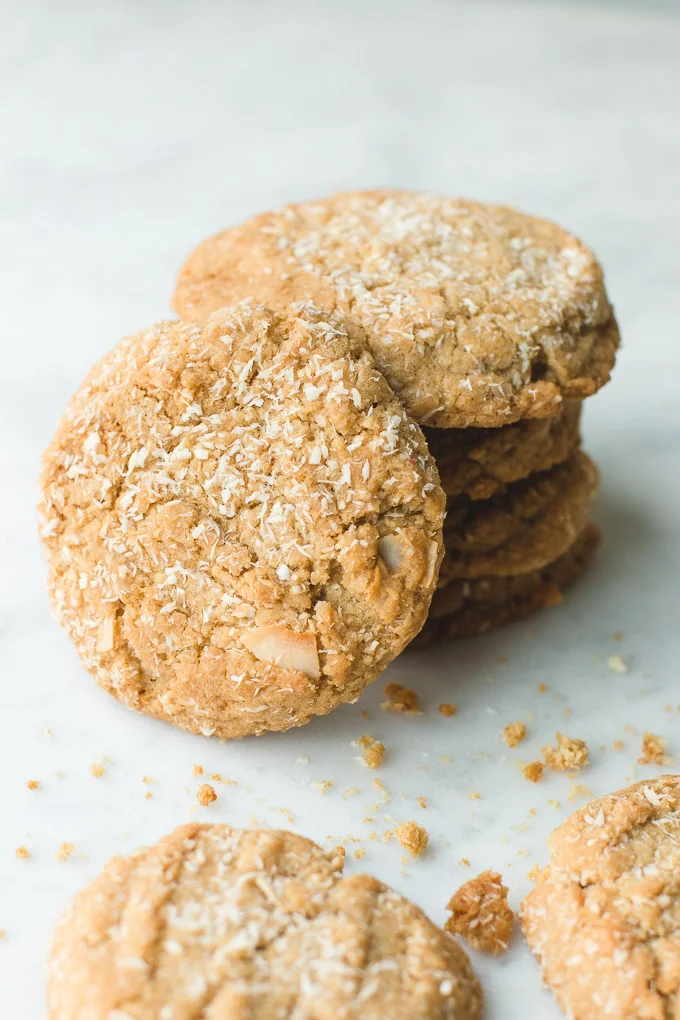
These coconut cookies have soft, chewy centres and lightly crisp edges, with toasted coconut folded through the dough and a coating of coconut on the outside. They are a good choice when you want a straightforward batch of biscuits that keeps well for sharing.
Ingredients
- 350 g (2½ cups)plain flour
- 1 teaspoonbicarbonate of soda
- ¾ teaspoonsalt
- 225 g (1 cup; 2 sticks)unsalted butter, softened to room temperature
- 150 g (¾ cup)dark brown sugar (light brown sugar also works)
- 150 g (¾ cup)caster sugar
- 2 largeeggs
- 1½ teaspoonspure vanilla extract
- 200 g (2 cups)toasted shredded unsweetened coconut flakes
- About 20 g (¼ cup)desiccated coconut, for rolling
Instructions
- 1
Heat the oven
Preheat the oven to 180°C (350°F) and line baking trays with baking parchment.
- 2
Combine dry ingredients
Sift the flour, bicarbonate of soda and salt into a medium bowl, then set it aside.
- 3
Make the dough
Using a mixer fitted with a paddle attachment, beat the butter at medium speed for 1 minute until creamy. Add both sugars and beat at medium speed for about 3 minutes, until light and fluffy. Beat in the eggs one at a time, then mix in the vanilla. Add the flour mixture and mix just until combined. Add the coconut and mix slowly until combined, taking care not to overmix.
- 4
Prepare the coating
Put ¼ cup of shredded or desiccated coconut in a small bowl.
- 5
Shape the cookies
Roll the dough into balls using about 22 ml (1½ tablespoons) per cookie, then roll each ball in the coconut coating. Arrange them on the prepared tray; an ice-cream scoop can make portioning easier. Press each ball down slightly, as the cookies will not spread much while baking.
- 6
Bake and cool
Bake for 9–12 minutes, until the edges just begin to brown while the centres remain soft. Do not overbake, or the cookies will become hard. Leave them on the tray for 5–10 minutes, then transfer to a wire rack to cool completely.
- 7
Store the cookies
Keep the cookies in an airtight container at room temperature for up to 3 days. Serve warm or at room temperature, or freeze for up to 2 months.
What are coconut cookies?
Coconut cookies are a broad family of biscuits found in many baking traditions, rather than a single dish with one fixed origin. This version uses a familiar butter-and-sugar cookie dough, with toasted coconut mixed in and more coconut on the outside.
Toasting the coconut gives it a deeper flavour, while the dough is mixed only until combined to help keep the baked centres tender.
Nutrition and macros by portion
The nutrition label shows one serving as written: 190 calories, 3g protein, 21g carbs, 11g fat.
| Portion | Adjustment | kcal | Protein | Carbs | Fat |
|---|---|---|---|---|---|
| Lighter | One cookie with fruit | 133 kcal | 2g | 15g | 8g |
| This serving | As written | 190 kcal | 3g | 21g | 11g |
| Hungry | Two cookies per portion | 285 kcal | 4g | 32g | 17g |
The flour and sugars provide most of the carbohydrates, while butter and coconut contribute much of the fat; the eggs, flour and coconut provide some protein. Pair a cookie or two with fruit and yoghurt, or serve them after a meal with a source of protein for a more balanced plate.
The coconut makes the difference
Toasted flakes: use unsweetened coconut so the dough does not become overly sweet. The toasted flakes add texture and a fuller coconut flavour.
Cream the butter and sugar
Butter first: beating softened butter until creamy gives it a smooth starting texture. After adding the sugars, beat for about 3 minutes until the mixture looks light and fluffy.
Eggs gradually: add them one at a time, mixing between additions. This helps them blend into the butter mixture before the dry ingredients go in.
Mix gently after adding flour
Flour mixture: sift it with the bicarbonate of soda and salt so the raising agent is distributed through the dough. Once it is added to the bowl, mix only until no dry patches remain.
Coconut: fold or mix it in slowly just until evenly combined. Prolonged mixing after adding flour can make the cookies less tender.
Shape for an even bake
Portions: use about 1½ tablespoons of dough for each cookie, then coat each ball in coconut. A scoop helps keep the portions consistent.
Flatten slightly: these cookies do not spread much in the oven, so press the dough balls down before baking to give them their final shape.
Look for lightly browned edges
Oven time: begin checking at 9 minutes, as the stated baking time is 9–12 minutes. The edges should only just start to brown, while the middle still looks soft.
Cooling: leave the cookies on the hot tray for 5–10 minutes before moving them to a rack. They continue to set as they cool, so avoid waiting for the centres to look completely firm in the oven.
Serve with a simple drink
These cookies can be served warm or at room temperature. Tea, coffee or a glass of milk makes an easy accompaniment without competing with the toasted coconut flavour.
Recipe notes & tips
- Bring the butter to room temperature so it creams smoothly with the sugars.
- Use unsweetened coconut flakes to keep the sweetness in check.
- Measure the dough portions consistently so the cookies bake at a similar rate.
- Check the first tray at 9 minutes because the centres should still be soft when removed.
- Let the cookies rest on the tray before transferring them, as they are delicate while hot.
Variations
- Use light brown sugar: swap it for the dark brown sugar for a milder flavour.
- Change the coating: use shredded coconut instead of desiccated coconut for a more textured outside.
- Add citrus: mix finely grated lemon or orange zest into the dough for a fresh note.
- Add chocolate: stir chocolate chips into the dough along with the coconut.
- Make smaller cookies: portion less dough per cookie and start checking them earlier.
Common mistakes to avoid
- Overmixing the dough: stop once the flour and coconut are incorporated to help keep the cookies tender.
- Skipping the flattening: press each ball down slightly because the cookies do not spread much in the oven.
- Baking until the centres look firm: take them out when the edges just begin to brown and the middles are still soft.
- Moving them straight off the tray: leave them for 5–10 minutes so they can set before transferring.
- Using hot trays for another batch: let trays cool before adding more dough to avoid starting the next batch too quickly.
How to store
Once completely cool, store in an airtight container at room temperature for up to 3 days. The cookies can be frozen for up to 2 months; thaw before serving.
Frequently asked questions
Can I use light brown sugar?
Yes. The recipe allows light brown sugar in place of dark brown sugar; the flavour will be a little less rich.
Do I need to toast the coconut first?
The recipe calls for toasted coconut flakes in the dough. Use coconut that has cooled before mixing it in.
Why should I press the dough balls down?
The cookies do not spread much as they bake, so flattening them slightly helps them form their shape.
How do I know when the cookies are done?
Look for edges that are just beginning to brown while the centres are still soft. They will set further as they cool.
Can I freeze the cookies?
Yes. The recipe says they can be frozen for up to 2 months.
Cook it from the original
This recipe comes from prettysimplesweet.com. Their page has the author’s own photos, notes and tips — the best place to cook it from.
Open the recipe on prettysimplesweet.com