
Kerala Parippu Curry
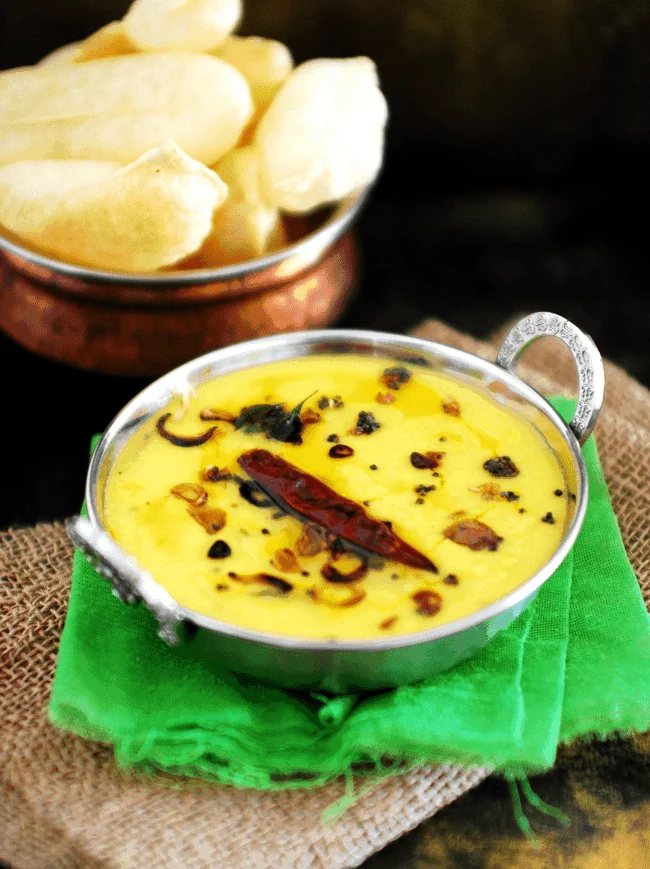
Kerala parippu curry is a gently spiced moong dal finished with coconut paste and a sizzling ghee or coconut oil tempering. It is a familiar part of Onam and Vishu sadya, and makes a comforting partner for rice at any time of year.
Ingredients
- 100 g (1 cup)cheruparippu (moong dal)
- 27–40 g (⅓–½ cup)grated coconut
- ½ tspcumin seeds
- 2–3green chillies
- ¼ tspturmeric powder
- 2–3 tspghee or coconut oil
- 500 mlwater
- 3–4small onions
- A pinchmustard seeds
- 2dried red chillies
- To tastecurry leaves
- To tastesalt
Instructions
- 1
Grind the coconut
Blend the coconut, cumin, green chillies and turmeric with 1 tbsp water until smooth. In a pressure cooker, roast the moong dal over a low flame for 4–5 minutes, until it smells toasted.
- 2
Pressure cook dal
Add 3 cups (about 710 ml) water to the dal and mix. Cover and pressure cook over a full flame for 8–10 whistles. Turn off the heat and let the pressure fall naturally.
- 3
Mash the dal
Use a wooden spoon to mash the cooked dal.
- 4
Simmer with paste
Stir the ground paste and salt into the mashed dal with ½–1 cup (about 120–240 ml) water. Cook over a low flame for 5–7 minutes, then take the pan off the heat.
- 5
Make the tempering
Heat the ghee or coconut oil in a separate pan and let the mustard seeds splutter. Add the small onions, curry leaves and dried red chillies; fry until the onions turn golden brown. Pour the tempering over the dal, drizzle with ghee if desired, and serve with rice and pappad.
What is Kerala parippu curry?
Parippu means lentils in Malayalam, and this curry is a simple, comforting preparation of moong dal associated with Kerala meals. It is especially at home on festive sadya spreads for Onam and Vishu, where it is served with rice.
Roasted dal gives the curry a deeper aroma, while a smooth coconut, cumin and chilli paste brings body and gentle warmth. The final tempering adds fragrant, savoury notes just before serving.
Nutrition and macros by portion
The nutrition label shows one serving as written: 145 calories, 8g protein, 19g carbs, 6g fat.
| Portion | Adjustment | kcal | Protein | Carbs | Fat |
|---|---|---|---|---|---|
| Lighter | Use less ghee | 102 kcal | 5g | 13g | 4g |
| This serving | As written | 145 kcal | 8g | 19g | 6g |
| Hungry | Serve with extra rice | 218 kcal | 12g | 28g | 9g |
The moong dal supplies most of the carbohydrates and plant protein, while coconut and the ghee or coconut oil contribute much of the fat. Serve it with a sensible portion of rice and add vegetables or another vegetable-rich side to round out the plate.
Roasting the moong dal
Dry roast: Keep the flame low and stir or shake the cooker so the dal warms evenly for 4–5 minutes. Stop when it smells toasted; the recipe does not call for browning it deeply.
Rinse-free start: The method begins by roasting the dal directly in the pressure cooker. If you usually rinse lentils, drain them very thoroughly first so moisture does not interfere with roasting.
Making the coconut paste
Smooth texture: Grind the grated coconut, cumin, green chillies and turmeric with 1 tbsp water until the mixture is smooth. A fine paste blends into the cooked dal more evenly than a coarse one.
Chilli level: The recipe uses 2–3 green chillies, so choose the amount to suit their heat and your preference. Keep the seeds in for more pungency, or remove them for a milder curry.
Cooking and mashing the dal
Pressure cooking: Add 3 cups (about 710 ml) water and cook for 8–10 whistles over a full flame, then allow the pressure to drop naturally. The natural release is part of the stated method and lets you open the cooker safely.
Mash gently: Once cooked, use a wooden spoon to break up the dal. The aim is a soft, cohesive base rather than whole, separate lentils.
Getting the consistency right
Simmering: Add the coconut paste, salt and ½–1 cup (about 120–240 ml) water, then cook on a low flame for 5–7 minutes. The added water lets you adjust the thickness to suit how you like to serve it.
Doneness cue: The curry should be hot and well combined after simmering, with no raw-tasting paste. Take it off the heat after the stated cooking time.
Finishing with a tempering
Mustard seeds: Heat the ghee or coconut oil in a separate pan and wait for the seeds to splutter before adding the other tempering ingredients. This releases their flavour into the fat.
Golden onions: Fry the small onions with curry leaves and dried red chillies until the onions are golden brown, then pour the tempering over the dal. Serve with rice and pappad; a final drizzle of ghee is suggested in the recipe.
Serving it as part of a meal
Rice pairing: Serve the curry over or alongside plain rice so the soft dal and its coconut gravy can be scooped up easily. Pappad adds a crisp contrast to the creamy texture.
Sadya-style meal: It also fits naturally alongside other dishes on a Kerala sadya spread. Keep the curry warm and add the tempering close to serving for its freshest aroma.
Recipe notes & tips
- Keep the dal over a low flame while roasting so it becomes fragrant without scorching.
- Grind the coconut paste thoroughly for a smoother curry.
- Let the pressure drop naturally before opening the cooker.
- Add the extra water gradually to reach the consistency you prefer.
- Wait for the mustard seeds to splutter before adding the onions and aromatics.
- Pour the tempering over the dal just before serving for its best aroma.
Variations
- Coconut oil: Use coconut oil instead of ghee for the tempering.
- Richer finish: Drizzle a little ghee over the curry when serving, as suggested in the method.
- Milder curry: Use 2 green chillies and remove their seeds for less heat.
- More coconut: Choose the upper end of the stated grated coconut amount for a fuller coconut flavour.
- Sadya spread: Serve the curry with rice and pappad as part of a Kerala-style meal.
Common mistakes to avoid
- High roasting heat: The dal can scorch before it smells toasted; keep the flame low.
- Opening too soon: Do not force the pressure cooker open; wait for the pressure to fall naturally.
- Coarse paste: Large coconut pieces can leave the curry uneven; grind the paste until smooth.
- Adding all the water at once: The curry may become thinner than you want; add the paste-stage water gradually.
- Burning the tempering: Add the onions and aromatics once the mustard seeds splutter, and fry only until the onions are golden.
How to store
Cool leftovers promptly and store them covered in the fridge for up to 3 days. Reheat gently in a pan, adding a splash of water if the dal has thickened; stir well before serving.
Frequently asked questions
Can I make this without a pressure cooker?
The supplied method uses a pressure cooker, so it does not give stovetop cooking times. If using a saucepan, cook the dal in water until soft before mashing and continuing with the paste.
How thick should parippu curry be?
It should be soft and cohesive after mashing, with enough looseness to serve alongside rice. Adjust with the stated ½–1 cup water while simmering.
Can I use ghee or coconut oil?
Yes. The recipe lists either for the tempering, and also suggests an optional drizzle of ghee when serving.
What can I serve with Kerala parippu curry?
Serve it with rice and pappad, as specified in the recipe. It also works as part of a larger Kerala sadya meal.
Can I prepare the coconut paste ahead?
Yes, you can grind the coconut, cumin, green chillies and turmeric ahead and keep the paste covered in the fridge. Stir it into the cooked dal when you reach that step.
How can I adjust the heat?
Use fewer green chillies for a milder result, or more if you prefer greater heat. The recipe gives a range of 2–3.
Cook it from the original
This recipe comes from mariasmenu.com. Their page has the author’s own photos, notes and tips — the best place to cook it from.
Open the recipe on mariasmenu.com