
Crepes
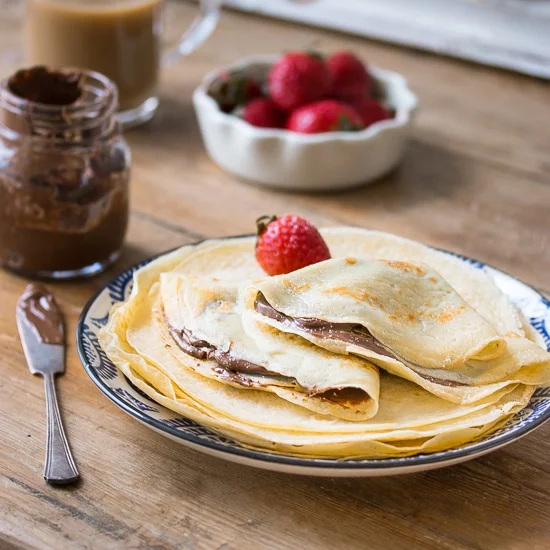
These thin, tender crêpes are made from a simple batter of flour, eggs and milk, with a little sugar and vanilla for a gentle sweetness. Cook a batch for an easy base for either sweet toppings or savoury fillings.
Ingredients
- 140 g (1 cup)plain flour
- 30 ml (2 tablespoons)granulated sugar
- 1.25 ml (1/4 teaspoon)salt
- 2 largeeggs
- 180 ml (3/4 cup)whole milk
- 120 ml (1/2 cup)water
- 5 ml (1 teaspoon)pure vanilla extract
- 28 g (2 tablespoons), melted and slightly cooledunsalted butter
- To coat the panbutter or neutral oil
- 30 ml (2 tablespoons), optionalliquor of your choice
Instructions
- 1
Adapt for savoury
For savoury crêpes, leave out the vanilla and reduce or omit the sugar.
- 2
Mix the batter
Combine the flour, sugar and salt in a large bowl. In a separate medium bowl, lightly beat the eggs, then whisk in the milk, water, vanilla and melted butter, adding the liquor too if using. Make a well in the flour mixture, pour in the egg mixture and whisk until smooth and well combined. Alternatively, blend or process all the ingredients for about 20 seconds on medium speed until creamy and smooth, then pour the batter into a bowl.
- 3
Chill if needed
Cover the bowl and refrigerate the batter for up to 2 days if you are not ready to cook it yet.
- 4
Rest the batter
If you like, refrigerate the batter for 1 hour to let the bubbles settle and reduce the likelihood of tearing. This rest is optional.
- 5
Cook the crêpes
Heat a griddle, frying pan or heavy skillet over medium heat and coat it with a little butter or oil. Pour 60 ml (1/4 cup) of batter into the pan for each crêpe, swirling to spread it evenly. Cook for about 2 minutes, until the underside is light brown, then carefully flip with a thin spatula and cook for another 1–2 minutes. Transfer to a plate and loosely cover with foil to keep warm; stack the cooked crêpes as you go. Recoat the pan with oil every 2 or 3 crêpes to prevent sticking.
- 6
Store leftovers
Keep cooked crêpes covered in the fridge for up to 3 days, or freeze them for up to 1 month.
What are crêpes?
Crêpes are very thin pancakes, traditionally associated with France and served with sweet or savoury fillings. Their simple batter cooks into a flexible sheet that can be folded or rolled around a topping.
This version uses a little sugar and vanilla for a mild sweetness, but both can be reduced for savoury fillings. Water in the batter helps keep the crêpes thin and easy to spread.
Nutrition and macros by portion
The nutrition label shows one serving as written: 265 calories, 8g protein, 30g carbs, 13g fat.
| Portion | Adjustment | kcal | Protein | Carbs | Fat |
|---|---|---|---|---|---|
| Lighter | Use less pan butter | 186 kcal | 6g | 21g | 9g |
| This serving | As written | 265 kcal | 8g | 30g | 13g |
| Hungry | Make a larger portion | 398 kcal | 12g | 45g | 20g |
Most of the carbohydrates come from the flour and sugar, while the eggs and milk provide protein. Butter, eggs and whole milk contribute most of the fat; pair a crêpe with fruit or vegetables and a protein-rich filling for a more balanced plate.
Getting a smooth batter
Dry ingredients: mixing the flour, sugar and salt first helps distribute them before the liquid goes in. Whisk steadily as you add the egg mixture to avoid leaving pockets of flour.
Blender option: blending the ingredients for about 20 seconds is a quick way to make a smooth batter. Transfer it to a bowl afterwards so it is ready to portion into the pan.
Resting the batter
Optional chill: refrigerating the batter for 1 hour gives bubbles time to subside, which may make the crêpes less prone to tearing. The recipe also allows the covered batter to stay in the fridge for up to 2 days before cooking.
No rest needed: the chilling step can be skipped if you want to cook straight away. Handle each crêpe gently when flipping, especially while it is still setting.
Spreading and flipping
Thin layer: pour 60 ml (1/4 cup) of batter into the pan, then immediately swirl it in a circle so it coats the base. A quick swirl helps make an evenly thin crêpe.
Careful turn: wait until the underside looks light brown before sliding a thin spatula underneath and flipping. Cook the second side for another 1–2 minutes.
Choosing the pan and fat
Pan choice: a griddle, frying pan or heavy skillet will work; heat it over medium heat before adding the batter. A consistent medium heat gives you time to spread the batter before it sets.
Light coating: use a little butter or neutral oil to coat the cooking surface. Reapply every 2 or 3 crêpes to help prevent sticking.
Sweet or savoury fillings
Sweet option: keep the vanilla and sugar in the batter, then fill the crêpes with fruit, yoghurt or another favourite sweet topping. Fold or roll them while warm.
Savoury option: omit the vanilla and reduce or leave out the sugar, then add a savoury filling. Keep the pan coating light so the crêpes remain easy to fold.
Keeping the batch warm
As you cook: stack each finished crêpe on a plate and cover the pile loosely with foil. This keeps them warm while you make the remaining batter.
For serving: bring the stack to the table with fillings on the side, or fill and fold each crêpe just before serving. The flexible texture suits both rolled and folded portions.
Recipe notes & tips
- Measure the batter for each crêpe to help keep the batch evenly sized.
- Swirl the pan as soon as the batter is poured, before it begins to set.
- Use a thin spatula to get underneath the crêpe before turning it.
- Keep the cooked crêpes stacked and loosely covered while you finish the batch.
- Recoat the pan every 2 or 3 crêpes to reduce sticking.
Variations
- Savoury batter: omit the vanilla and reduce or leave out the sugar for savoury fillings.
- Liquor addition: whisk in 30 ml (2 tablespoons) of your chosen liquor with the wet ingredients.
- Fruit filling: add fresh fruit after cooking and fold or roll the crêpe around it.
- Herb filling: pair the savoury-style crêpes with a filling that includes chopped fresh herbs.
- Dairy-free pan coating: use neutral oil instead of butter to coat the pan.
Common mistakes to avoid
- Lumpy batter: whisk the wet mixture gradually into the flour, or blend everything until smooth.
- Tearing while flipping: wait until the underside is light brown and use a thin spatula.
- Uneven thickness: swirl the pan in a circular motion immediately after adding the batter.
- Sticking to the pan: coat the surface lightly and refresh it every 2 or 3 crêpes.
- Overcooking the first side: turn the crêpe when the bottom is light brown, after about 2 minutes.
How to store
Keep cooked crêpes covered in the fridge for up to 3 days, or freeze them for up to 1 month. Reheat gently in a pan until warmed through.
Frequently asked questions
Can I make the batter ahead?
Yes. Cover it and refrigerate for up to 2 days before cooking.
Do I have to rest the batter?
No, the 1-hour rest is optional. It lets bubbles settle and may help reduce tearing.
Can I make these crêpes savoury?
Yes. Omit the vanilla and reduce or leave out the sugar, then use a savoury filling.
How much batter goes into each crêpe?
Use 60 ml (1/4 cup) per crêpe, then swirl the pan to spread it thinly.
How do I stop the crêpes sticking?
Coat the pan with a little butter or oil, and reapply every 2 or 3 crêpes.
Can I freeze cooked crêpes?
Yes. They can be frozen for up to 1 month; thaw and reheat gently before serving.
Cook it from the original
This recipe comes from prettysimplesweet.com. Their page has the author’s own photos, notes and tips — the best place to cook it from.
Open the recipe on prettysimplesweet.com