
Kerala Style Prawns Fry
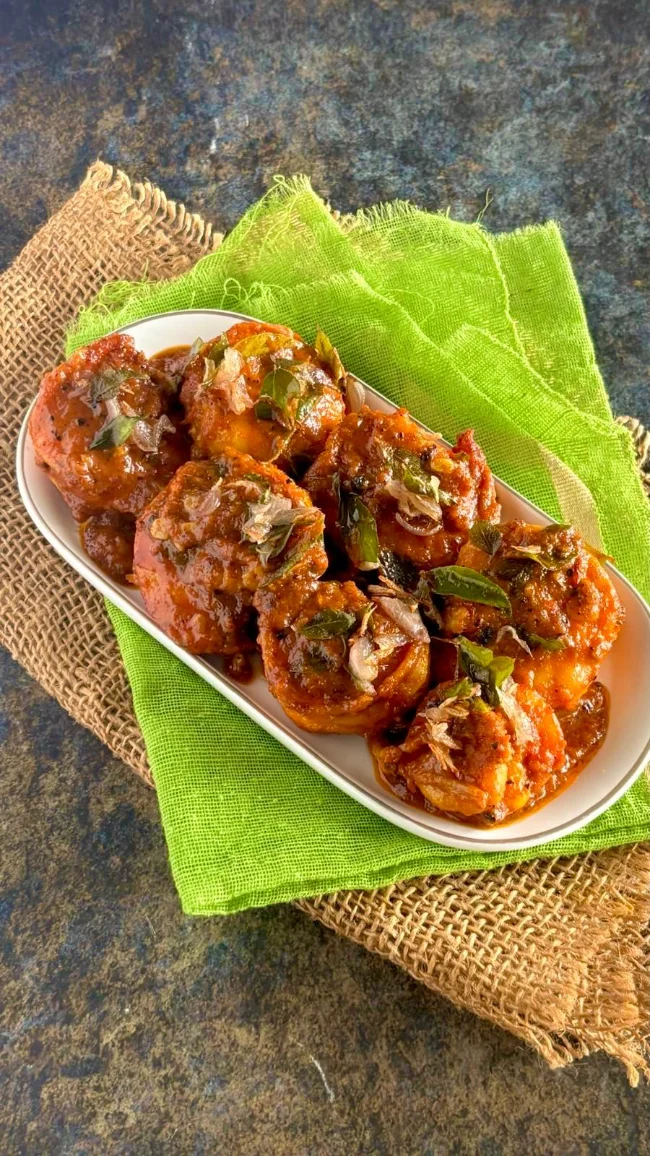
Kerala-style prawns fry, or chemmeen varuthathu, combines prawns with a coarse chilli, spice and garlic paste, then finishes them in coconut milk, coconut oil and curry leaves. Serve it as a punchy appetiser or alongside rice or appam.
Ingredients
- 300 g, cleanedprawns (the original recipe uses tiger prawns)
- 1 tbsp (15 ml)Kashmiri chilli powder
- 1 tsp (5 ml)chilli powder
- ½ tsp (2.5 ml)turmeric powder
- ½ tsp (2.5 ml)whole black peppercorns
- ½ tsp (2.5 ml)fennel seeds
- 5–6pearl or small onions
- 1 tbsp plus 1–2 tsp (15 ml plus 5–10 ml)chopped garlic
- 1 tbsp (15 ml)red chilli flakes
- 60 ml (¼ cup)thick coconut milk
- To tastesalt
- 2–3 tbsp (30–45 ml)coconut oil
- To tastecurry leaves
- 1–1½ tbsp (15–22.5 ml)water, for grinding
Instructions
- 1
Grind the spices
Grind the peppercorns, fennel seeds, small onions, 1 tbsp plus 1–2 tsp of the chopped garlic, turmeric, both chilli powders and salt with about 15–22.5 ml water. Make a thick, coarse paste.
- 2
Marinate the prawns
Coat the cleaned prawns in the paste and leave them to marinate for 15–30 minutes.
- 3
Fry the prawns
Heat coconut oil in a wide pan and fry the prawns in uncrowded batches, adding a few curry leaves. Cook each side for 3–4 minutes, depending on their size, until cooked through and golden brown. The prawns can also be cooked in an air fryer.
- 4
Set them aside
Transfer the cooked prawns to a plate.
- 5
Fry the aromatics
Add more coconut oil to the same pan if needed. When it is hot, add 1–2 tsp chopped garlic, curry leaves and the chilli flakes. Cook for 2–3 minutes, until the raw smell of the garlic has gone.
- 6
Thicken the sauce
Stir in the thick coconut milk, then add the cooked prawns and turn them to coat. Cook for 2–3 minutes, until the sauce is very thick and clings to the prawns.
- 7
Serve hot
Serve hot as an appetiser, or with rice, appam or another accompaniment.
What is Kerala-style prawns fry?
Chemmeen varuthathu is a Kerala-style spiced prawn dish, drawing on the region’s coastal seafood cooking and its fondness for coconut, curry leaves and bold seasoning. This version first coats the prawns in a coarse chilli-and-spice paste, then finishes them in a thick coconut milk sauce.
The two-stage cooking gives the prawns a browned surface before the coconut milk brings the spices together. Kashmiri chilli powder adds colour, while the second chilli powder and flakes contribute extra heat.
Nutrition and macros by portion
The nutrition label shows one serving as written: 220 calories, 18g protein, 8g carbs, 14g fat.
| Portion | Adjustment | kcal | Protein | Carbs | Fat |
|---|---|---|---|---|---|
| Lighter | Use less coconut oil | 154 kcal | 13g | 6g | 10g |
| This serving | As written | 220 kcal | 18g | 8g | 14g |
| Hungry | Add rice or appam | 330 kcal | 27g | 12g | 21g |
The prawns provide most of the protein, while the onions and chilli seasonings contribute some of the carbohydrates. Coconut oil and coconut milk are the main sources of fat, so serve the prawns with rice or appam and a vegetable side to make a more rounded plate.
Build the spice paste
Whole spices: grinding the peppercorns and fennel with the onions and garlic makes a textured paste rather than a smooth sauce. Use only enough water to help the ingredients come together; too much will make the paste runny.
Chilli powders: Kashmiri chilli powder is paired with a second chilli powder, so the seasoning has both colour and a more direct chilli kick. Adjust the heat by choosing a milder or hotter chilli powder.
Marinate briefly
Timing: the recipe calls for 15–30 minutes of marinating. This gives the paste time to coat the prawns without requiring a long wait.
Before frying: let excess paste cling to the prawns, but avoid adding a pool of watery marinade to the pan. A drier coating is more likely to brown.
Get the prawns golden
Pan space: fry in batches if needed, leaving gaps around the prawns. Crowding cools the pan and encourages steaming instead of browning.
Doneness: cook each side for 3–4 minutes as a guide, allowing for the size of the prawns. Look for a golden exterior and prawns cooked through; avoid leaving them in the pan longer than necessary.
Finish with coconut milk
Garlic and curry leaves: frying these with the chilli flakes in the same pan adds aroma to the finishing sauce. Cook for 2–3 minutes, until the garlic no longer smells raw, without letting it burn.
Thick sauce: stir in the coconut milk, return the prawns and cook for 2–3 minutes. The aim is a concentrated coating on the prawns, not a large amount of thin liquid.
What to serve alongside
Rice: plain rice gives the chilli-rich sauce something to cling to and makes the dish work as part of a meal.
Appam: soft appam is another suggested pairing and is handy for scooping up the coconut milk masala. The prawns can also be served on their own as an appetiser.
Recipe notes & tips
- Pat the cleaned prawns dry before adding the paste to help them brown.
- Use a wide pan and cook in batches if the prawns do not fit with space between them.
- Keep the frying time flexible because larger prawns take longer than smaller ones.
- Add only a few curry leaves while frying the prawns, then use more for the garlic and chilli-flake finish.
- Keep the heat controlled when frying the garlic so it becomes aromatic without burning.
- Cook the coconut milk until it clings to the prawns rather than leaving the sauce loose.
Variations
- Adjust the heat: use less chilli powder or fewer chilli flakes for a milder finish.
- Use smaller prawns: reduce the frying time and check them early, as they cook faster.
- Air-fry the prawns: cook them in an air fryer instead of frying them in the pan, as the recipe suggests.
- Add more curry leaves: use extra leaves in the finishing stage for a stronger herbal aroma.
- Serve as a meal: pair the prawns with rice or appam to make them part of a more substantial plate.
Common mistakes to avoid
- Crowding the pan: the prawns may steam rather than brown, so fry them in batches.
- Adding too much water to the paste: it can turn runny, so start with the stated 15 ml and add only enough to grind.
- Overcooking the prawns: they can become tough, so use the 3–4 minute guide and account for their size.
- Burning the garlic: it can taste bitter, so cook it over controlled heat and watch for the raw smell to fade.
- Leaving the sauce thin: continue cooking for the stated 2–3 minutes until the coconut milk coats the prawns.
How to store
Refrigerate leftovers in a covered container and use within 2 days. Reheat gently in a pan until hot throughout; avoid prolonged heating, which can make the prawns tough.
Frequently asked questions
Can I use a different size of prawns?
Yes. The recipe uses cleaned tiger prawns, but other sizes can work. Adjust the frying time to suit their size and check that they are cooked through.
How long should I marinate the prawns?
Marinate them for 15–30 minutes, as directed. Keep them chilled if you are not cooking them straight away.
Can I make this in an air fryer?
The recipe notes that the prawns can be cooked in an air fryer. It does not give an air-fryer temperature or timing, so follow your appliance’s guidance and check the prawns for doneness.
How can I make the dish less spicy?
Reduce the chilli powder or chilli flakes, or choose a milder chilli powder. The Kashmiri chilli powder is also part of the seasoning, so adjust the total to suit your preference.
What can I serve with Kerala-style prawns fry?
Serve it hot as an appetiser, or pair it with rice or appam. A vegetable side can round out a meal.
How do I know when the sauce is ready?
After 2–3 minutes of cooking with the coconut milk, it should be thick and coat the prawns rather than pooling thinly in the pan.
Cook it from the original
This recipe comes from mariasmenu.com. Their page has the author’s own photos, notes and tips — the best place to cook it from.
Open the recipe on mariasmenu.com