
Chocolate, Dulce de Leche and Vanilla Marble Cake
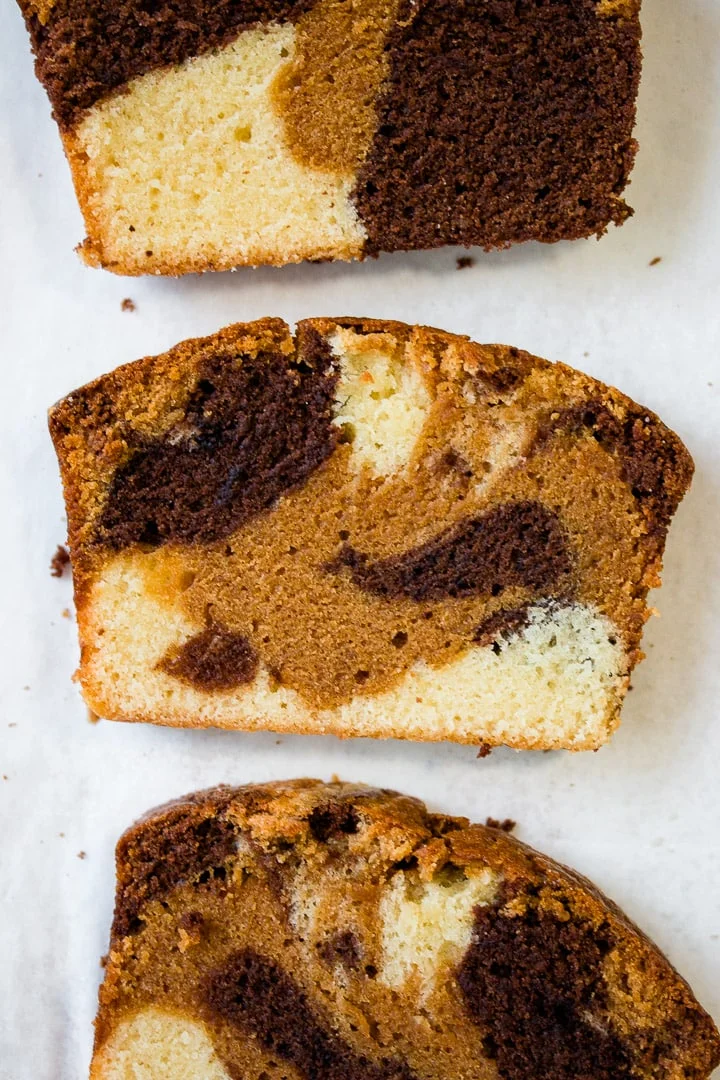
This loaf cake layers vanilla, chocolate and dulce de leche batters for a marbled slice with buttery crumb and caramel notes. The low oven temperature and careful layering help the three flavours bake together without losing their distinct swirls.
Ingredients
- 170 g (1 1/2 sticks/6 oz.)unsalted butter, at room temperature
- 300 g (1 1/2 cups)granulated sugar
- 60 g (2 1/4 oz.)semisweet or bittersweet chocolate, chopped
- 80 g (1/4 cup)dulce de leche
- 3 largeeggs
- 210 g (1 1/2 cups)all-purpose flour
- 1/2 teaspoonsalt
- 1/4 teaspoonbaking powder
- 120 ml (1/2 cup)sour cream or buttermilk (heavy cream also works)
- 1 tablespoonDutch process cocoa powder
- 2 teaspoonspure vanilla extract
Instructions
- 1
Prepare the tin
Heat the oven to 150°C (300°F). Grease an 8.5 x 4.5-inch loaf tin well; a 9-inch loaf tin also works. If you like, line it with baking parchment, leaving overhang along the long sides to help lift out the cake.
- 2
Cream butter and sugar
Using a stand mixer with the paddle attachment, beat the butter and sugar on medium-high for about 5 minutes, until pale and fluffy. Stop to scrape down the bowl as needed.
- 3
Melt the chocolate
Place the chopped chocolate in a heatproof bowl over a pan of barely simmering water. Stir gently until smooth, then turn off the heat and set aside.
- 4
Soften the caramel
Warm the dulce de leche in a medium microwave-safe bowl for about 30 seconds, until soft and fluid.
- 5
Add eggs and dry ingredients
When the butter mixture is light and fluffy, add the eggs one at a time on medium speed, scraping down the bowl after each addition. Whisk the flour, salt and baking powder together in a small bowl.
- 6
Finish the batter
With a spatula, fold in one-third of the dry mixture until nearly combined. Mix in half the sour cream or buttermilk, then half the remaining dry mixture. Add the rest of the dairy, followed by the remaining dry ingredients, mixing only until incorporated; do not overbeat.
- 7
Make three batters
Divide the batter into three portions. Stir one-third, about 300 g, into the melted chocolate with the cocoa powder. Mix another third with the dulce de leche, and stir the vanilla into the remaining batter. Avoid overmixing.
- 8
Layer the first row
Using an ice-cream scoop or two tablespoons, arrange five rows of chocolate and vanilla batter in alternating order down both sides of the loaf tin. Add scoops of dulce de leche batter down the centre.
- 9
Build the checkerboard
For the next layer, place chocolate scoops over the vanilla batter, then dulce de leche scoops over the chocolate batter. Finish with vanilla scoops down the centre, then scatter any leftover batter over the top. Tap the tin lightly on the worktop to settle the batter.
- 10
Create the marble
Draw a toothpick or butter knife through the batter about seven times to mingle the colours. Stop before the patterns blend together.
- 11
Bake until set
Bake for about 1 hour 30 minutes, until the centre is just set and a toothpick inserted in the middle comes out clean.
- 12
Cool and serve
Leave the cake in its tin for 15 minutes, then use the parchment overhang to lift it onto a wire rack. Cool completely and serve at room temperature.
- 13
Store the cake
Keep the cake in the refrigerator for 2–3 days and bring it to room temperature before serving. It also freezes well; thaw overnight in the fridge or for a couple of hours at room temperature.
What is a chocolate, dulce de leche and vanilla marble cake?
A marble cake combines contrasting batters in one loaf, so each slice has a different pattern of flavours. This version brings together familiar vanilla and chocolate cake with dulce de leche, the thick milk caramel used in many Latin American sweets.
Three separate batters make the flavours clear, while the checkerboard arrangement creates a patterned cross-section. A few gentle strokes with a knife tie the layers together without turning them into one uniform mixture.
Nutrition and macros by portion
The nutrition label shows one serving as written: 4130 calories, 60g protein, 500g carbs, 230g fat.
| Portion | Adjustment | kcal | Protein | Carbs | Fat |
|---|---|---|---|---|---|
| Lighter | Smaller cake slice | 2891 kcal | 42g | 350g | 161g |
| This serving | As written | 4130 kcal | 60g | 500g | 230g |
| Hungry | Larger cake slice | 6195 kcal | 90g | 750g | 345g |
The flour and sugar provide most of the carbohydrates, while butter, chocolate and dulce de leche contribute much of the fat; eggs and dairy add some protein. The recipe is marked as 1 serving, which would mean the entire loaf for these estimates, so divide it into slices and pair one with fruit or yoghurt for a more balanced plate.
The three flavour batters
Chocolate: Melt the chopped chocolate gently over barely simmering water, then combine it with cocoa and one portion of the cake batter. Let the chocolate cool slightly if it is very hot before mixing it in.
Dulce de leche: Briefly warming the caramel makes it easier to stir into the batter and scoop into the tin. Warm it only until fluid, not hot.
Vanilla: Keep the final portion plain apart from the vanilla extract. This lighter batter provides contrast against the chocolate and caramel in each slice.
Why the creaming stage matters
Butter at room temperature blends smoothly with the sugar and can be beaten until light and fluffy. Give it the stated 5 minutes, pausing to scrape the bowl so the mixture is evenly aerated.
Eggs go in one at a time so they can be incorporated gradually. If the mixture looks uneven, scrape the sides and base of the bowl before adding the next egg.
Keep the crumb tender
Dry ingredients and sour cream or buttermilk are added in alternating additions. This gradual mixing helps the batter come together evenly.
Stop as soon as the last flour streaks disappear, and use a spatula rather than beating hard while dividing and flavouring the batter. Overmixing at this stage can make the loaf less tender.
Layering and marbling
Checkerboard layers: Place the batters in the prescribed alternating rows, keeping the dulce de leche portions down the centre in the first layer. The arrangement gives the finished loaf its varied pattern.
Light swirling: About seven passes with a toothpick or knife are enough to make the colours mingle. More strokes can blur the distinct bands, so leave some clear patches of each batter.
Check the centre, not just the top
The cake bakes at 150°C (300°F) for about 1 hour 30 minutes, but use the centre as your guide. It should be just set, and a toothpick inserted there should come out clean.
Let the loaf rest in the tin for 15 minutes before lifting it out. Cooling it fully on a wire rack helps the structure settle before slicing.
Serving ideas
Serve slices at room temperature so the butter-rich crumb is soft and the dulce de leche flavour comes through. The cake works well on its own with tea or coffee.
For a simple dessert plate, add fresh berries or a spoonful of unsweetened yoghurt. Their freshness balances the loaf's sweetness without obscuring its three flavours.
Recipe notes & tips
- Bring the butter and eggs to room temperature so they incorporate more readily.
- Use a tin with the stated dimensions or a 9-inch loaf tin, and grease it thoroughly.
- Keep the water beneath the chocolate at a bare simmer rather than a rolling boil.
- Use a scale to divide the batter into three similar portions for more even layers.
- Tap the tin gently to settle the batter before making the marble pattern.
- Allow the cake to cool fully before cutting neat slices.
Variations
- Use buttermilk: Choose it instead of sour cream for a slightly lighter, tangier batter.
- Choose bittersweet chocolate: Use it for a deeper, less sweet chocolate layer.
- Try heavy cream: Use it in place of sour cream or buttermilk, as allowed in the recipe.
- Add a finishing dusting: Once cool, lightly dust the top with cocoa powder.
- Serve with berries: Add fresh berries alongside a slice for a bright contrast.
Common mistakes to avoid
- Overbeating the batter: Mix only until the ingredients are incorporated to help keep the crumb tender.
- Overheating the chocolate: Melt it over barely simmering water and stir gently to keep it smooth.
- Using cold dulce de leche: Warm it for about 30 seconds so it is soft enough to mix and scoop.
- Swirling too much: Limit the knife or toothpick to about seven passes so the batters stay distinct.
- Relying on the top colour: Check the centre with a toothpick, since the loaf needs to be set all the way through.
- Lifting it out too soon: Leave the cake in the tin for 15 minutes before using the parchment to remove it.
How to store
Store the cake covered in the refrigerator for 2–3 days and bring slices to room temperature before serving. It freezes well; thaw overnight in the fridge or for a couple of hours at room temperature.
Frequently asked questions
Can I use a 9-inch loaf tin?
Yes. The recipe allows a 9-inch loaf tin as well as an 8.5 x 4.5-inch one. Check the cake for doneness in the centre rather than relying only on the suggested time.
Can I use sour cream or buttermilk?
Either works in the recipe, and heavy cream is also given as an option. Measure 120 ml whichever you choose.
How do I know when the cake is baked?
The centre should be just set, and a toothpick inserted in the middle should come out clean. The suggested baking time is about 1 hour 30 minutes at 150°C.
How do I get a clear marble pattern?
Layer the three batters in the checkerboard arrangement, then draw a toothpick or butter knife through the mixture about seven times. Avoid extra strokes, which can make the colours blend together.
Can I freeze this cake?
Yes. Thaw it overnight in the fridge or for a couple of hours at room temperature, then serve it at room temperature.
Why does the recipe say one serving?
The supplied serving count is 1, but this recipe makes a loaf cake that is normally cut into multiple slices. The nutrition estimate follows the supplied count, so it represents the whole loaf.
Cook it from the original
This recipe comes from prettysimplesweet.com. Their page has the author’s own photos, notes and tips — the best place to cook it from.
Open the recipe on prettysimplesweet.com