
Chicken Sausage Pasta
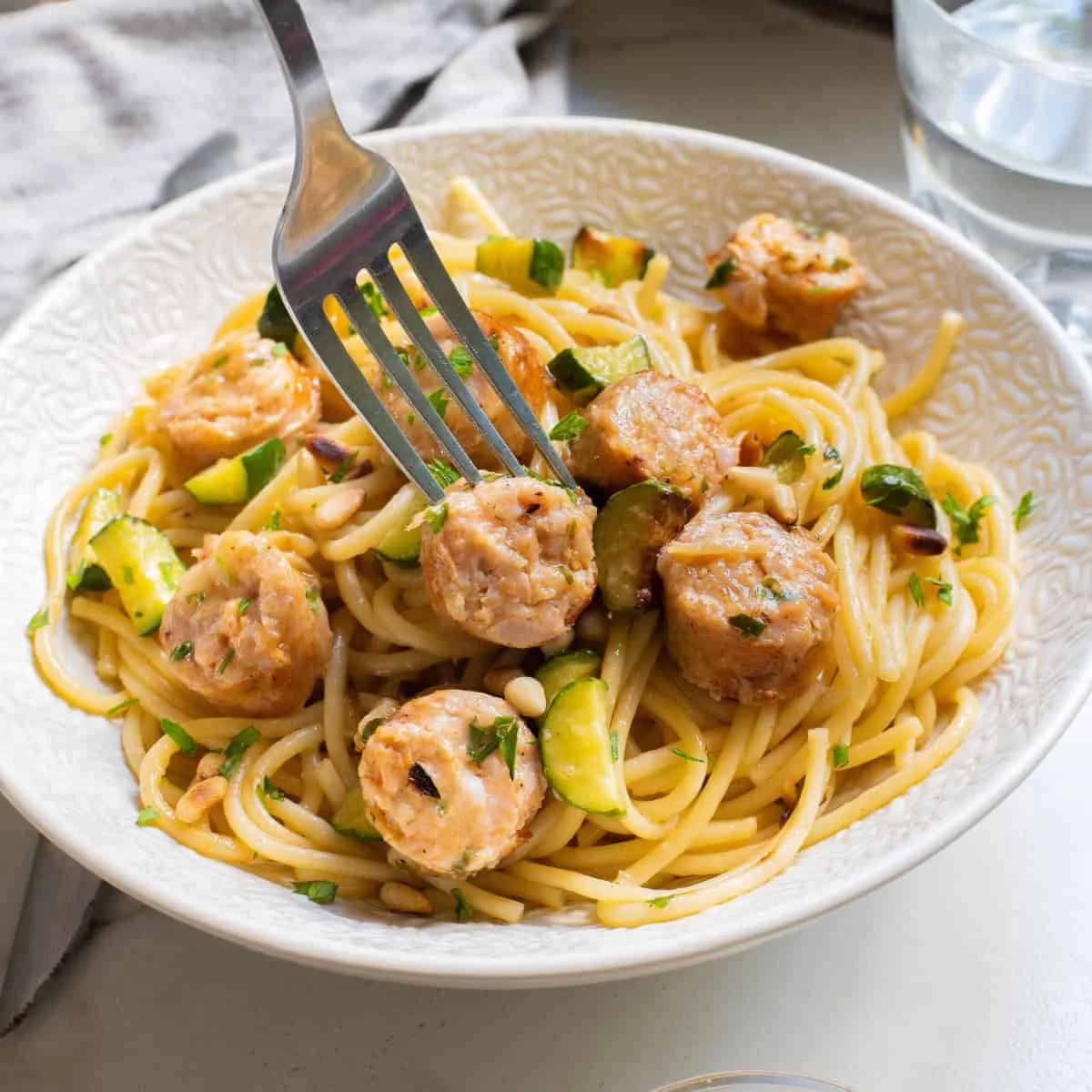
Chicken sausage pasta brings spaghetti together with browned sausage, soft courgette, Parmesan and toasted pine nuts. It is a straightforward weeknight meal that takes about 25 minutes and needs only one pan for the sauce.
Ingredients
- 454 g (16 oz)spaghetti
- 60 ml (4 tbsp), dividedolive oil
- 1 package, about 4 linkschicken sausages, cut into rings
- 150 g (1 cup), choppedcourgette
- 1 smallwhite onion, peeled and finely chopped
- 3 cloves, mincedgarlic
- 30 ml (2 tbsp)parsley
- 3.75 ml (¾ tsp)sea salt
- 2.5 ml (½ tsp)ground black pepper
- 75 g (¾ cup)Parmesan cheese, grated
- 35 g (¼ cup)pine nuts, toasted
Instructions
- 1
Cook the spaghetti
Bring a large pan of salted water to the boil. Cook the spaghetti according to the packet instructions, then reserve 120 ml (½ cup) of the pasta water before draining.
- 2
Cook the sausage
Meanwhile, heat 45 ml (3 tbsp) of the olive oil in a large pan over a medium heat. Add the sausage and cook for 8 minutes, stirring occasionally; it is fine if some pieces break up. Add the courgette, onion and garlic, and cook together for about 4–6 minutes, until the courgette is soft and the sausage is cooked through.
- 3
Combine the pasta
Add the spaghetti, parsley, salt, pepper and remaining 15 ml (1 tbsp) olive oil to the pan. Stir to combine, then add the Parmesan and reserved pasta water and stir until the sauce turns creamy.
- 4
Finish and serve
Scatter the toasted pine nuts over the pasta and serve.
What is chicken sausage pasta?
This is an American-style weeknight pasta dish: spaghetti tossed with chicken sausage and vegetables, then finished with cheese and nuts. It draws on familiar Italian-American ingredients without being a traditional regional Italian preparation.
The combination works because the pasta water helps the Parmesan coat the strands, while courgette, parsley and toasted pine nuts bring freshness and texture.
Nutrition and macros by portion
The nutrition label shows one serving as written: 748 calories, 27g protein, 93g carbs, 30g fat.
| Portion | Adjustment | kcal | Protein | Carbs | Fat |
|---|---|---|---|---|---|
| Lighter | Less oil, more courgette | 524 kcal | 19g | 65g | 21g |
| This serving | As written | 748 kcal | 27g | 93g | 30g |
| Hungry | Larger pasta portion | 1122 kcal | 41g | 140g | 45g |
The spaghetti supplies most of the carbohydrates, while olive oil, Parmesan and pine nuts contribute much of the fat. Chicken sausage and Parmesan provide protein. Serve with a green salad or extra non-starchy vegetables to add freshness and balance the plate.
Choosing the ingredients
Chicken sausage: Cut the links into rings so they brown in the pan and are easy to mix through the spaghetti. Sausages vary in size and seasoning, so check that they are cooked through as directed in the method.
Pasta and cheese: Grated Parmesan disperses more readily than large shavings, helping form a coating with the reserved cooking water. Save that water before draining the spaghetti.
Build the pan sauce
Pasta water: Its starch helps bind the oil and cheese into a smoother sauce. Add it with the Parmesan and stir; the pasta should look lightly coated rather than sit in a pool of liquid.
Heat: Keep the pan at a medium heat while combining everything. If the sauce seems too thick, loosen it with a little more of the reserved water.
Cook the sausage and vegetables
Sausage: Stir occasionally during its 8 minutes in the pan so the rings cook evenly. After adding the vegetables, make sure the sausage is cooked through before moving on.
Courgette: The 4–6 minutes is a guide; cook until the pieces are soft, stirring the onion and garlic along with them. Avoid letting the garlic scorch.
Finish with texture
Parmesan: Stir it into the hot pasta with the reserved water rather than leaving it only as a topping. This distributes the savoury flavour throughout the dish.
Pine nuts: Add them just before serving so they retain their toasted crunch. Their nutty flavour complements the soft courgette and tender pasta.
Serve it as a meal
A simple green salad makes a fresh accompaniment, while garlic bread suits a more substantial meal. Serve the pasta promptly, while the sauce is at its creamiest.
If you are preparing a side, make it while the pasta water heats or the sausage cooks so the components are ready together.
Recipe notes & tips
- Reserve the pasta water before draining, as it helps bring the sauce together.
- Cut the sausage into similarly sized rings so the pieces cook at a similar rate.
- Stir the courgette, onion and garlic as they cook to soften them evenly.
- Add the pasta water gradually if you prefer a thicker coating.
- Toast the pine nuts ahead of time, then scatter them over the dish just before serving.
Variations
- Add chilli: Stir a pinch of chilli flakes into the pan with the garlic for a little heat.
- Swap the herbs: Use chopped basil in place of parsley for a different fresh finish.
- Change the pasta: Use another long pasta shape and cook it according to its packet instructions.
- Add greens: Stir in a handful of spinach at the end and let it wilt in the warm pasta.
- Use another sausage: Replace the chicken sausage with another cooked-through sausage, adjusting the pan time as needed.
Common mistakes to avoid
- Forgetting the pasta water: Reserve it before draining so you can make the Parmesan coating creamy.
- Overcooking the courgette: Cook until soft, checking after 4 minutes so it does not lose all its texture.
- Scorching the garlic: Stir it with the other vegetables and keep the pan at a medium heat.
- Adding all the water at once: Stir it in with the cheese and add gradually if the sauce needs loosening.
- Leaving the pine nuts in the pan: Add them at the end to preserve their toasted crunch.
How to store
Refrigerate leftovers in an airtight container for up to 3 days. Reheat gently in a pan or microwave with a splash of water to loosen the pasta; add fresh pine nuts after reheating if available.
Frequently asked questions
Can I make this without pine nuts?
Yes. Leave them out, or use toasted chopped almonds for a similar crunchy finish.
Can I use a different type of pasta?
Yes. Use another pasta shape and cook it according to its packet instructions, reserving some of the cooking water.
How do I know the sausage is cooked through?
Check the sausage pieces are cooked through before adding the cooked pasta. Follow any cooking guidance on the sausage packaging.
Why does the recipe reserve pasta water?
The starchy water helps the Parmesan and olive oil coat the spaghetti. Add it with the cheese and stir until the sauce looks creamy.
Can I prepare this ahead?
It is best served straight after combining, when the sauce is creamy. You can chop the vegetables and cut the sausage ahead, then refrigerate them until cooking.
Cook it from the original
This recipe comes from noshingwiththenolands.com. Their page has the author’s own photos, notes and tips — the best place to cook it from.
Open the recipe on noshingwiththenolands.com