
Dates And Oats Pudding
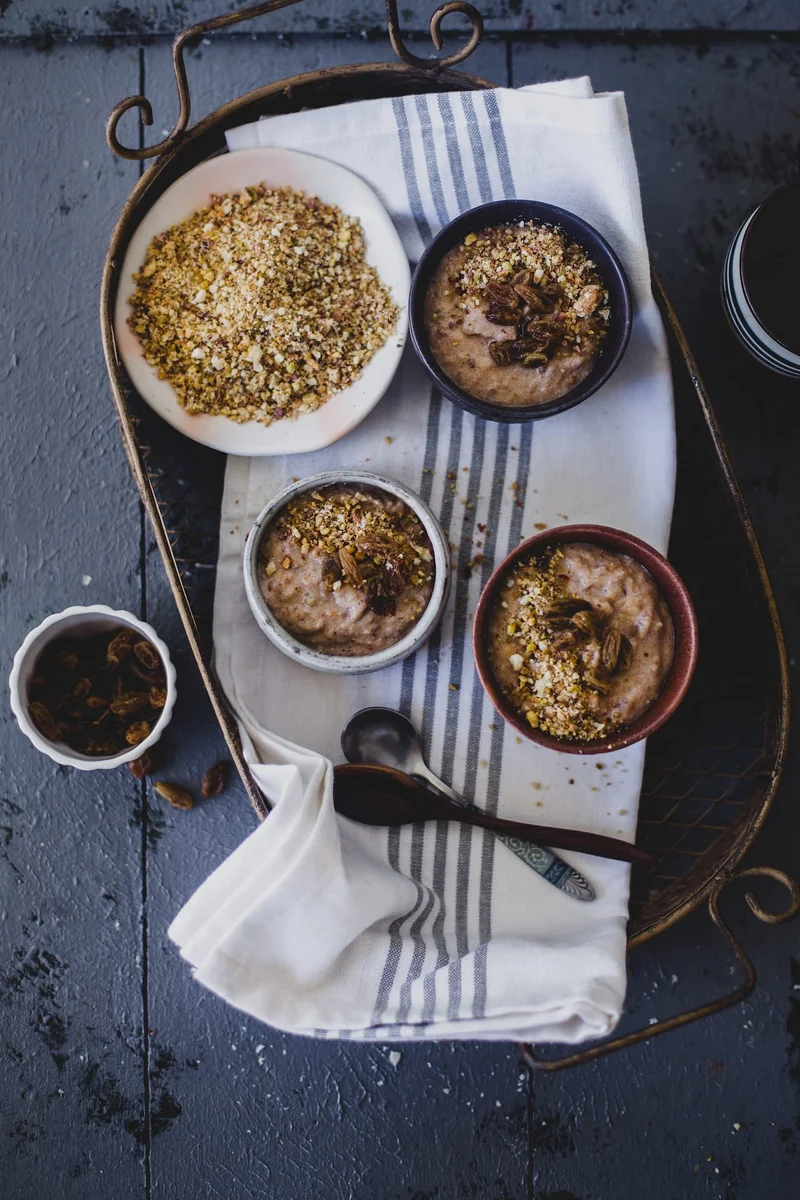
This dates and oats pudding combines softened dates, cream, milk and honey into a thick, gently sweet dessert, finished with crunchy nuts and raisins. It is a comforting option when you want a warm pudding with little hands-on preparation.
Ingredients
- 60 ml (¼ cup)water
- 200 gdates, stones removed and roughly chopped
- 1 cup (about 140 g)mixed nuts, coarsely ground
- 45 ml (3 tablespoons)rolled oats
- 240 ml (1 cup)fresh cream
- 240 ml (1 cup)milk
- 45 ml (3 tablespoons)honey
- 15 ml (1 tablespoon)raisins
Instructions
- 1
Soften the dates
Put the water and chopped dates in a pan. Bring to the boil, then simmer for 10 minutes, or until the dates have softened. Blend them into a paste.
- 2
Cook the base
In a separate saucepan, combine the cream, milk and honey and bring to the boil. Stir in the date paste and half of the ground mixed nuts, then cook for 10 minutes.
- 3
Thicken with oats
Stir in the rolled oats. Cook for a further 5 minutes, until the mixture thickens, then sprinkle in some of the raisins.
- 4
Garnish and serve
When serving, garnish with a sprinkling of the remaining coarsely ground nuts and raisins.
What is dates and oats pudding?
This is a warm, spoonable pudding built around dates cooked until soft and blended into a paste. Dates and nuts are common ingredients in sweets across many regions, and this version brings them together with a creamy milk base and oats.
Date paste gives the pudding sweetness and body, while ground nuts add richness and a little texture. Oats finish the job by thickening the mixture as it cooks.
Nutrition and macros by portion
The nutrition label shows one serving as written: 665 calories, 12g protein, 65g carbs, 40g fat.
| Portion | Adjustment | kcal | Protein | Carbs | Fat |
|---|---|---|---|---|---|
| Lighter | Use less cream | 465 kcal | 8g | 46g | 28g |
| This serving | As written | 665 kcal | 12g | 65g | 40g |
| Hungry | Serve a larger bowl | 998 kcal | 18g | 98g | 60g |
Dates, honey, oats and raisins contribute most of the carbohydrates, while the cream and nuts account for much of the fat. Milk, nuts and oats also provide some protein. Pair a portion with fresh fruit, or serve a smaller bowl after a meal with a lighter main course.
Making a smooth date paste
Dates: Simmer them in the measured water until soft enough to blend easily. If they still feel firm after 10 minutes, continue cooking until they give way when pressed.
Blending: Blend the softened dates into a paste before adding them to the dairy. This helps distribute their sweetness through the pudding.
Building the creamy base
Dairy and honey: Bring the cream, milk and honey to the boil together, keeping an eye on the pan so the mixture does not boil over. Stir in the date paste and half the nuts, then let them cook together for the stated 10 minutes.
Nuts: Coarsely ground nuts bring flavour and a slight bite to the pudding. Saving half for the finish keeps some of that texture noticeable.
Getting the thickness right
Oats: Add them after the date mixture has cooked, then give the pudding the full 5 minutes to thicken. Stir as it cooks so the oats are distributed evenly.
Doneness: The pudding should be thicker after the oats have cooked, but still easy to spoon. It will continue to feel more substantial as it cools.
Finishing with raisins and nuts
Raisins: Stir some into the pudding near the end, then use the remainder as a garnish when serving. This gives you a little sweetness throughout as well as a visible finish.
Garnish: Add the reserved nuts just before serving so their coarsely ground texture stands out against the soft pudding.
Serving the pudding
Serve it warm in small bowls, with a little of the nut-and-raisin garnish on each portion. The pudding is rich enough to serve on its own, or alongside fresh fruit for a brighter contrast.
Recipe notes & tips
- Remove every stone from the dates before chopping and simmering them.
- Use a separate pan for the cream, milk and honey as directed.
- Stir in the oats evenly so they do not gather in clumps.
- Keep the remaining nuts aside for the garnish.
- Serve soon after cooking for a warm, creamy texture.
Variations
- Extra spice: Stir in a pinch of ground cardamom while the date paste cooks with the dairy.
- More fruit: Add chopped fresh fruit alongside each serving.
- Different nuts: Use another coarsely ground nut mixture in place of the mixed nuts.
- Less honey: Reduce the honey slightly if you prefer a less sweet pudding.
- Chilled pudding: Cool the cooked pudding and refrigerate it before serving.
Common mistakes to avoid
- Firm dates: Simmer them until soft before blending so they form a smooth paste.
- Boiling over: Watch the dairy mixture as it comes to the boil and lower the heat once it does.
- Uneven oats: Stir thoroughly after adding them so they thicken the pudding evenly.
- Losing the garnish: Reserve half the nuts and some raisins instead of adding everything during cooking.
- Overcooking after the oats: Cook them for the stated 5 minutes and check the thickness before serving.
How to store
Refrigerate leftovers in a covered container and use within 3 days. Reheat gently in a saucepan, stirring; add a splash of milk if the pudding has thickened too much.
Frequently asked questions
Can I make this pudding ahead?
Yes. Make it ahead and refrigerate it in a covered container. Reheat gently, stirring, and loosen with a little milk if needed.
Can I serve it cold?
Yes. Let the pudding cool, then chill it before serving. It will be thicker when cold.
How do I know when the dates are soft enough?
They should be tender enough to blend easily into a paste. Simmer them for longer than 10 minutes if they are still firm.
Can I use a different type of milk?
You can try another milk, though the pudding's flavour and thickness may change. Stir and check the consistency as it cooks.
Why is my pudding too thick?
Oats continue to absorb liquid as the mixture stands. Stir in a splash of milk to loosen it, especially when reheating.
Cook it from the original
This recipe comes from playfulcooking.com. Their page has the author’s own photos, notes and tips — the best place to cook it from.
Open the recipe on playfulcooking.com