
Easy Eggless Triple Chocolate Mousse Cake
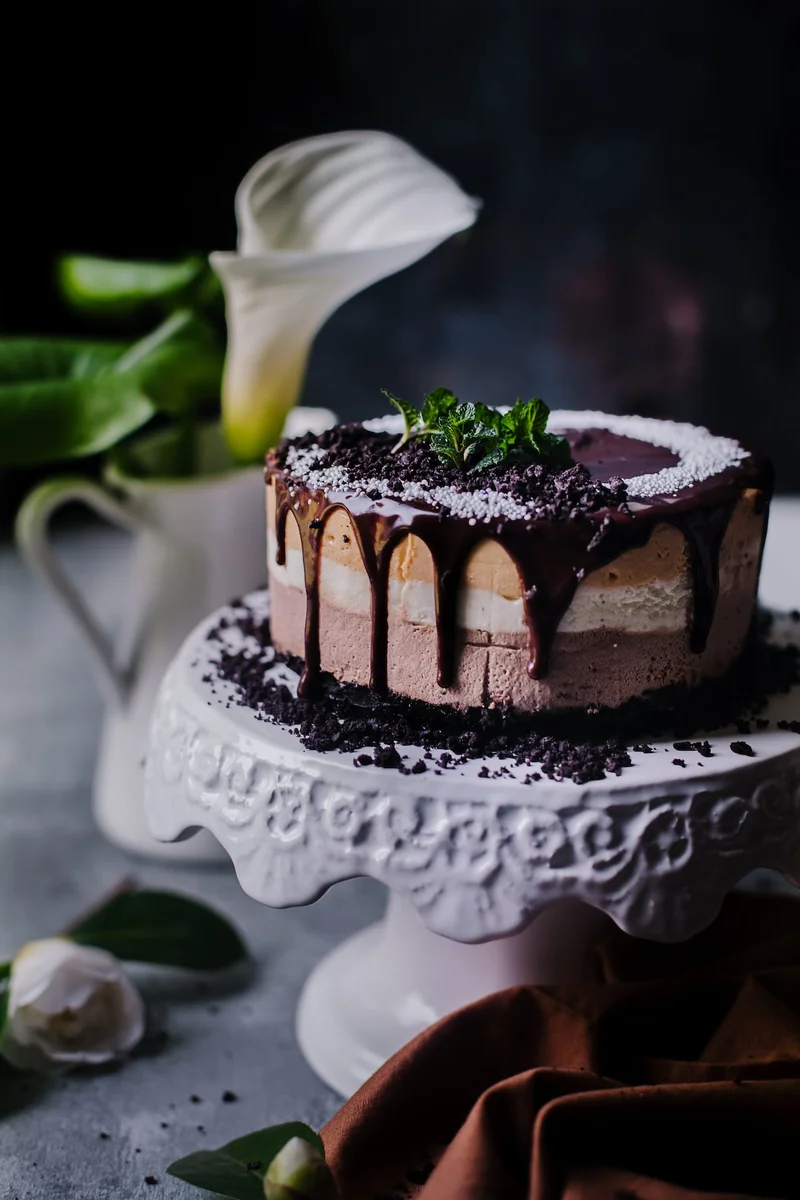
This eggless triple chocolate mousse cake layers a buttery Oreo base with milk, white and butterscotch chocolate mousse, then finishes with chocolate ganache and biscuit crumbs. Make it ahead for a rich, chilled dessert that slices neatly once set.
Ingredients
- 20thin Oreo biscuits
- 1½ tablespoonsmelted butter
- 85 g (3 oz; about ½ cup)milk chocolate chips
- 2 tablespoonsmilk
- 120 ml (½ cup)double cream
- 1 teaspoongelatine powder
- 2 tablespoonswater
- 85 g (3 oz; about ½ cup)white chocolate chips
- 2 tablespoonsmilk
- 120 ml (½ cup)double cream
- 1 teaspoongelatine powder
- 2 tablespoonswater
- 85 g (3 oz; about ½ cup)butterscotch chocolate chips
- 2 tablespoonsmilk
- 120 ml (½ cup)double cream
- 1 teaspoongelatine powder
- 2 tablespoonswater
- 55 g (⅓ cup)milk chocolate chips
- 1 tablespoonbutter
- 1 tablespoonmilk
- 4Oreo biscuits
Instructions
- 1
Prepare the tin
Grease the base and sides of a 15 cm (6-inch) springform cake tin with butter.
- 2
Make the crust
Grind the 20 Oreo biscuits into fine crumbs in a food processor, or crush them in a sealed bag with a rolling pin. Stir in the melted butter, press the mixture into an even layer across the base of the tin, then refrigerate it.
- 3
Bloom the gelatine
Pour 2 tablespoons of water into a small saucepan, sprinkle over 1 teaspoon of gelatine powder and stir. Leave it for 5 minutes to bloom.
- 4
Melt the chocolate
Bring water to the boil in a saucepan, then reduce the heat to medium and set a heatproof glass or stainless-steel bowl on top. Add 85 g (3 oz; about ½ cup) of milk chocolate chips and 2 tablespoons of milk, and stir until melted.
- 5
Dissolve the gelatine
Warm the bloomed gelatine over medium heat for about 1 minute, until fully dissolved. Pour it into the melted chocolate and whisk to combine.
- 6
Make the first mousse
Whip 120 ml (½ cup) of double cream until stiff. Add the chocolate and gelatine mixture and whisk to combine. Spread this mousse evenly over the crust, then refrigerate while you prepare the next layer.
- 7
Add two layers
Repeat the same process for the white chocolate layer and then the butterscotch chocolate layer, using the listed quantities of water, gelatine, chocolate chips, milk and double cream for each. Spread each mousse evenly over the preceding layer.
- 8
Chill until set
After adding the third mousse layer, refrigerate the cake for at least 4 hours or overnight.
- 9
Release the cake
Take the tin from the refrigerator and leave it for 5 minutes. Run a clean knife around the edge, carefully release the springform ring, then run the knife beneath the crust and transfer the cake to a serving plate or cake stand.
- 10
Make the ganache
Bring water to the boil in a saucepan, then reduce the heat to medium and set a heatproof glass or stainless-steel bowl on top. Add 55 g (⅓ cup) of milk chocolate chips, 1 tablespoon of butter and 1 tablespoon of milk; stir until melted.
- 11
Prepare the crumbs
Grind the 4 Oreo biscuits into fine crumbs.
- 12
Finish the cake
Drizzle the ganache over the cake and scatter the Oreo crumbs on top. The original method also suggests white sprinkles and fresh mint, with fresh berries as an optional finishing touch.
What is a triple chocolate mousse cake?
Mousse cakes pair a crisp or crumbly base with a light, chilled chocolate filling. This version uses the familiar Oreo-and-chocolate combination rather than a baked sponge, and builds three distinct flavours into one dessert.
The three layers are milk, white and butterscotch chocolate, set with gelatine. Whipped cream softens the richness, while the biscuit crust and final ganache add contrasting textures.
Nutrition and macros by portion
The nutrition label shows one serving as written: 720 calories, 8g protein, 66g carbs, 48g fat.
| Portion | Adjustment | kcal | Protein | Carbs | Fat |
|---|---|---|---|---|---|
| Lighter | Use a smaller slice | 504 kcal | 6g | 46g | 34g |
| This serving | As written | 720 kcal | 8g | 66g | 48g |
| Hungry | Serve a larger slice | 1080 kcal | 12g | 99g | 72g |
The Oreo biscuits, chocolate chips and milk supply most of the carbohydrates, while the cream, butter and chocolate contribute much of the fat. Protein comes mainly from the dairy and chocolate, though this is still a dessert rather than a substantial protein source. Serve a slice with fresh berries for a fresher contrast.
Why the Oreo base works
Crushed biscuits: Grind the 20 biscuits finely so the base presses into a compact, even layer. Mix in the melted butter before pressing it into the greased tin.
Chilling: Refrigerating the crust while making the first mousse helps it firm up and gives the filling a stable surface.
Get the gelatine ready
Blooming: Sprinkle the gelatine over the water and leave it for 5 minutes. This gives the granules time to absorb the liquid before heating.
Dissolving: Warm it gently until clear and fully liquid, then whisk it into the melted chocolate. Undissolved grains can leave an uneven texture in the mousse.
Make smooth mousse layers
Melt gently: Use a heatproof bowl over simmering water, keeping the bowl above the water rather than immersed. Stir the chocolate with its measured milk until smooth.
Fold in cream: Whip the cream until stiff before adding the chocolate mixture. Work until combined, then spread the mousse level so the next layer has a flat surface.
Allow time to set
Between layers: The method says to refrigerate the first mousse while preparing the next one, then spread each layer over the previous one. If a layer still looks very loose, give it a little more time to firm before adding the next.
Final chill: Allow at least 4 hours after the last layer, or leave the cake overnight. The centre should feel set before you remove the ring.
Release and finish neatly
Warm the edge: Leaving the cake out for 5 minutes and running a clean knife around the sides helps free it from the tin. Take care when releasing the ring so the mousse layers stay intact.
Ganache: Melt the chocolate, butter and milk gently over the water bath, then drizzle it across the top. Scatter the Oreo crumbs over the ganache for a crunchy finish.
What to serve alongside
Fruit: Fresh berries, suggested as an optional topping in the method, bring a tart contrast to the sweet chocolate layers.
Portions: The cake is rich, so small slices work well after a meal. Keep it chilled until close to serving so the mousse holds its shape.
Recipe notes & tips
- Use a 15 cm (6-inch) springform tin so the layers match the recipe's proportions.
- Crush the biscuits finely to help the crust hold together when sliced.
- Keep the water below the bowl when melting chocolate to avoid overheating it.
- Whip each batch of cream separately and stop once it reaches stiff peaks.
- Level each mousse layer before adding the next for a tidy finish.
- For clean slices, use a clean knife and wipe it between cuts.
Variations
- Fresh berries: Add a few berries on top just before serving for a tart contrast.
- White sprinkles: Scatter them over the ganache as suggested in the original method.
- Mint finish: Add fresh mint leaves at the end for a fresh aromatic note.
- Different biscuits: Use another thin chocolate biscuit for the base and crumb topping.
- Single chocolate: Use the same type of chocolate for all three mousse layers for a simpler flavour profile.
Common mistakes to avoid
- Skipping the bloom: Leave the gelatine in the water for 5 minutes before heating so it dissolves evenly.
- Boiling the gelatine: Warm it gently until dissolved rather than letting it boil.
- Overheating chocolate: Keep the bowl above the hot water and stir until just melted.
- Soft cream: Whip the cream to stiff peaks before mixing in the chocolate.
- Rushing the chill: Allow at least 4 hours after the final layer so the cake can set.
- Forcing the ring: Run a clean knife around the edge before releasing the springform tin.
How to store
Cover and refrigerate the cake, and eat it within 3 days. Serve it chilled; freezing and reheating are not recommended for maintaining the mousse texture.
Frequently asked questions
Can I make this cake the day before?
Yes. The method allows the cake to set overnight, making it convenient to prepare ahead. Keep it refrigerated until serving.
How long does the cake need to set?
Chill it for at least 4 hours after adding the last mousse layer, or overnight. The centre should be firm before you release the tin.
Why is my mousse not setting?
It may need more chilling time, or the gelatine may not have dissolved fully. Make sure to bloom it for 5 minutes and warm it until completely dissolved.
Can I use a different-sized cake tin?
The recipe is written for a 15 cm (6-inch) springform tin. A larger tin will make the layers thinner, and setting and serving may be less straightforward.
How do I get clean slices?
Chill the cake until completely set and use a clean knife. Wipe the blade between cuts to keep the layers distinct.
Cook it from the original
This recipe comes from playfulcooking.com. Their page has the author’s own photos, notes and tips — the best place to cook it from.
Open the recipe on playfulcooking.com