
Hummus
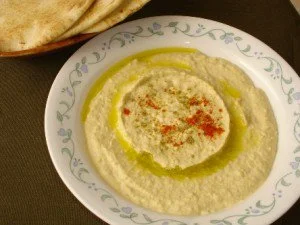
This smooth chickpea and tahini hummus is flavoured with lemon, garlic and cumin, with a little chilli on top. Make it for a dip or spread, adjusting the reserved cooking water until it reaches a thick, spoonable consistency.
Ingredients
- 200 g (1 cup)dried chickpeas
- 60 g (¼ cup)tahini
- 60 ml (¼ cup)lemon juice
- 60 ml (¼ cup)olive oil
- 2 clovesgarlic
- 1 tspground cumin
- ½ tspchilli powder
- to tastesalt
Instructions
- 1
Soak chickpeas
Cover the chickpeas with water and leave them to soak overnight.
- 2
Cook and cool
Cook the soaked chickpeas until tender. Let them cool, reserving a little of their cooking water.
- 3
Blend the hummus
Put the chickpeas, tahini, lemon juice, olive oil, garlic and salt in a food processor. Leave out the cumin and chilli powder.
- 4
Adjust texture
Blend the ingredients into a paste. If it is too thick, add reserved cooking water a little at a time until it is thick but spreadable, not watery.
- 5
Finish and serve
Sprinkle the cumin and chilli powder over the hummus, then drizzle with olive oil. Serve with warm pita bread.
What is hummus?
Hummus is a chickpea and tahini dip found across Arabic and wider Middle Eastern food traditions. Its exact origins are not settled, but the familiar combination of chickpeas, sesame paste and lemon makes a satisfying, savoury spread.
This version is built around cooked dried chickpeas and a generous amount of olive oil. Cumin and chilli are sprinkled on at the end, so their flavours remain distinct in the finished bowl.
Nutrition and macros by portion
The nutrition label shows one serving as written: 530 calories, 18g protein, 45g carbs, 33g fat.
| Portion | Adjustment | kcal | Protein | Carbs | Fat |
|---|---|---|---|---|---|
| Lighter | Use less olive oil | 371 kcal | 13g | 31g | 23g |
| This serving | As written | 530 kcal | 18g | 45g | 33g |
| Hungry | Serve a larger portion | 795 kcal | 27g | 68g | 50g |
The chickpeas provide most of the carbohydrates and fibre, with some protein; tahini and olive oil contribute much of the fat, while tahini and chickpeas also add protein. Serve it with vegetables alongside the pita to add variety to the plate.
The key ingredients
Dried chickpeas: soaking them overnight gives them a head start before cooking. Cook until tender so they blend into a smooth paste rather than leaving firm bits.
Tahini and lemon: tahini brings a nutty richness, while lemon juice gives the mixture a bright edge. Taste the finished blend and adjust the salt to suit.
Getting the texture right
Reserved cooking water: add it gradually if the hummus seems too dense. A small amount can loosen the mixture while keeping it thick and spoonable.
Blending: process the ingredients until they form a paste, then check the consistency before adding more water. The recipe calls for hummus that is not watery.
Cook the chickpeas until tender
The chickpeas need to be fully tender before they go into the food processor. Cool them before blending, and keep some of their cooking water to make texture adjustments.
The method does not specify a cooking time, so use tenderness rather than a clock as your cue.
Finish with the spices
Cumin and chilli powder go on after blending rather than into the processor. This keeps them visible on top and lets each diner mix in as much as they like.
A final drizzle of olive oil adds a glossy finish. Serve the hummus with warm pita bread, as suggested, or set it out as part of a shared spread.
Timing and preparation
Allow for an overnight soak, followed by cooking and cooling; the total time is not specified. You can cook the chickpeas ahead, then blend and season the hummus when you are ready to serve.
Keep a little cooking water aside before draining or transferring the chickpeas, so it is ready if the mixture needs loosening.
Recipe notes & tips
- Soak the chickpeas overnight so they are ready for cooking the next day.
- Cook the chickpeas until tender before blending.
- Reserve the cooking water before you finish preparing the chickpeas.
- Add reserved water in small amounts to avoid making the hummus runny.
- Blend the cumin and chilli only as a topping, following the method.
- Warm the pita shortly before serving.
Variations
- More lemon: add a little extra lemon juice for a sharper finish.
- Milder topping: reduce or omit the chilli powder.
- Garlic adjustment: use one clove for a gentler garlic flavour.
- Extra cumin: add a little more ground cumin over the top.
- Vegetable platter: serve with sliced vegetables alongside the pita.
Common mistakes to avoid
- Undercooked chickpeas: cook them until tender before blending so the hummus can become a paste.
- Adding too much water: loosen the mixture a little at a time to keep it from becoming watery.
- Forgetting to reserve cooking water: set some aside before finishing with the chickpeas.
- Blending in the topping spices: leave out the cumin and chilli powder, then sprinkle them on top as directed.
- Serving it straight from the fridge: warm the pita and let the hummus lose some of its chill before serving.
How to store
Refrigerate leftover hummus in a covered container and use within 3–4 days. Stir before serving; if it has thickened, mix in a small splash of water. Reheat is not necessary, but serve with freshly warmed pita if desired.
Frequently asked questions
Can I use tinned chickpeas?
Yes, but this method is written for dried chickpeas that are soaked and cooked. If you use tinned chickpeas, you will not have their cooking water, so use a little water to adjust the consistency.
How do I know when the chickpeas are cooked?
They should be tender rather than firm when you bite or press one. The method does not give a set cooking time.
What if my hummus is too thick?
Blend in reserved cooking water a little at a time until it becomes a thick, spreadable paste. Avoid adding so much that it turns watery.
Can I make the hummus ahead?
Yes. Cook the chickpeas ahead, reserving some cooking water, and blend the hummus when convenient. Store prepared hummus covered in the fridge.
What should I serve with hummus?
The recipe suggests warm pita bread. Sliced vegetables or other items on a shared mezze-style spread also work well.
Cook it from the original
This recipe comes from mariasmenu.com. Their page has the author’s own photos, notes and tips — the best place to cook it from.
Open the recipe on mariasmenu.com