
Oaxacan Chicken with Oregano and Garlic
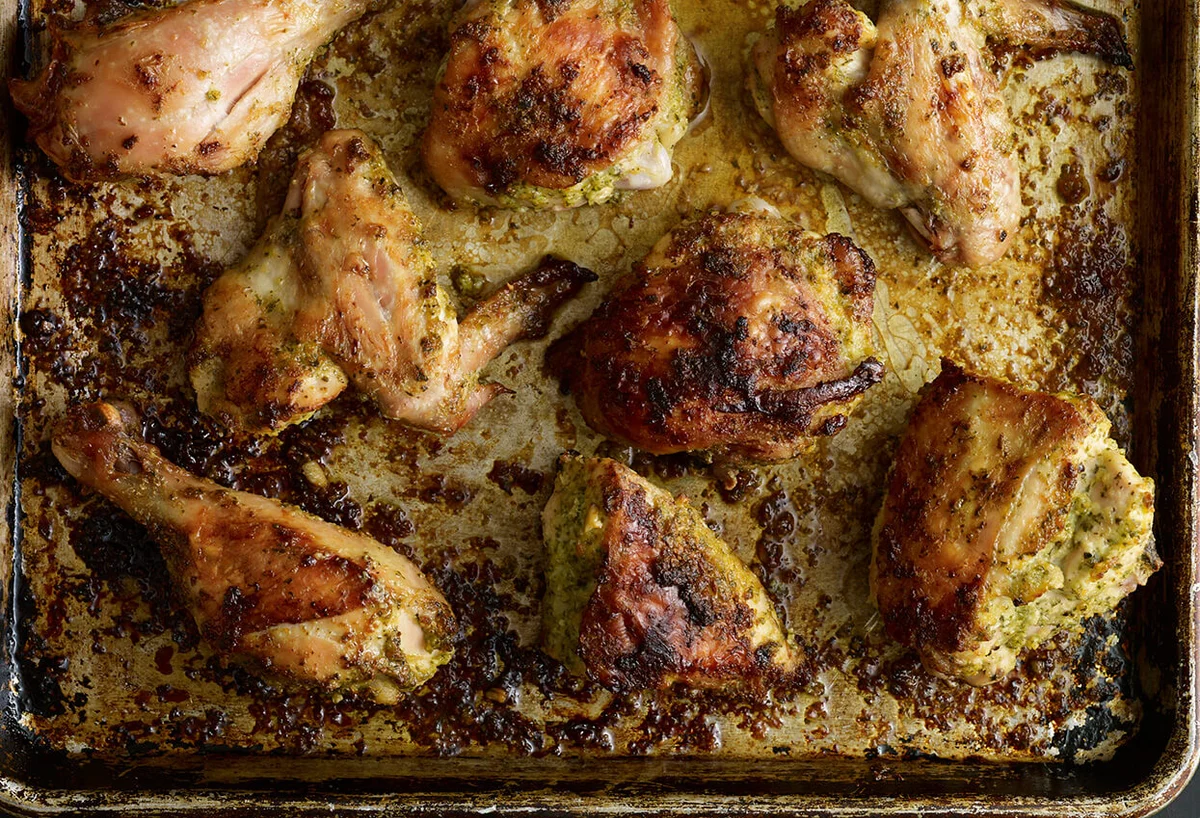
Oaxacan chicken is roasted with a coarse, fragrant mixture of garlic, fresh oregano, lime and olive oil. The two-stage roasting method browns the skin first, then uses chicken broth to keep the meat moist as it cooks through.
Ingredients
- 30garlic cloves
- 15 g (1 cup)fresh oregano leaves
- 120 ml (1/2 cup)olive oil
- 60 ml (1/4 cup)freshly squeezed lime juice
- 7.5 ml (1 1/2 teaspoons)kosher salt or coarse sea salt
- To tastefreshly ground black pepper
- 1 chicken, about 1.36 kg (3 lb), cut into 10 serving pieces, with breasts halvedchicken
- 360 ml (1 1/2 cups)chicken broth
Instructions
- 1
Preheat the oven
Heat the oven to 230°C (450°F).
- 2
Make the seasoning
In a food processor or molcajete, process or mash the garlic, oregano, olive oil, lime juice, salt and pepper until the mixture is coarse and combined, but not fully smooth.
- 3
Coat the chicken
Rub the garlic mixture over all the chicken pieces and arrange them skin-side down on a non-stick baking sheet. If not cooking straight away, cover and marinate in the refrigerator for up to 24 hours.
- 4
Roast the chicken
Bake for 15 minutes. Take the tray out and lower the oven to 190°C (375°F). Turn the chicken pieces over, pour the chicken broth onto the bottom of the tray, and return it to the oven for 45 minutes, or until cooked through and the juices run clear when pierced with a knife.
What is Oaxacan chicken?
Oaxaca, in southern Mexico, is known for a rich regional food culture, with herbs, chillies and distinctive sauces among its hallmarks. This recipe takes a simpler route, pairing chicken with a punchy garlic and oregano mixture brightened with lime.
The method comes from Pati's Mexican Table, Season 6, Episode 3, “A Queen in the Land of Gods”. Starting the chicken skin-side down in a very hot oven and adding broth after turning gives the pieces time to brown before they finish roasting.
Nutrition and macros by portion
The nutrition label shows one serving as written: 690 calories, 48g protein, 5g carbs, 51g fat.
| Portion | Adjustment | kcal | Protein | Carbs | Fat |
|---|---|---|---|---|---|
| Lighter | Smaller piece, less skin | 483 kcal | 34g | 4g | 36g |
| This serving | As written | 690 kcal | 48g | 5g | 51g |
| Hungry | Add rice and beans | 1035 kcal | 72g | 8g | 77g |
Most of the protein comes from the chicken, while the olive oil and chicken skin contribute much of the fat. The chicken and any rice or tortillas served alongside supply most of the plate's carbohydrates; pair a piece with vegetables and a moderate portion of a starchy side for balance.
The garlic and herb mixture
Coarse texture: Leave the garlic and oregano mixture a little rough rather than blending it into a smooth paste. That keeps its texture and lets the herbs and garlic cling to the chicken.
Fresh oregano: Use the fresh leaves specified here; dried oregano has a different intensity and texture. Fresh lime juice adds acidity that balances the oil and aromatic garlic.
Marinating ahead
Short rest: You can coat the chicken and roast it straight away, or cover it and leave it in the refrigerator for up to 24 hours. If you marinate it ahead, keep it chilled until ready to cook.
Even coating: Rub the seasoning over all the pieces, including the less exposed sides. Arrange them skin-side down for the first part of roasting.
Two oven temperatures
Hot start: The initial 15 minutes at 230°C (450°F) begin cooking the chicken and help the skin take on colour. Keep the pieces skin-side down during this stage.
Lower finish: After turning the chicken, reduce the oven to 190°C (375°F) and add the broth to the tray. The recipe gives a further 45 minutes of roasting, with doneness as the final check.
Check the chicken is cooked
Juices: Pierce a piece with a knife; the recipe describes the chicken as ready when it is cooked through and the juices run clear. Check a thick piece rather than relying only on the appearance of the smallest pieces.
Tray liquid: The broth collects with the chicken juices and seasoning as the pieces roast. Spoon some over the chicken when serving if you like.
Serving ideas
The garlicky pan juices pair well with plain rice, which can soak them up without competing with the oregano and lime. Warm tortillas or beans also make useful accompaniments.
Add a simple salad or cooked vegetables alongside for freshness and colour. Serve the chicken hot, with lime wedges if you have extra lime to hand.
Recipe notes & tips
- Use a food processor or molcajete to keep the seasoning mixture coarse rather than completely smooth.
- Turn the pieces carefully so the skin stays intact for the second roasting stage.
- Pour the broth onto the tray rather than over the chicken skin.
- If marinating ahead, cover the chicken and keep it refrigerated for no more than 24 hours.
- Check a thick piece for clear juices before serving.
Variations
- Add chilli: Include a little chopped fresh chilli in the coarse seasoning mixture for heat.
- Use chicken pieces: Choose bone-in pieces of similar size so they cook at a similar rate.
- Add citrus: Serve with extra lime wedges for a sharper finish.
- Serve with rice: Spoon the tray juices over rice alongside the chicken.
- Add vegetables: Roast a separate tray of vegetables to make the meal more substantial.
Common mistakes to avoid
- Blending until smooth: The recipe calls for a coarse mixture, so stop processing while it still has texture.
- Skipping the turn: Turn the chicken after the first 15 minutes so it can finish roasting skin-side up.
- Adding broth too early: Pour it into the tray only after turning the chicken and lowering the oven temperature.
- Crowding the tray: Arrange the pieces in a single layer so they roast rather than sit piled together.
- Relying only on the clock: Check that the chicken is cooked through and its juices run clear when pierced.
How to store
Refrigerate leftover chicken in a covered container within 2 hours and use within 3 days. Reheat until piping hot throughout, adding a little broth or water if the meat seems dry.
Frequently asked questions
Can I marinate the chicken overnight?
Yes. Cover it and keep it refrigerated for up to 24 hours before cooking.
Can I make the seasoning without a food processor?
Yes. Mash it in a molcajete, as the recipe suggests, until the ingredients are mixed but still coarse.
Can I use dried oregano?
The recipe specifies fresh oregano leaves. Dried oregano will change the texture and flavour, so use fresh if possible.
How do I know when the chicken is done?
The recipe says it should be cooked through, with clear juices when pierced with a knife. Check one of the thicker pieces.
What can I serve with it?
Rice, warm tortillas or beans all work well with the garlicky pan juices. Add vegetables or a salad for a fresh contrast.
Cook it from the original
This recipe comes from patijinich.com. Their page has the author’s own photos, notes and tips — the best place to cook it from.
Open the recipe on patijinich.com