
Aloo Paratha - 3 Easy Fillings
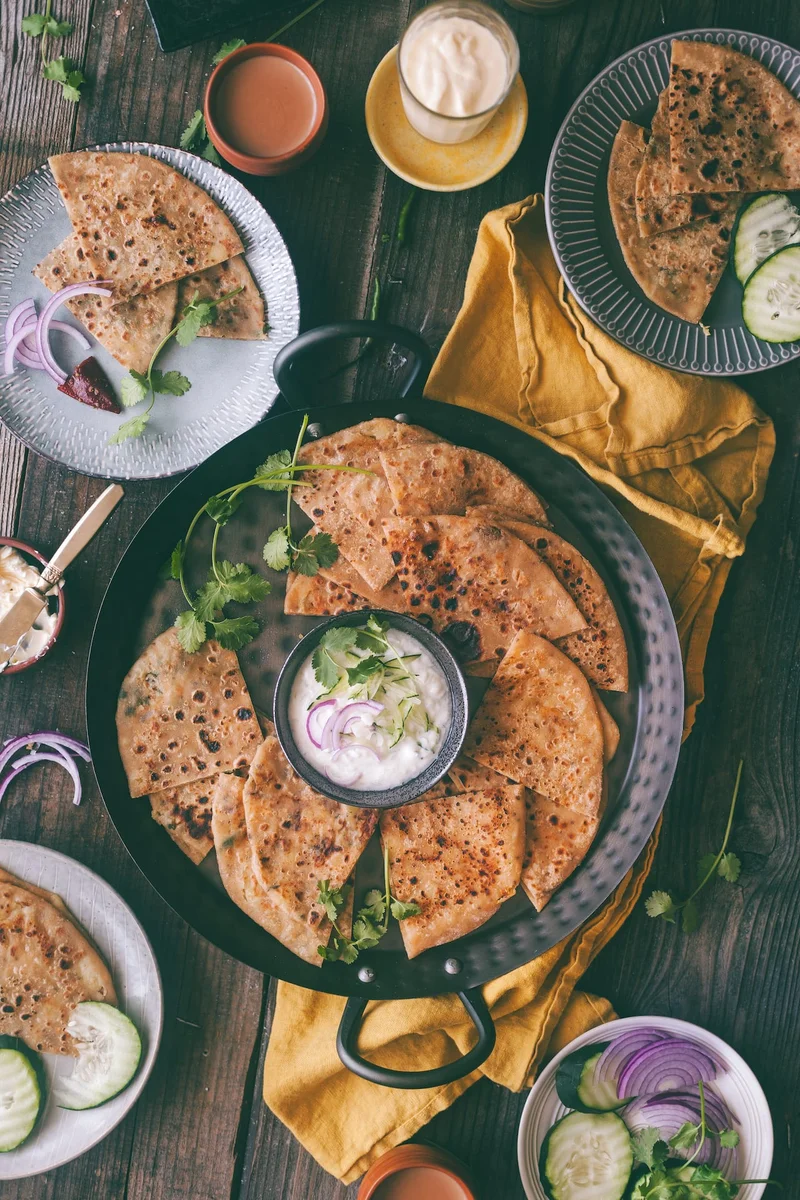
Aloo paratha is an Indian flatbread filled with seasoned mashed potato and cooked in a pan until golden. This version makes six parathas with three filling options: spiced onion and herbs, grated cheese, or Indian pickle.
Ingredients
- 300 gwholemeal wheat flour (atta)
- 1 teaspoonsalt
- 1 teaspooncarom seeds
- 1 teaspoonoil
- as neededhot water, for kneading
- 1 small onion (140 g), finely choppedonion
- 2.5 cm piecefresh ginger, finely chopped
- 1 clovegarlic, finely chopped
- 1green chilli, finely chopped
- a few sprigsfresh coriander leaves, finely chopped
- 1/2 teaspoonground cumin
- 1/2 teaspoondried mango powder
- 3 medium potatoes (about 140 g each)potatoes
- 55 ggrated cheese
- 60 mlIndian pickle (achar; use mostly the spices and oil)
- as neededoil, for frying the parathas
- a littleflour, for dusting while rolling
Instructions
- 1
Cook the potatoes
Boil or steam the potatoes until tender. Steaming helps them take on less moisture; if boiling, leave the skins on.
- 2
Make the dough
Mix the flour, salt and carom seeds in a bowl. Add hot water gradually, kneading as you go, until you have a dough; the amount of water will vary with the flour.
- 3
Rest the dough
Cover the dough and leave it to rest for 15 minutes.
- 4
Mash the potatoes
When the potatoes are cooked, peel and mash them; they are easier to handle while still warm. Divide the mash into three portions.
- 5
Heat the oil
Set a frying pan over medium heat and add 1 teaspoon of oil.
- 6
Soften the onion
When the oil is hot, add the garlic, ginger and green chilli and sauté briefly. Add the onion, season with salt and cook until softened.
- 7
Season one filling
Add the ground cumin, coriander leaves and dried mango powder. Stir for 1 minute, then mix this seasoning into one portion of mashed potato.
- 8
Mix the cheese
Mix the grated cheese into the second portion of mashed potato.
- 9
Mix the pickle
Mix the Indian pickle into the third portion of mashed potato.
- 10
Divide the dough
Once the fillings are ready, divide the rested dough into 6 portions.
- 11
Fill and seal
Flatten one dough portion slightly with your hand, thinning the edges as you go. Add your chosen potato filling, seal the edges and flatten it into a disc.
- 12
Roll the parathas
Dust a rolling board or worktop with a little flour. Roll each filled disc gently, working from the centre outwards.
- 13
Cook until golden
Heat a pan over medium heat and lay in a rolled paratha. After a few seconds, when small bubbles appear, flip it and add a little oil or ghee. Cook for about 2–3 minutes on each side, applying oil or ghee to both sides.
- 14
Serve warm
Serve the aloo parathas warm.
What is aloo paratha?
Aloo means potato, and aloo paratha is a stuffed flatbread popular across India, often eaten for breakfast but just as welcome at lunch or dinner. The dough is rolled around a seasoned potato filling, then cooked on a hot pan.
This version offers three fillings from one batch of potato: a spiced onion mixture, cheese, and achar. That gives the parathas different flavours without making three separate doughs.
Nutrition and macros by portion
The nutrition label shows one serving as written: 645 calories, 13g protein, 92g carbs, 25g fat.
| Portion | Adjustment | kcal | Protein | Carbs | Fat |
|---|---|---|---|---|---|
| Lighter | Use less frying oil | 451 kcal | 9g | 64g | 18g |
| This serving | As written | 645 kcal | 13g | 92g | 25g |
| Hungry | Serve an extra paratha | 968 kcal | 20g | 138g | 38g |
The wheat flour supplies most of the carbohydrates, while the cooking oil, cheese and oil from the pickle contribute much of the fat. Potatoes and cheese add some protein, with the cheese contributing more per portion than the vegetables. Pair a paratha with yoghurt and a fresh vegetable side for a more balanced plate.
The potato filling
Cook the potatoes until tender enough to mash smoothly. Steaming keeps them from absorbing as much water; if you boil them, leave the skins on as directed.
Warm potatoes are easier to peel and mash. Aim for an even mash without large lumps, which can make the filled dough harder to roll.
Three ways to season
Masala: cook the ginger, garlic, chilli and onion before adding cumin, coriander and dried mango powder. Mixing this into the potato gives the first filling its savoury, tangy seasoning.
Cheese: fold the grated cheese into the second portion of potato. Achar: use mostly the pickle’s spices and oil in the third portion, rather than adding excess pickle liquid.
Seal before rolling
Flatten the dough portion and make its edges thinner before adding the filling. Bring the dough together over the potato and seal it well so the filling stays inside.
Roll gently from the centre outwards, turning the paratha as needed. A light dusting of flour helps prevent sticking, but too much can leave a dry coating on the cooked bread.
Look for bubbles
Let the pan warm over medium heat before adding a paratha. Small bubbles on the surface after a few seconds are the cue to flip it.
Cook each side for about 2–3 minutes, adding oil or ghee to both sides. The paratha should be cooked through and lightly browned; lower the heat if the outside colours before the centre is done.
Serve it warm
These parathas are best served warm, when the bread is soft and the filling is hot. They can be served on their own or alongside yoghurt, chutney or a fresh salad.
If serving several people, cook the parathas in batches and keep the finished ones covered while the rest cook.
Recipe notes & tips
- Steam the potatoes if you want to limit the moisture in the mash.
- Mash the potatoes while warm, then divide them evenly among the three fillings.
- Keep the dough covered while it rests so the surface does not dry out.
- Seal each filled dough portion carefully before rolling.
- Use gentle pressure and roll from the centre outwards to help prevent tearing.
- Adjust the pan heat if the parathas brown too quickly.
Variations
- More herbs: add extra chopped coriander to the spiced potato filling.
- Tangier masala: increase the dried mango powder slightly to suit your taste.
- Milder filling: leave the green chilli out of the onion mixture.
- Different cheese: use another grated cheese that melts well in the filling.
- Extra pickle flavour: add a little more of the achar spices and oil to the third portion.
Common mistakes to avoid
- Wet potato mash: steam the potatoes or boil them in their skins so the filling is less damp.
- Lumpy filling: mash the potatoes thoroughly while they are still warm.
- Overfilled dough: use a manageable amount of filling so the edges can seal securely.
- Torn paratha: roll gently from the centre outwards rather than pressing hard.
- Burnt outside: reduce the heat if the bread colours before it cooks through.
- Dry paratha: apply oil or ghee to both sides as it cooks.
How to store
Cool leftover parathas, refrigerate in an airtight container and use within 3 days. Reheat in a frying pan over medium-low heat until hot, turning once; add a little oil if needed.
Frequently asked questions
Can I make the dough ahead?
Yes. Make it, cover it well and refrigerate it until needed. Let it sit briefly at room temperature before shaping if it feels firm.
How do I know when the potatoes are cooked?
They should be tender when pierced and easy to mash. If they are still firm in the centre, cook them for longer before peeling and mashing.
Can I use only one of the fillings?
Yes. Choose whichever filling you prefer and use it for all the potato portions. Keep the filling amount manageable so the dough seals easily.
What can I use instead of dried mango powder?
The recipe’s tang comes from dried mango powder and the pickle filling. If you do not have it, you can leave it out of the masala filling, though the flavour will be less tangy.
Can I cook the parathas without ghee?
Yes. Use oil for frying as listed in the ingredients. Apply it to both sides while the paratha cooks.
Why is my paratha breaking while I roll it?
The dough may be too thin or the filling may be pushing through. Seal the edges well and roll more gently, starting from the centre.
Cook it from the original
This recipe comes from playfulcooking.com. Their page has the author’s own photos, notes and tips — the best place to cook it from.
Open the recipe on playfulcooking.com