
Caramel Custard
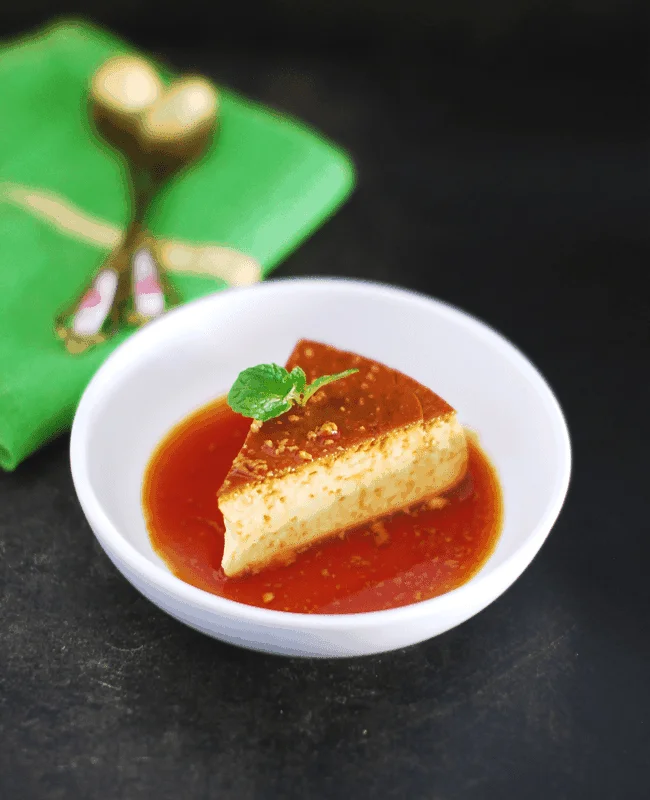
Caramel custard is a gently steamed egg-and-milk pudding set over a layer of caramel. This pressure-cooker version is a practical make-ahead dessert, with condensed milk bringing sweetness and a smooth, rich texture.
Ingredients
- 500 mlmilk
- 4eggs
- 1 tin (395 g)condensed milk
- 2 tspcornflour
- 1 tspvanilla essence
- 2 tbspsugar
- A littlewater for the caramel
- 2 glasseswater for the pressure cooker
Instructions
- 1
Mix the custard
Beat the condensed milk and eggs together well. Add the milk and beat again. Take a little of the mixture and stir it into the cornflour to make a paste, then mix this paste and the vanilla essence into the milk mixture.
- 2
Make the caramel
Spread the 2 tbsp sugar across the caramelising dish and add some water. Heat until the caramel turns golden brown, then take it off the heat and leave it to set.
- 3
Fill the dish
Pour the pudding mixture over the set caramel and cover the dish with aluminium foil.
- 4
Steam and chill
Pour 2 glasses of water into a pressure cooker and place the pudding dish inside. Put on the weight and cook over a low heat for 10 minutes, then turn off the heat. Leave the dish in the cooker for another 30–45 minutes. Once cool, refrigerate for 3–4 hours.
What is caramel custard?
Caramel custard is a baked or steamed egg custard served with a layer of caramel, and is also known in some places as crème caramel or flan. It belongs to a broad family of custard desserts found in many cuisines, so its exact origins are not tied to one single version.
Here, condensed milk sweetens and enriches the custard, while cornflour helps give the mixture body. Pressure-cooker steaming offers a covered, gentle way to cook it.
Nutrition and macros by portion
The nutrition label shows one serving as written: 480 calories, 18g protein, 63g carbs, 18g fat.
| Portion | Adjustment | kcal | Protein | Carbs | Fat |
|---|---|---|---|---|---|
| Lighter | Smaller custard portion | 336 kcal | 13g | 44g | 13g |
| This serving | As written | 480 kcal | 18g | 63g | 18g |
| Hungry | Larger custard portion | 720 kcal | 27g | 95g | 27g |
The condensed milk and sugar supply most of the carbohydrates, while the eggs, milk and condensed milk contribute protein and fat. Serve a modest portion with fresh fruit to add contrast and round out the plate.
The custard mixture
Eggs: Beat them thoroughly with the condensed milk before adding the milk, so the sweet base is evenly combined.
Cornflour: First blend it with a little of the milk mixture to make a smooth paste. Stirring that paste into the rest helps avoid lumps.
Vanilla: Add it to the full mixture for a gentle aromatic note that complements the caramel.
Getting the caramel right
Sugar: Spread the 2 tbsp evenly over the base of the dish so it can caramelise across the surface.
Colour: Take the dish off the heat once the caramel is golden brown. It will be very hot, and a darker colour can taste bitter.
Setting: Let the caramel set before adding the custard mixture, as the recipe directs.
Gentle pressure-cooker steaming
Water: Add the specified 2 glasses of water to the cooker and keep the pudding dish inside it. The water should be in the cooker, not mixed into the custard.
Timing: Cook for 10 minutes over a low heat after putting on the weight, then leave the dish in the switched-off cooker for 30–45 minutes. The additional resting time is part of the recipe, not an optional shortcut.
Chilling and texture
Cooling: Allow the dish to cool before transferring it to the fridge, as the method specifies. Chill it for 3–4 hours so the custard has time to firm up.
Serving: The finished custard should hold its shape when turned out, with the caramel forming a sauce over it. Loosen the edge carefully if needed when serving.
What to serve with it
Fruit: Fresh berries or sliced fruit add a bright contrast to the sweet custard.
Coffee: Serve a small portion after a meal with unsweetened coffee or tea; the custard is already sweet from the condensed milk and caramel.
Recipe notes & tips
- Use a dish that fits comfortably inside your pressure cooker.
- Mix the cornflour with a little custard mixture until smooth before adding it to the full batch.
- Keep an eye on the sugar as it caramelises and remove it from the heat at a golden-brown colour.
- Cover the pudding dish with aluminium foil as directed.
- Let the custard cool before chilling it for the full 3–4 hours.
Variations
- Citrus note: Add finely grated orange zest to the custard mixture for a fresh aroma.
- Coffee flavour: Stir a little strong coffee into the milk mixture before combining it with the other custard ingredients.
- Cardamom: Add a small pinch of ground cardamom alongside the vanilla for a warm spice note.
- Fruit pairing: Serve with fresh berries or sliced mango rather than adding fruit to the custard itself.
Common mistakes to avoid
- Lumpy cornflour: Mix it first with a little of the custard mixture to make a smooth paste.
- Burnt caramel: Take it off the heat as soon as it reaches a golden-brown colour.
- Pouring too soon: Let the caramel set before adding the pudding mixture.
- Skipping the resting time: Leave the dish in the switched-off cooker for the stated 30–45 minutes.
- Serving too early: Chill the cooled custard for 3–4 hours so it can firm up.
How to store
Keep the covered custard in the fridge and eat within 2–3 days. Serve it chilled; reheating may soften the set texture.
Frequently asked questions
How do I know when the caramel is ready?
Take it off the heat when it turns golden brown, as the method specifies. Avoid letting it become very dark, which can make the caramel bitter.
Can I make the custard ahead?
Yes. It needs 3–4 hours in the fridge to chill, so it suits making ahead and serving cold.
Why mix the cornflour with some of the custard first?
Making a paste before adding it to the full mixture helps the cornflour blend in smoothly and reduces lumps.
Can I skip the time in the switched-off cooker?
The recipe includes a 30–45-minute rest after the 10-minute cooking period. Follow that timing for this method.
How should I serve caramel custard?
Serve it chilled, with the caramel over the custard. Fresh fruit on the side is a simple accompaniment.
Cook it from the original
This recipe comes from mariasmenu.com. Their page has the author’s own photos, notes and tips — the best place to cook it from.
Open the recipe on mariasmenu.com