
Chitoi Pitha (Steamed Pancakes)
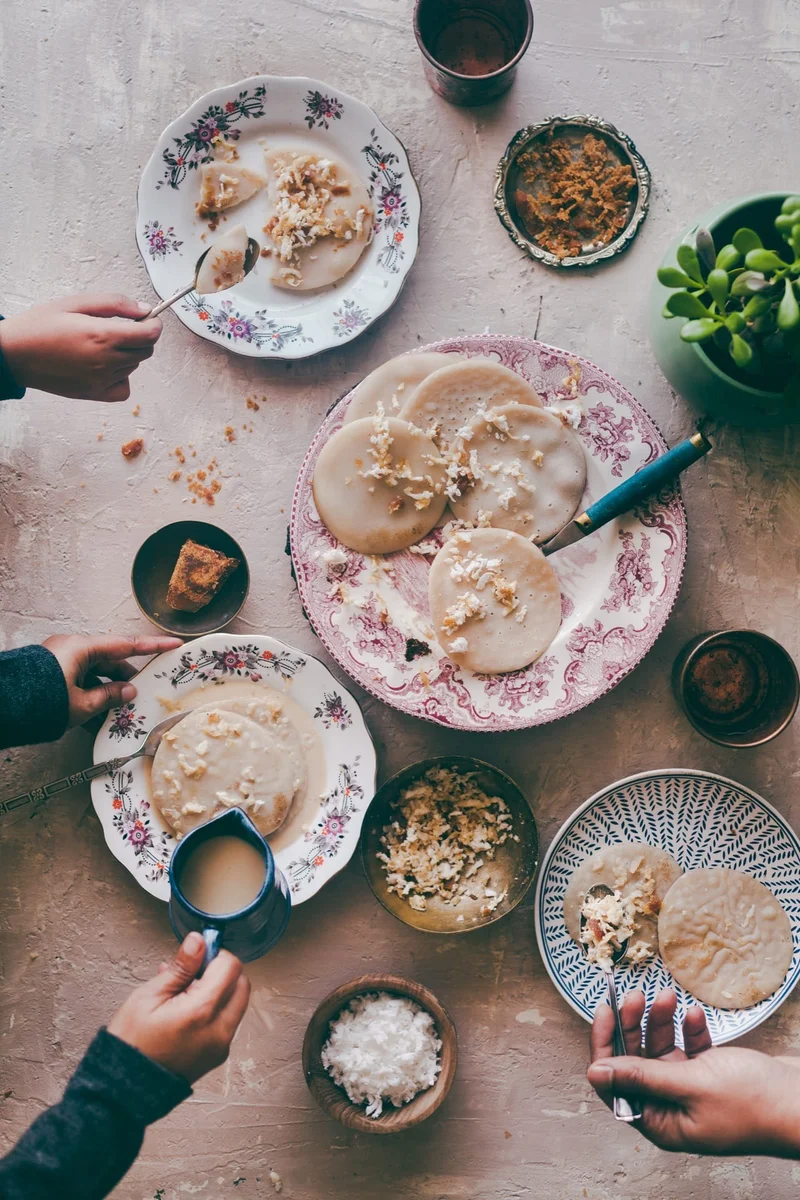
Chitoi pitha are soft Bengali rice-flour pancakes steamed in a covered pan, then served with jaggery and coconut or a warm jaggery cream sauce. They need no oil or butter and make a simple, comforting sweet to share.
Ingredients
- 120 g (1 cup)rice flour
- 30 g (¼ cup)wholemeal flour
- a pinchsalt
- as neededwater
- 50 g (¼ cup)grated jaggery
- 200 mlfresh cream
- to tastegrated jaggery
- to tastefreshly grated coconut
Instructions
- 1
Mix the batter
Whisk the rice flour, wholemeal flour and salt in a bowl. Add water gradually until the batter reaches a suitable consistency; if it becomes too thin, mix in a little more rice or wholemeal flour. Leave it to rest for about 10 minutes while you make the sauce.
- 2
Make the sauce
Scatter the grated jaggery in a saucepan and heat it until it begins to melt. Carefully move your face away from the pan, pour in the cream and stir. Mix just until combined, then switch off the heat so the cream does not curdle.
- 3
Steam the pancakes
Heat a flat pan over medium-low heat. Ladle a little batter into the centre, cover the pan immediately and sprinkle 1 tablespoon of water around the lid. Steam for about 2 to 3 minutes, then remove the lid and transfer the pitha to a serving plate. Repeat with the remaining batter.
- 4
Serve the pitha
Pour the jaggery cream sauce over the pitha and let them soak up some of it before serving. Alternatively, serve them without the sauce, topped with grated coconut and grated jaggery.
What are chitoi pitha?
Chitoi pitha are Bengali rice-based pancakes cooked by steaming rather than frying. Pitha is a broad family of South Asian cakes and snacks, often associated with home cooking and regional traditions.
This version combines rice flour with a little wholemeal flour, then steams the batter in a covered pan. Jaggery cream makes a rich topping, while coconut and jaggery offer a simpler finish.
Nutrition and macros by portion
The nutrition label shows one serving as written: 118 calories, 2g protein, 18g carbs, 5g fat.
| Portion | Adjustment | kcal | Protein | Carbs | Fat |
|---|---|---|---|---|---|
| Lighter | Use less cream sauce | 83 kcal | 1g | 13g | 3g |
| This serving | As written | 118 kcal | 2g | 18g | 5g |
| Hungry | Serve a larger portion | 177 kcal | 3g | 27g | 7g |
Rice flour and wholemeal flour provide most of the carbohydrates, while the cream contributes much of the fat and some of the energy. Jaggery adds sugar, and the recipe includes only modest protein from the flour and cream. For a more balanced plate, serve a moderate number of pitha alongside a savoury dish with a protein-rich ingredient.
Getting the batter right
Flour balance: rice flour gives the pitha its characteristic rice-based texture, while wholemeal flour adds structure. Add water gradually so you can stop when the batter is pourable but not runny.
Resting time: leave the batter for about 10 minutes as directed. This gives the flours time to absorb water before cooking.
Making the jaggery cream
Gentle heat: warm the jaggery only until it starts to melt. Keep an eye on it, as the method relies on mixing in the cream rather than cooking the sauce for a long time.
Adding cream: take care when pouring it into the hot pan, then stir just to combine and switch off the heat. Prolonged cooking can cause the cream to curdle.
Steaming in a covered pan
Cover promptly: put the lid on as soon as the batter is in the pan so the pitha can steam. Sprinkling 1 tablespoon of water around the lid helps create steam inside.
Moderate heat: medium-low heat gives the pancake time to cook through without rushing the steaming step. The stated cooking time is about 2 to 3 minutes per pitha.
Checking when they are ready
Timing: use the 2 to 3 minutes as a guide for each pancake, and keep the pan covered while it steams. Remove the pitha from the pan once that cooking time is up.
Texture: these are steamed pancakes, not crisp fried ones. Handle them gently when lifting them to the serving plate.
Choosing a topping
Cream sauce: pour the jaggery and cream mixture over the pitha and give them time to absorb some of it before serving. Jaggery made from date palm, such as nolen gur or patali gur, is a fitting choice when available.
Dry finish: serve the pitha without sauce and add freshly grated coconut and grated jaggery to taste. This keeps the toppings separate and lets everyone adjust their own serving.
Serving ideas
Serve the pitha warm, either coated in sauce or topped individually with coconut and jaggery. They work well as a sweet snack or as part of a larger spread of Bengali dishes.
If offering both toppings, keep the sauce in a small jug and place the coconut and jaggery alongside it. That makes it easy to choose between a saucy or dry serving.
Recipe notes & tips
- Add the water a little at a time so the batter does not become too thin.
- Rest the batter for the full 10 minutes while preparing the sauce.
- Keep the pan at medium-low heat for steaming.
- Cover the pan immediately after ladling in the batter.
- Stir the cream into the jaggery only until combined, then turn off the heat.
- Let the sauce sit on the pitha briefly before serving so they can absorb some of it.
Variations
- Date palm jaggery: use nolen gur or patali gur for the jaggery if you have it.
- Coconut topping: serve the pitha dry with freshly grated coconut and jaggery.
- Sauce on the side: offer the jaggery cream separately so each person can add their own.
- Mixed flour: adjust the rice-to-wholemeal flour balance slightly, adding more flour if the batter turns runny.
- Sauce-free serving: skip the cream sauce and finish with grated jaggery and coconut.
Common mistakes to avoid
- Adding water too quickly: the batter can become runny; add it gradually and correct with a little flour if needed.
- Skipping the rest: the flours have less time to absorb water; leave the batter for about 10 minutes.
- Leaving the pan uncovered: the pitha will not steam as intended; cover it straight after adding the batter.
- Using high heat: the cooking time can pass too quickly; keep the pan at medium-low.
- Cooking the cream sauce for too long: it may curdle; stir just to combine and switch off the heat.
How to store
Refrigerate leftover pitha in a covered container and eat within 2 days. Reheat gently in a covered pan with a little water to create steam; store the sauce separately if possible and warm it gently.
Frequently asked questions
Can I make the batter ahead?
The method calls for a 10-minute rest before cooking. For best results, make the batter shortly before steaming so you can check and adjust its consistency.
What should the batter consistency be?
It should be pourable enough to ladle into the centre of the pan, but not so thin that it runs like water. If it is too runny, add a little rice or wholemeal flour.
Can I use a different jaggery?
Yes. Use the grated jaggery you have; date palm jaggery such as nolen gur or patali gur is suggested as a preferred option.
How do I serve chitoi pitha?
Pour over the jaggery cream sauce and allow the pitha to absorb some of it. Alternatively, serve them dry with grated coconut and grated jaggery.
Why did my cream sauce curdle?
It may have cooked for too long after the cream was added. Stir just until the sauce is combined, then take it off the heat.
Cook it from the original
This recipe comes from playfulcooking.com. Their page has the author’s own photos, notes and tips — the best place to cook it from.
Open the recipe on playfulcooking.com