
Pan Fried Noodles With Chili Crisp
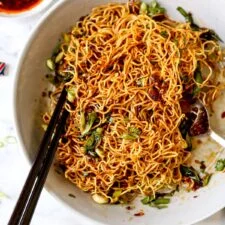
These Hong Kong-style pan-fried noodles are cooked in crisp-edged noodle cakes and finished with a punchy sauce of chilli crisp, soy and Chinkiang vinegar. They make a quick meal with plenty of savoury heat, fresh herbs and contrasting textures.
Ingredients
- 2 tablespoonschilli crisp
- 2 tablespoonsvegetable broth or chicken broth
- 2 tablespoonssoy sauce
- 1 tablespoonChinkiang vinegar
- 340 g (12 ounces)chow mein noodles
- 1 tablespoonvegetable oil
- 4green onions, finely chopped
- 60 ml (¼ cup)cilantro, finely chopped
- 60 ml (¼ cup)basil, finely chopped
- to taste, optionalground sesame seeds
Instructions
- 1
Mix the sauce
Stir the chilli crisp, broth, soy sauce and Chinkiang vinegar together in a bowl, then set the sauce aside.
- 2
Boil the noodles
Cook the chow mein noodles for the time stated on the packet, taking care not to overcook them. Drain thoroughly and divide the noodles into 4 equal portions.
- 3
Fry the noodle cakes
Heat the vegetable oil in a large pan over medium-high heat. Once hot, add one portion of noodles and spread it evenly across the pan like a pancake. Fry for 3–5 minutes until browned and crisp, then carefully turn it over and cook for another 2–3 minutes, until both sides are golden brown. Transfer to a plate and repeat with the remaining portions.
- 4
Sauce and serve
Drizzle about half of the sauce over the noodle cakes. Scatter over the cilantro, basil and green onions, and serve with the remaining sauce on the side.
What are pan-fried noodles?
Pan-fried noodles are cooked until their outside turns golden and crisp while the inside stays tender. This version takes inspiration from Hong Kong-style crispy noodles and gives them a fragrant, spicy finish.
The method builds texture in separate portions rather than stirring the noodles continuously. Chilli crisp, soy and vinegar bring heat, savouriness and a sharp edge to the crisp noodle cakes.
Nutrition and macros by portion
The nutrition label shows one serving as written: 821 calories, 13g protein, 108g carbs, 36g fat.
| Portion | Adjustment | kcal | Protein | Carbs | Fat |
|---|---|---|---|---|---|
| Lighter | Use less chilli crisp | 575 kcal | 9g | 75g | 25g |
| This serving | As written | 821 kcal | 13g | 108g | 36g |
| Hungry | Add another noodle cake | 1232 kcal | 20g | 161g | 54g |
Most of the carbohydrates come from the chow mein noodles, while the chilli crisp and frying oil contribute much of the fat. The noodles provide some protein, with smaller amounts from the soy sauce and herbs. Pair a portion with vegetables or greens for a more balanced plate.
The sauce does the balancing
Chilli crisp: it provides the heat and aromatic oil, so stir it well into the sauce before adding it to the noodles.
Chinkiang vinegar: its tang cuts through the richness of the crisp and fried noodles. Soy sauce adds salt and savoury depth, while broth loosens the mixture enough to drizzle.
Choose noodles that hold their shape
Chow mein noodles: cook them according to their packet directions, since brands and varieties can need different timings. Stop when they are just tender; overcooked noodles are more likely to break or turn soft in the pan.
Drain well: excess water can interfere with browning. Separate the noodles into four portions so each one can spread into a thin, even layer.
Get crisp edges in the pan
Hot oil: wait until the oil is hot before adding the first portion. This helps the noodles start browning rather than sitting in oil as they warm.
Even layer: spread each portion across the pan like a pancake and leave it to fry for 3–5 minutes before turning. Cook the second side for 2–3 minutes, until both sides are golden and crisp.
Turn gently and serve promptly
Turning: the noodle cake can be delicate, so use a wide spatula and support as much of it as possible. If it breaks, it will still taste good, though the pieces may be less neatly browned.
Serving: add the herbs and green onions after frying to keep their flavour fresh. Serve soon after cooking, with the remaining sauce on the side for dipping or extra drizzling.
Fresh herbs and finishing touches
Cilantro and basil: their fresh, aromatic notes contrast with the browned noodles and spicy sauce. Chop them finely so they are easy to scatter over each portion.
Green onions: these add a mild, savoury bite. Ground sesame seeds are an optional topping for a nutty finish.
What to serve alongside
The noodle cakes are substantial, so a simple side of lightly dressed greens or steamed vegetables can bring freshness to the plate. Keep the side flavours gentle so they do not compete with the chilli crisp sauce.
For a more filling meal, serve the noodles with a protein of your choice. Keep any extra sauce handy to season the noodles as you eat.
Recipe notes & tips
- Check the noodle packet for its cooking time and begin testing near the lower end of the range.
- Drain the noodles thoroughly before dividing them into portions.
- Use a wide pan so each noodle portion can spread into an even layer.
- Let the first side brown before trying to turn the noodle cake.
- Keep the cooked portions warm while frying the rest.
- Serve the extra sauce separately so everyone can add it to taste.
Variations
- Adjust the heat: use less chilli crisp for a milder sauce.
- Add vegetables: serve with lightly cooked greens alongside the noodle cakes.
- Add protein: serve with a cooked protein of your choice for a heartier meal.
- Switch the herbs: use extra cilantro or basil if you do not have both.
- Finish with sesame: scatter ground sesame seeds over the noodles before serving.
Common mistakes to avoid
- Overcooking the noodles: follow the packet timing and drain them as soon as they are just tender.
- Skipping the drain: excess water makes crisping harder, so drain the noodles thoroughly.
- Crowding the pan: fry the noodles in four separate portions to give each one room to brown.
- Turning too early: wait until the first side has browned and crisped before flipping.
- Using too little heat: add the noodles only once the oil is hot.
- Adding herbs too soon: scatter them over the noodles after frying to keep them fresh.
How to store
For the best crisp texture, serve the noodle cakes straight after cooking. Refrigerate leftovers in a covered container for up to 2 days and reheat in a lightly oiled pan until hot; they may be softer than freshly fried. Store any remaining sauce separately in the fridge.
Frequently asked questions
Can I make these noodles less spicy?
Yes. Reduce the chilli crisp to suit your taste and keep the remaining sauce on the side.
How do I know when the noodles are cooked?
Use the packet timing as a guide and check that they are just tender, not soft or falling apart. They will be fried again in the pan.
Can I use a different kind of noodle?
Chow mein noodles are specified for this recipe. If using another type, cook it according to its packet directions and make sure it can be spread into portions for pan-frying.
Why did my noodle cakes not turn crisp?
The noodles may have been wet, the pan may not have been hot enough, or the portions may have been too crowded. Drain well, heat the oil before frying and cook each portion separately.
Can I prepare the sauce ahead?
Yes. Mix the chilli crisp, broth, soy sauce and vinegar ahead of time, then stir it again before serving.
Can I leave out the sesame seeds?
Yes. They are an optional topping and can simply be omitted.
Cook it from the original
This recipe comes from pickledplum.com. Their page has the author’s own photos, notes and tips — the best place to cook it from.
Open the recipe on pickledplum.com